


A roof drip edge is a thin metal strip fitted along the edges of a roof. It guides rainwater away from the roof and into the gutter, and stops water from running back under the shingles and into the fascia and deck. It is a small part, but it protects the roof edge from rot and leaks.
Most people never notice the drip edge, yet a roof without one is far more likely to fail at the edges. It is one of those small details that quietly does a big job.
This guide explains what a drip edge does, where it goes, and why it matters. It works with the roof’s other edge parts, and it is not the same as flashing, which does a related but different job.
Table of Contents
ToggleWhat Is a Roof Drip Edge?
A drip edge is a strip of metal, usually aluminum, fitted along the edges of the roof. It has a bent shape that hangs slightly over the edge so water drips clear of the roof structure.
It goes along two parts of the roof: the eaves, which are the lower horizontal edges, and the rakes, which are the sloped side edges. Together, these are the spots where water leaves the roof.
The shape is the clever part. The bend pushes water outward and down into the gutter, instead of letting it curl back under the roof edge where it would cause damage.
Drip edge comes in a few profiles, with names like Type C, Type D, and Type F. They do the same basic job, and a roofer picks the right one for your roof edge and gutter setup.
What Does a Drip Edge Do?
For such a small part, a drip edge does a lot. Here are the main jobs it handles on your roof.
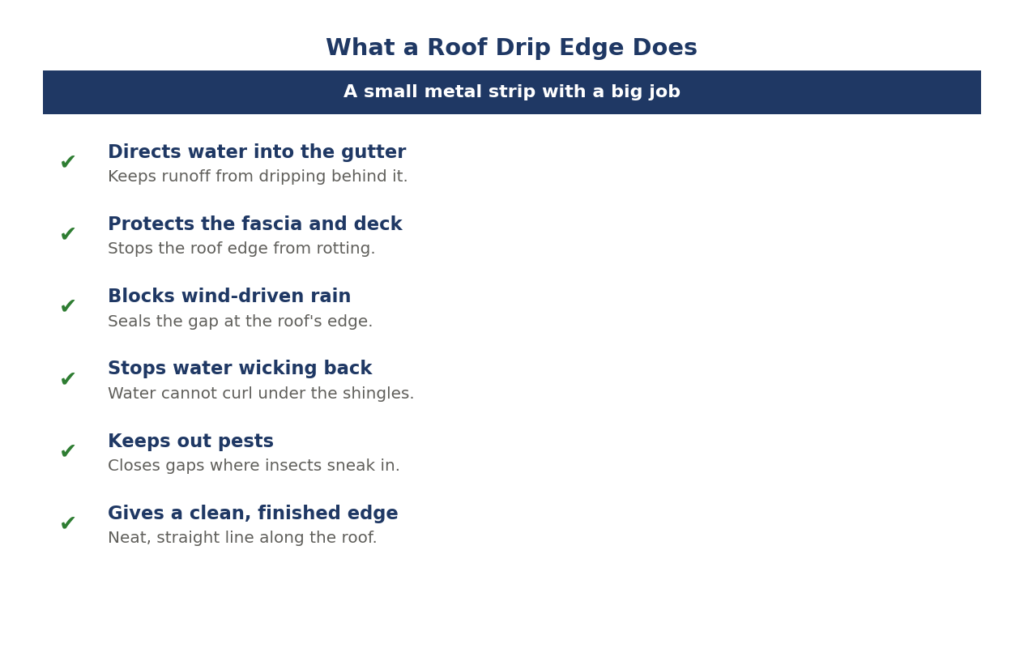
Its biggest job is steering water into the gutter and away from the fascia and deck. It also blocks wind-driven rain, stops water from wicking back under the shingles, keeps pests out of the edge gaps, and gives the roof a clean, finished line.
That last point is easy to overlook. A drip edge also strengthens the roof edge itself, giving the shingles firm support so they do not sag or lift over the gutter. It is protection and reinforcement in one small strip.
Why Does a Drip Edge Matter So Much?
Without a drip edge, water does not always fall cleanly off the roof. Some of it clings to the underside of the shingles and runs back toward the fascia and deck.
Over time, that water soaks into the wooden fascia board and the edge of the roof deck. The wood rots, paint peels, and eventually the damage spreads inward, leading to leaks and costly repairs.
A rotted roof edge is a common cause of hidden problems. Our guide on the most common causes of roof leaks shows how edge damage turns into leaks, which often first appear as stains on the ceiling inside the home.
Signs Your Drip Edge Is Missing or Damaged
You can spot drip-edge trouble from the ground with a careful look. These signs mean it is worth a closer check.
- Water stains or streaks on the fascia boards below the roof edge.
- Peeling paint or rot along the wooden edge of the roof.
- Water dripping behind the gutter instead of into it.
- No visible metal lip between the shingles and the gutter.
If you see any of these, the roof edge may be taking water it should not. Catching it early keeps a cheap fix from becoming a rotted fascia and deck.
Drip Edge vs Flashing: What's the Difference?
People often mix these up, but they are two different parts. Both are metal, and both keep water out, but they work in different places.
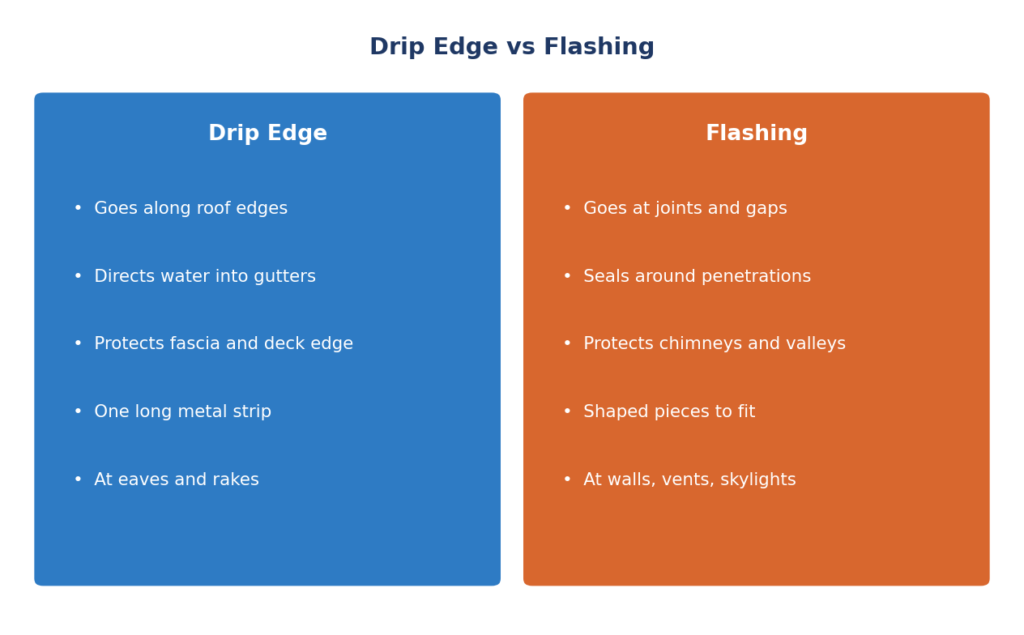
A drip edge runs along the outer edges of the roof and directs water into the gutter. Flashing seals the joints and gaps, like around chimneys, walls, and valleys. A good roof needs both.
To see how the sealing side works, our guide on roof flashing and when to replace it explains that part in detail.
Is a Drip Edge Required?
In most places, yes. Many modern building codes require a drip edge on new roofs, exactly because it prevents so much edge damage.
Even where it is not strictly required, leaving it off is a poor choice. It is a low-cost part that prevents high-cost damage, so any good roofer fits one as standard.
If a roofer suggests skipping the drip edge to save a little money, treat it as a warning sign. Cutting this corner is a sign of low-quality work, and it is the kind of shortcut that leads to edge rot down the line.
Local rules and quality standards matter here. A proper roof replacement always includes a correctly fitted drip edge as part of the job.
How Does a Drip Edge Help in Winter?
Drip edge matters year-round, but it earns its keep in an Illinois winter. Cold weather is hard on roof edges.
When snow melts and refreezes at the eaves, ice dams form. A drip edge, working with other edge protection, helps water drain and keeps it from sitting against the roof structure and freezing there.
Ice dams are a serious winter threat. Our guide on how to prevent ice dams covers the full set of steps that keep the roof edge safe in the cold, and how good attic ventilation fits in.
When Is a Drip Edge Installed?
A drip edge is fitted during a roof replacement or a new roof, along with the underlayment and shingles. It works together with the layers around it.
The order matters. At the eaves, the drip edge goes under the underlayment; at the rakes, it goes over. Getting this sequence right is part of what separates a good installation from a sloppy one.
It sits right alongside the roof underlayment and rests on the roof deck, so both need to be sound for the edge to work as it should.
Can a Missing Drip Edge Void a Warranty?
It can cause problems. Many roofs are expected to be built to code and to the maker’s standards to keep the full warranty valid.
A missing or poorly fitted drip edge can be a red flag on a warranty claim. Our guide on roofing warranties explains how proper installation protects your cover, and a routine roof inspection can confirm the edge is doing its job.
How Much Does a Drip Edge Cost?
A drip edge is one of the cheapest parts of a roof. The metal itself is low-cost, and it is usually a small line on a roofing bill.
Because it is fitted during a roof replacement, the main cost is the labor to install it correctly, which a good roofer includes as standard. On its own, adding or replacing a drip edge at the eaves is a modest job.
Fitting a drip edge is not a beginner do-it-yourself task. The order of the layers matters, and a mistake can trap water instead of shedding it. For most homeowners, this is a job worth leaving to a roofer.
Frequently Asked Questions
What is a drip edge on a roof?
It is a thin metal strip fitted along the roof’s edges. It guides water into the gutter and stops it from running back under the shingles into the fascia and deck, which protects the roof edge from rot and leaks.
Why is a drip edge important?
Without one, water can cling to the roof edge and soak the fascia and deck, causing rot and leaks. A drip edge keeps water moving cleanly off the roof and into the gutter.
Is a drip edge the same as flashing?
No. A drip edge runs along the roof’s outer edges and directs water into the gutter. Flashing seals joints and gaps around chimneys, walls, and valleys. A good roof uses both.
Is a drip edge required by code?
In most places, yes. Many modern building codes require it on new roofs. Even where it is not required, a good roofer fits one, and it should show up on any roof inspection checklist of a quality roof.
Can you add a drip edge to an existing roof?
Sometimes, at the eaves, a roofer can add or replace a drip edge without a full tear-off. Most often, though, it is fitted during a roof replacement when the edges are open.