

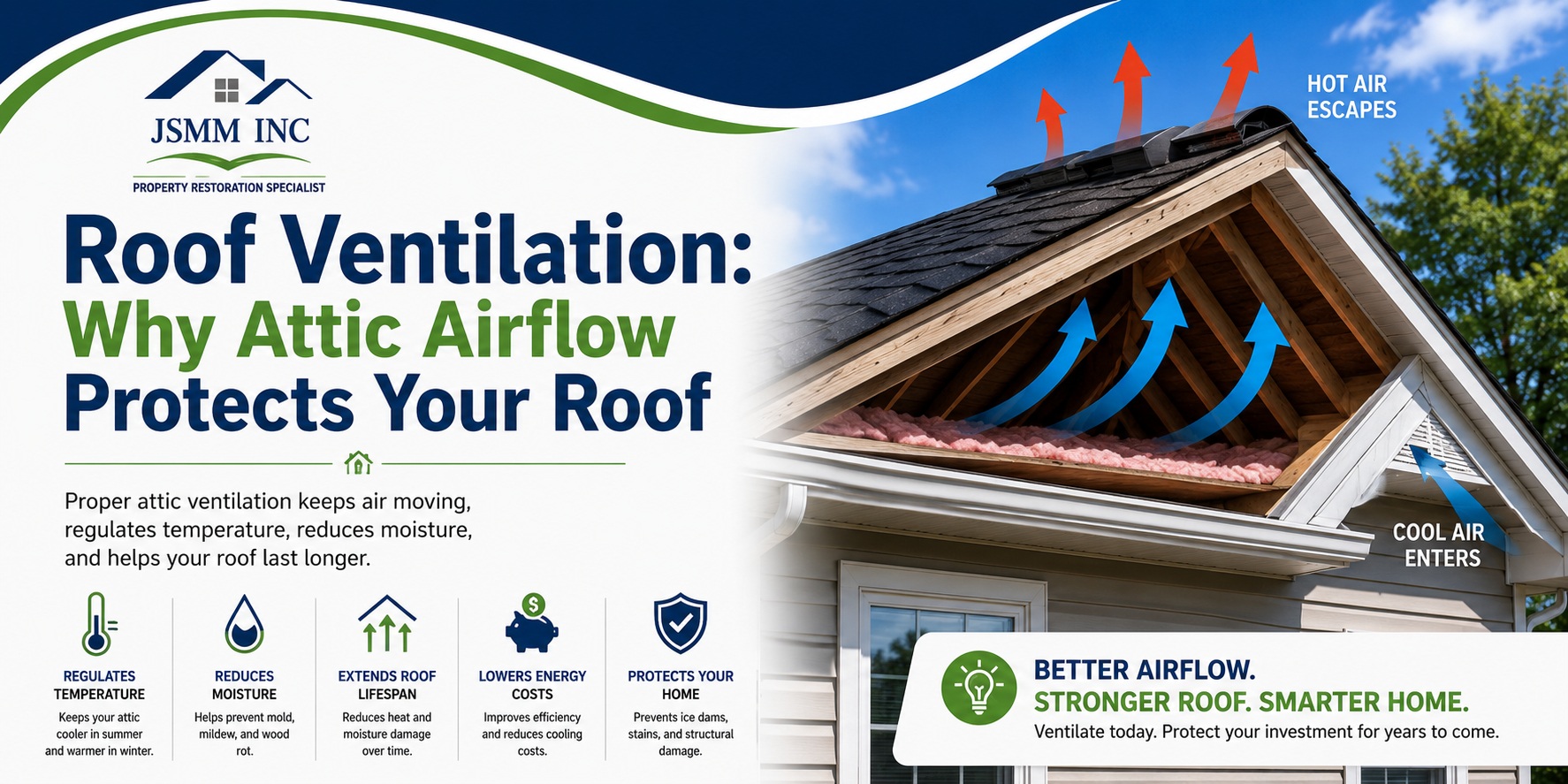
Roof ventilation is the flow of fresh air in and out of your attic. Cool air enters near the bottom edge of the roof, and warm, damp air leaves near the top. When that airflow works, your attic stays dry and close to the outdoor temperature. When it stalls, heat and moisture build up under the roof and damage it from the inside.
Most homeowners in Highland Park never think about their attic until a problem appears. A water stain on the ceiling. A shingle that curls too soon. An upstairs bedroom that bakes every July. Very often, poor attic airflow is the hidden cause.
At JSMM Inc., we have spent more than 30 years on roofs across the North Shore, and we see the same pattern again and again. A well-vented roof lasts longer, stays drier, and costs less to run. This guide explains how attic airflow protects your roof, what a poorly vented attic looks like, and how much ventilation your home really needs.
Table of Contents
ToggleNeed a Reliable Roofing Expert?
Get a FREE roof inspection from JSMM INC. We provide trusted roofing and restoration services across Highland Park and the North Shore.
Contact Us 📞 (847) 410-7060What Is Roof Ventilation, Exactly
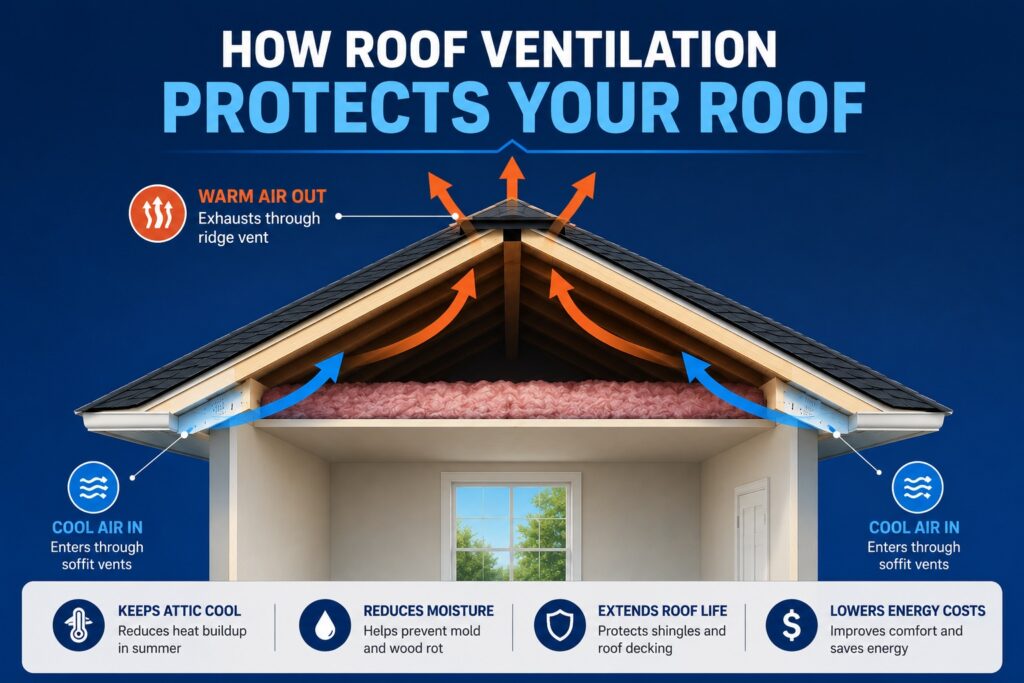
Roof ventilation is a simple loop. Fresh air comes in through intake vents at the lower edge of the roof, usually in the soffits under the eaves. Warm air leaves through exhaust vents near the peak, most often a ridge vent that runs along the top.
This works because hot air rises. As warm air escapes at the top, it pulls cooler air in at the bottom. The result is a steady, natural flow that never stops moving.
A good system keeps intake and exhaust in balance. If one side is blocked or missing, the whole loop weakens. Balance matters more than the total number of vents.
How Does Attic Airflow Protect Your Roof?
Good airflow does four quiet jobs, all year round.
- It removes summer heat. Attic temperatures can top 130 degrees on a hot day. Venting that heat keeps your shingles cooler and your air conditioner from working overtime.
- It clears out moisture. Showers, cooking, and laundry send damp air into the attic. Ventilation carries it out before it turns into mold or wood rot.
It protects your shingles. Trapped heat bakes shingles from below and shortens their life. Steady airflow helps them reach their full shingle lifespan.
- It fights winter ice dams. A warm attic melts snow on the roof, which refreezes at the edge. Cool, even airflow keeps the whole roof one temperature.
Ventilation is not an add-on. It is part of how a roof is built to work, which is why we plan it during every roof installation in Illinois.
How Does Roof Ventilation Affect Your Energy Bills ?
A hot attic does not stay in the attic. That heat pushes down into your bedrooms and makes your air conditioner run longer. In an older North Shore home, that can add real money to your summer bills.
Good airflow lets the heat escape before it reaches your living space. Your rooms feel cooler, your cooling system rests more, and your equipment lasts longer. The same airflow helps in winter by keeping the attic dry, which protects your insulation and its R-value.
None of this needs a big remodel. In many homes, clearing blocked soffits and adding a proper ridge vent is enough to change how the whole attic feels within a day or two.
What Happens When a Roof Is Poorly Vented?
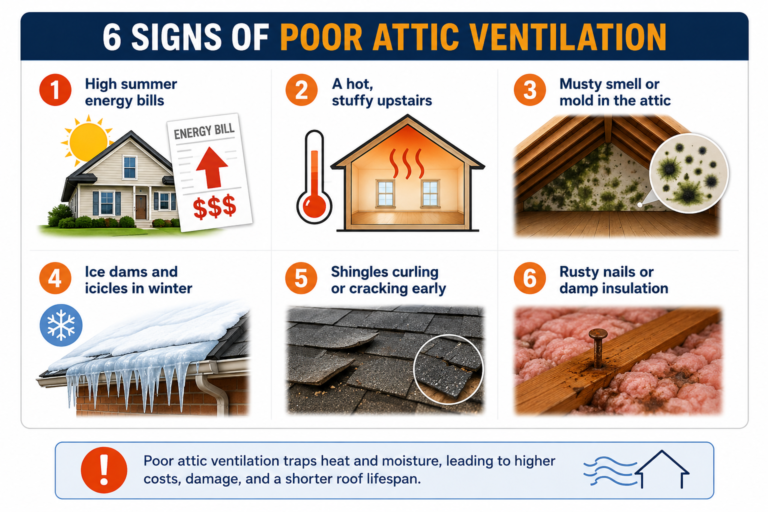
A blocked or unbalanced attic sends clear warning signs. Most are easy to spot once you know what to look for.
- Higher energy bills in summer, as trapped heat pushes into your home.
- A hot, stuffy upstairs even when the rest of the house feels fine.
- A musty smell or visible mold in the attic.
- Ice dams and icicles along the roof edge each winter.
- Shingles that curl, crack, or fall apart earlier than expected.
- Rusty nails or damp insulation in the attic.
Any one of these can point to an airflow problem, and several together usually confirm it. Left alone, poor ventilation leads to leaks, sagging roof decking, and early roof failure.
Don't Wait Until It's Too Late!
If you spot any of these signs, don't wait for a leak. Book a roof repair check with our team and catch small problems before they turn into costly repairs.
Contact Us 📞 (847) 410-7060How Much Ventilation Does Your Roof Need?
There is a simple guideline roofers use. For every 300 square feet of attic floor, you want about 1 square foot of vent space. Homes with a vapor barrier can often use half of that.
Just as important, split that space evenly. Aim for about half intake at the soffits and half exhaust at the ridge. A roof with plenty of ridge vents but blocked soffits will not breathe well. When the two sides match, the air keeps moving on its own, with no fans or power needed.
Older Highland Park homes are common culprits. Insulation gets stuffed into the eaves over the years and slowly chokes off the intake. A quick attic check during a roof inspection usually finds it.
What Are the Main Types of Roof Vents?
A few vent types do most of the work on Illinois homes.
- Ridge vents run along the peak and give even, quiet exhaust.
- Soffit vents sit under the eaves and pull in fresh air.
- Box and turbine vents handle exhaust on roofs without a long ridge line.
- Gable vents move air through the ends of the attic.
Your roof may use one type or a mix. The right choice depends on your roof shape, which we sort out during a roof replacement in Illinois or a fresh install.
Why Does Ventilation Matter So Much in Illinois?
North Shore weather is hard on roofs. Summers are hot and humid, and winters bring heavy snow and long freezes. Both extremes punish an attic that cannot breathe.
In winter, a warm attic is the main reason ice dams form and push water under the shingles. Balanced airflow is your best defense, and it pairs well with simple steps to prevent ice dams this winter.
Skipping ventilation is also one of the most common roof installation mistakes we get called in to fix. It is far cheaper to vent a roof correctly the first time than to repair the damage later.
How Does JSMM Check Your Attic Airflow ?
Our process is simple and clear. We look at your roof, then we look inside your attic, because airflow problems hide on both sides.
- We check the intake at the soffits and make sure insulation has not blocked it.
- We check the exhaust at the ridge and confirm the two sides are balanced.
- We look for moisture, mold, rusted nails, and daylight where it should not be.
Then we explain what we find in plain language, as part of our residential roofing services. If airflow problems have already caused damage, we also handle roof repair in Highland Park and the surrounding North Shore.
Frequently Asked Questions
Can I add roof vents to my existing roof?
Yes. In many cases a roofer can add ridge or soffit vents without a full tear-off. An attic check shows what your roof needs.
Does more ventilation make my house colder in winter?
No. Attic ventilation moves air through the attic, not your living space. Good insulation keeps your rooms warm while the attic stays cool and dry.
How do I know if my attic is properly vented?
Look for even attic temperatures, no musty smell, and no ice dams in winter. A professional inspection gives you a clear answer.
Can poor ventilation void my shingle warranty?
Sometimes. Many shingle makers require proper attic ventilation, so a poorly vented roof can affect a future claim.
Is roof ventilation worth the cost?
For most homes, yes. It is a small cost that protects a much larger investment in your roof, your insulation, and your energy bills. Compared with a new roof or a mold cleanup, good ventilation is one of the cheapest ways to add years to your roof.