

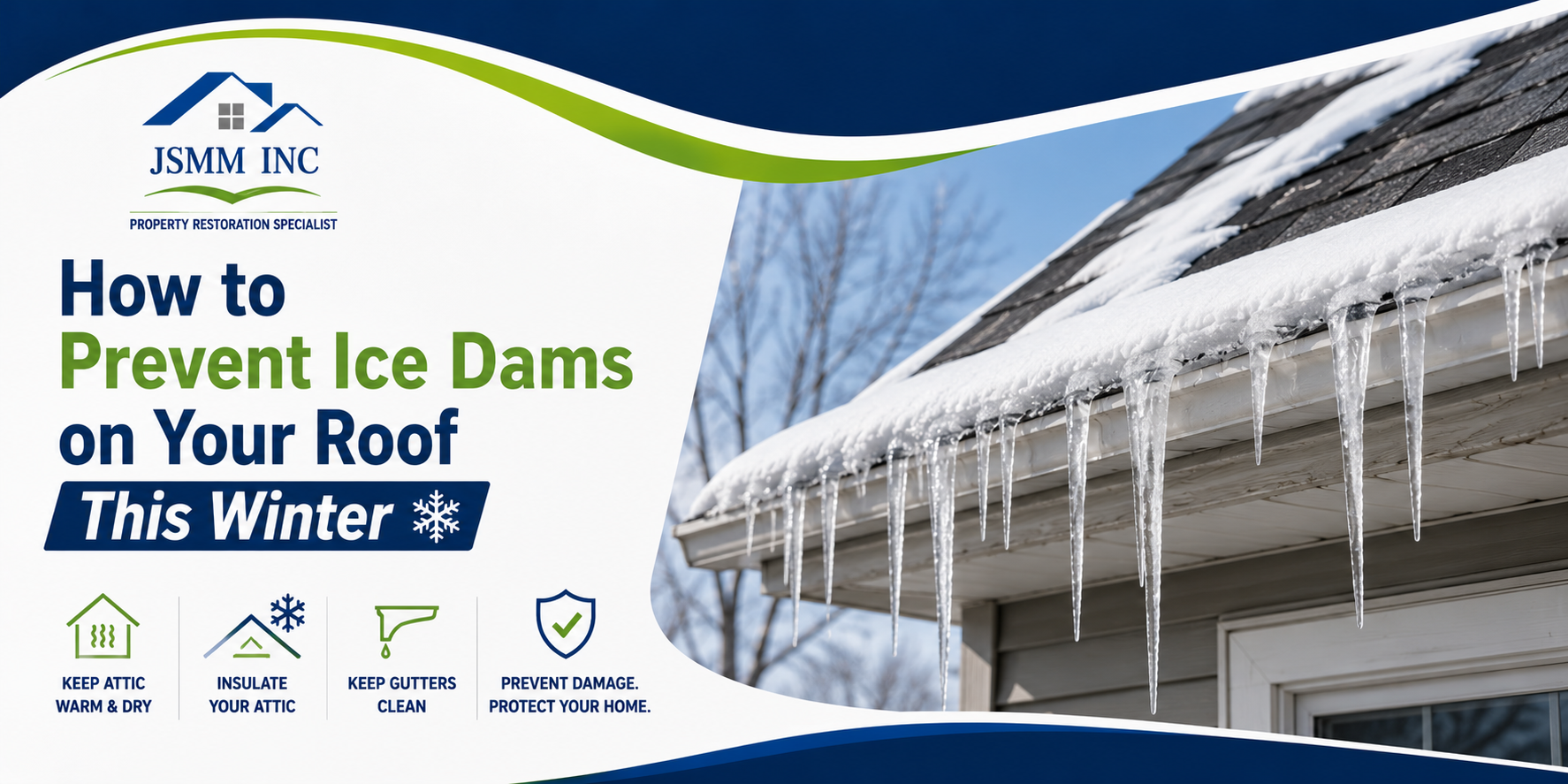
Ice dams are one of the most common causes of roof and interior damage for Illinois homeowners every winter.
They form quietly, often overnight, and by the time you notice water staining on your ceiling, the damage is already done.
This guide explains how ice dams form, what you can do before winter to stop them from happening, and what to do if one is already on your roof.
| Serving Highland Park, Northbrook, and Glenview, IL. Contact Us Today |
Table of Contents
TogglePART 1 OF 3| — HOW ICE DAMS FORM AND WHY THEY CAUSE DAMAGE
Understanding the Problem— Before You Fix It
What an Ice Dam Actually Is
An ice dam is a ridge of ice that forms at the edge of your roof and blocks melting snow from draining off properly.
As water backs up behind the dam, it sits on the roof surface and eventually seeps under the shingles. From there it enters the roof deck, the insulation, and the interior walls.
The result is water damage that looks like it came from a plumbing leak, with the source being the roof and the damage often showing up in ceilings and top-floor walls.
Why They Form in Illinois
Ice dams are a heat problem, not just a cold problem.
They form when the upper roof is warm enough to melt snow while the eaves stay below freezing.
The heat source is almost always the attic. Warm air escaping from the living space heats the roof deck from below, melting snow even when outdoor temperatures are well below freezing.
This is why ice dams are a symptom of an insulation or ventilation problem, not just a weather event.
What Damage They Cause
Water backed up behind an ice dam infiltrates at the most vulnerable points: unsealed nail penetrations, gaps around flashing, and low-slope sections where shingles do not shed water as aggressively.
Once inside, it saturates insulation, rots roof deck boards, stains ceilings, and can promote mold growth inside wall cavities.
If your roof has already taken ice dam damage this winter, our roof repair team in Highland Park can assess the damage and provide a written repair estimate.
Ice dam damage in your home? We can help. Contact Us Today |
PART 2 OF 3 | HOW TO PREVENT ICE DAMS BEFORE WINTER
Five Prevention Steps That Actually Work
STEP 01 Add Attic Insulation to the Right Depth The single most effective ice dam prevention measure is keeping your attic cold by sealing heat inside the living space below it. In Illinois, attic insulation should reach R-49 to R-60 to meet current energy code standards. Most older homes fall well short of that, especially around light fixtures, hatches, and plumbing penetrations. Adding insulation to an under-insulated attic not only prevents ice dams but reduces heating costs and extends shingle lifespan by reducing the heat cycle on the roof deck. |
STEP 02 Seal All Air Leaks Into the Attic Insulation alone is not enough if warm air from the living space is still leaking into the attic. Common air leak points include recessed light fixtures that penetrate the ceiling, attic hatches without weatherstripping, gaps around plumbing and electrical penetrations, and the tops of interior partition walls. Air sealing is a different task from insulation. It involves foam, caulk, or rigid board to close the actual gaps before insulation is added on top. |
STEP 03 Improve Attic Ventilation Proper ventilation keeps the attic temperature close to the outdoor air temperature in winter. This means continuous airflow from soffit vents at the eaves up through ridge vents at the peak. When this path is blocked by insulation or debris, warm air gets trapped and the roof deck heats unevenly. Poor ventilation also shortens shingle lifespan in summer. Our roof repair services in Illinois include ventilation assessments as part of any roof inspection. |
STEP 04 Install Ice and Water Shield During Any Roof Work Ice and water shield is a self-adhering membrane installed along the eaves before shingles go on. It creates a waterproof barrier in the zone where ice dams are most likely to back water up under the shingles. Illinois building code requires ice and water shield on the first few feet of any new roof installation. If your current roof was installed before this became standard practice, your eaves may not have this protection. |
STEP 05 Keep Gutters Clear Before the First Freeze Clogged gutters make ice dam conditions worse. When gutters are full of leaves, water cannot drain even when it does manage to flow off the eave. Clear your gutters fully before temperatures drop consistently below freezing, which in Illinois typically means early November. An autumn roof inspection catches gutter issues, missing flashing, and other vulnerabilities before winter. Our guide on how often you should get a roof inspection explains when seasonal checks make the most sense. |
PART 3 OF 3 | — WHAT TO DO IF YOU ALREADY HAVE AN ICE DAM
Safe Removal and Whento Call a Professional
What Not to Do
Do not use a hammer, chisel, or axe to break up an ice dam. This damages shingles and flashing and often creates more entry points for water than the dam itself.
Do not pour hot water directly onto the dam. It refreezes quickly and adds weight to an already stressed area of the roof.
Do not go on the roof yourself in icy conditions. Falls from residential roofs during ice dam removal are a serious injury risk every Illinois winter.
Safe Steps You Can Take Yourself
Use a roof rake to pull snow off the lower sections of the roof from the ground. Removing the snow source stops the dam from growing.
Roof rakes with telescoping handles let you clear snow from single-story eaves safely without climbing.
If water is actively entering the interior, place buckets and move valuables away from the affected area. Document everything with photos before any cleanup for insurance purposes.
When to Call a Roofing Contractor
Call a contractor if the dam is large, if water is already inside the home, or if the ice has built up to the point where the roof edge is stressed.
Professional ice dam removal uses steam, not pressure washing or chipping. Steam melts the ice without damaging the shingles and allows the contractor to clear the dam safely.
After the dam is cleared, have the roof inspected for shingle and flashing damage. Our roof repair and replacement services in Illinois cover post-ice-dam assessments and repairs.
Checking for Interior Damage After an Ice Dam
Once the dam is gone, inspect your attic for wet insulation, staining on roof deck boards, and any signs of mold.
Check ceilings on the top floor for bubbling paint, soft spots, or discoloration. These are signs water has already entered the structure.
If you find water damage inside the home, our roof repair cost and timeline guide for Illinois gives you a realistic picture of what repairs will cost before you contact a contractor.
The HVAC Connection
Ice dams are fundamentally a thermal problem. If your attic is overheating in winter, your HVAC system distribution, duct leaks in the attic, or furnace placement may be contributing factors.
Our HVAC services in Highland Park can assess whether your heating system is contributing to attic heat gain and address the source of the problem, not just the symptom.
Long-Term Protection for Your Roof
The only permanent solution to ice dams is addressing the heat source causing them.
Temporary measures like roof rakes and calcium chloride sock treatments manage the problem each winter. Proper attic insulation, air sealing, and ventilation eliminate it.
If your roof sustained damage this season or shows signs that age and weather have weakened it, our signs your roof needs replacement guide helps you assess whether repair or a full replacement makes more sense.
For Highland Park and North Shore homeowners who want a licensed contractor to assess both the roof and attic condition together, our roofing company Highland Park page covers the full scope of what JSMM-INC offers.
Quick Tip Act Before the First Freeze, Not After Attic insulation, air sealing, and gutter cleaning are all far easier to address in September and October than in January. Most ice dam damage happens in the first significant winter weather event because prevention work was put off. Schedule an autumn roof and attic check before temperatures drop and you will head into winter with confidence. |
Frequently Asked Questions
What causes ice dams in Illinois?
Ice dams form when heat escaping from the attic warms the roof deck and melts snow above, which then refreezes at the cold eave edge. The root cause is almost always inadequate attic insulation or air leaks from the living space.
Can new gutters prevent ice dams?
No. Gutters do not cause ice dams and replacing them will not stop them. Ice dams form at the roof surface before water reaches the gutter. The fix is attic-based, not gutter-based.
Is it safe to use a roof rake?
Yes, when used from the ground with an appropriate telescoping handle. Do not go onto the roof to use it, and do not use metal rakes that can catch on shingles.
Does homeowner insurance cover ice dam damage?
Most standard homeowner policies cover damage caused by ice dams. Document everything before any cleanup and file the claim as soon as possible.
Does JSMM-INC repair ice dam damage in Highland Park?
Yes. JSMM-INC assesses and repairs roof damage caused by ice dams across Highland Park, Northbrook, Glenview, and the wider North Shore area.
- Licensed Illinois contractor — License #104.019924
- BBB A+ rated with 5.0/5 customer satisfaction
- 24/7 emergency repair response
- Free on-site diagnostic inspection
- Full insurance documentation and claim management
Also serving: Northbrook roof repair, Glenview roof repair, Winnetka roof repair, and Lake Forest roof repair.
Get It Looked At — Before It Gets Bigger
JSMM Inc. has been handling commercial roof leak detection and repair across the North Shore and greater Chicago area for over 30 years. We offer free inspections and can typically get to an active situation within 24 hours.
Contact us here or call (847) 410-7060 — we’re available around the clock for emergencies. Our office is at 1542 Old Skokie Valley Rd, Highland Park, IL 60035.
Don’t just take our word for it — check out what our customers are saying.” → Link text: Read our Google reviews
About the Author
Janathan is a licensed roofing repair specialist at JSMM Inc with decades of field experience in residential and commercial roofing across Illinois. He leads the company’s diagnostic inspection process and storm damage documentation program.