


The soffit is the panel under your roof overhang, facing the ground, and the fascia is the board along the front edge of the roof that holds the gutters. Both protect the roof edge, support ventilation, and stop water and pests from getting into your home, yet most homeowners never think about them until something goes wrong.
Damage to either one can lead to rot, leaks, and expensive repairs. Knowing what they are and what to watch for makes them easy to protect.
This guide explains both parts, where they sit, what they do, and when to fix them. They work closely with the roof’s ventilation system, which moves air through the soffit to keep the attic dry.
Table of Contents
ToggleWhat Is a Soffit?
The soffit is the flat panel that covers the underside of the roof overhang. When you stand back and look up at the eaves of your home, the soffit is the surface you see looking down at you.
Soffits are usually made from vinyl, aluminum, or wood. Most have small slots or perforations cut into them, and those openings are the key to healthy attic airflow.
Fresh, cool air enters the attic through these soffit vents, travels up under the roof, and exits through the ridge or roof vents. Without that flow, heat and moisture build up and shorten the life of the roof above.
In Illinois summers, a well-ventilated attic runs far cooler, which eases the load on air conditioning and slows the aging of the shingles. In winter, even airflow prevents ice dams from forming at the eaves.
What Is a Fascia?
The fascia is the long board that runs along the front edge of the roof, just below the shingles. It is the vertical face of the eave, the part that your gutters attach to.
It seals the gap between the roof edge and the home, protecting the ends of the rafters and the edge of the roof deck from rain. When it fails, water gets into the roof structure.
A compromised fascia often leads to deck rot. Our guide on what is roof decking and when it needs replacing explains how water in the edge boards spreads to the wooden base of the roof.
What Are Soffit and Fascia Made Of?
The material matters for how long each part lasts and how much care it needs.
Wood was the original choice, and many older homes still have it. It looks natural and paints well, but it absorbs water and can rot. Regular painting and prompt repairs are needed to keep it sound.
Vinyl and aluminum are common on newer homes. Both resist moisture better than wood, require less maintenance, and last longer without painting. Aluminum is especially strong along the fascia, where gutter weight is a factor.
Fiber cement sits between the two. It holds up well in wet climates, takes paint, and will not rot, though it costs more than vinyl. When replacing damaged sections, matching the existing material makes for a cleaner finish and avoids the need to repaint the whole run.
Soffit vs Fascia at a Glance
People mix these two up constantly, but they are in different positions and do different jobs. Here is a clear look at both.

Think of it this way: the soffit faces down and breathes, the fascia faces out and holds. Together they close off the roof edge and let it do its job properly.
Why Do Soffit and Fascia Get Ignored?
They are easy to miss. The soffit is overhead and often looks clean from the ground. The fascia is hidden behind the gutter. Neither is as visible as the shingles, and neither causes a dramatic leak the moment something goes wrong.
Instead, the damage is quiet: rot that spreads slowly, water that drips behind the gutter for months, attic moisture that builds up through the winter. By the time a homeowner notices, the repair is already larger than it needed to be.
The good news is that catching it early is easy. Five minutes looking up at the eaves on a dry day is often enough to spot the signs before a small problem turns expensive.
Year-round care matters here. Including the soffit and fascia in your annual roof maintenance checklist keeps small problems from growing.
What Happens When Soffit or Fascia Are Damaged?
Neither part is structural, but both are protective, and when they fail the roof and home pay the price.
Damaged fascia lets water reach the roof deck and the wall behind it. The wood rots, the gutters pull loose, and eventually water finds its way inside. Damaged soffit lets pests into the attic and blocks airflow, raising attic temperatures and wearing shingles faster.
Blocked soffit vents are one of the less obvious causes of early roof failure. Our guide on the most common causes of roof leaks covers how restricted airflow can lead to leaks and moisture damage.
Signs of Soffit and Fascia Damage
Most problems are visible from the ground on a clear day. Walk around the home and look up at the eaves. Here is what to watch for.
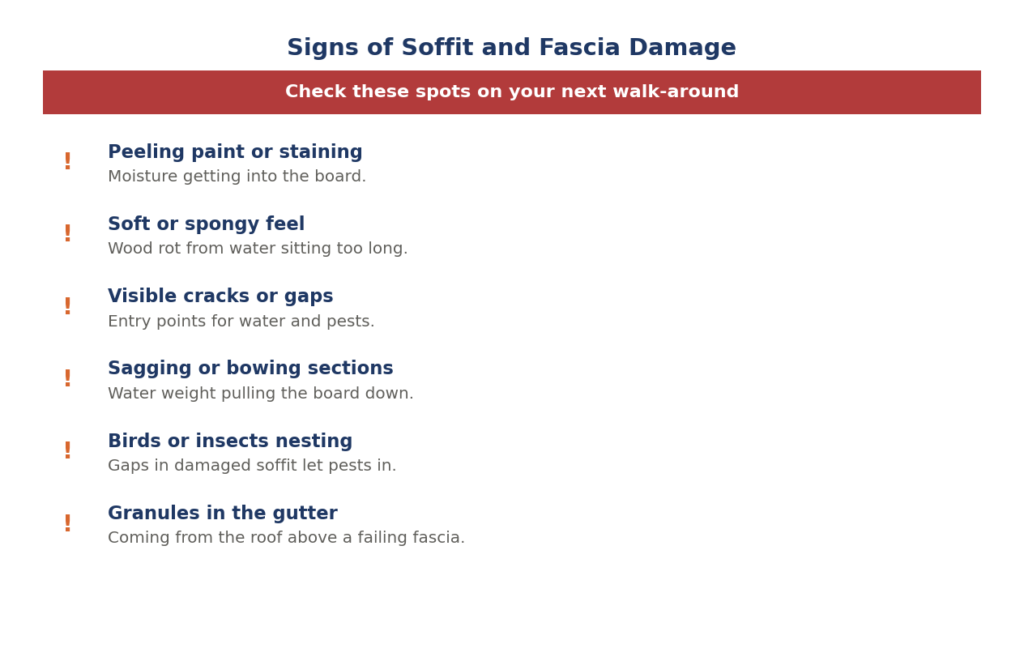
Peeling paint, staining, and soft wood are the earliest signs. Sagging sections and birds or insects nesting near the eaves point to gaps. Granules in the gutter beneath the fascia can mean the roof edge above it has lost protection.
If you see water stains inside the home too, check what your ceiling stains are telling you before deciding the source.
Soffit, Fascia, and Ice Dams in Winter
Illinois winters put the fascia and soffit under real stress. Clogged gutters overflow and soak the fascia. Ice builds up at the eave. Water has nowhere to go but into the wood.
There is also a pest angle in winter. Mice and other animals look for warm gaps as temperatures drop, and damaged soffit is an easy entry point into the attic. Fixing gaps before the first hard freeze keeps both water and wildlife out.
A fascia that is already weakened makes ice-dam damage worse. Our guide on how to prevent ice dams covers the full set of steps that protect the roof edge in cold weather.
When Should You Repair or Replace Them?
Surface peeling and minor stains are often a painting or sealing job. Soft, spongy, or visibly rotted sections need full replacement. The same applies when pests have chewed through or birds have carved out a nest.
Replacement is quicker than it sounds. A roofer can swap out a damaged fascia board in a morning, and new soffit panels are easy to cut and fit. The key is acting before the rot spreads to the deck or the wall.
Soffit and fascia are often replaced alongside a full roof. Our roof replacement service in Illinois handles the complete edge — deck, fascia, and drip edge — so nothing is left exposed.
Small repairs and painting are reasonable DIY jobs on a single-storey home. Multi-storey or widespread rot is a job for a professional roofer, both for safety and to make sure the deck and wall behind the fascia are sound before anything goes back on.
Frequently Asked Questions
What is the difference between soffit and fascia?
The soffit is the panel under the roof overhang, facing the ground. The fascia is the vertical board along the front of the roof that holds the gutters. Soffit handles ventilation; fascia handles edge protection.
Why do soffit and fascia matter?
Soffit keeps airflow moving through the attic so heat and moisture do not build up. Fascia seals the roof edge and supports the gutters. Both protect the home from water, rot, and pests.
What causes soffit and fascia to rot?
Water is the main cause. Overflowing gutters soak the fascia, and damaged soffit lets rain in. Once wood stays wet it rots, and the damage spreads if left.
How often should soffit and fascia be inspected?
Once a year, and after any big storm. A proper roof inspection covers the fascia, soffit, and every other part of the roof edge, so nothing is missed.
Do roofing warranties cover soffit and fascia?
Material warranties usually cover the shingles only, not the edge components. Workmanship warranties may cover installation of the fascia and soffit. Our guide on roofing warranties explains what each type covers and what to check.