
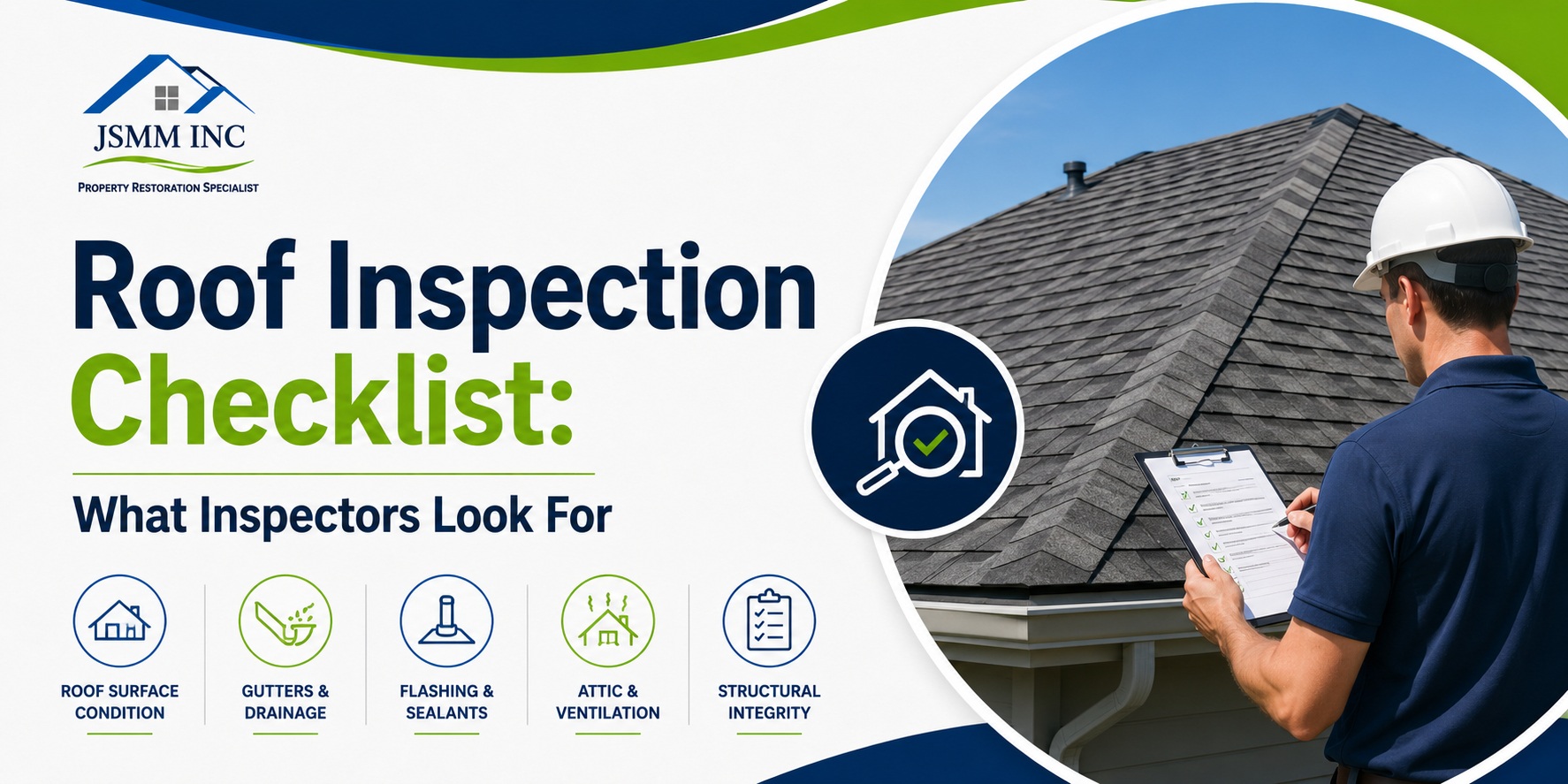
Most homeowners know they should get their roof inspected. Very few know what actually happens during one. A professional inspection is not a quick look from the driveway. A licensed inspector works through the roof systematically, checking every component that keeps water out and your structure intact. This guide walks through the full process from the inspector’s point of view, so you know exactly what you are paying for and what the report means when it lands in your inbox.
Serving Highland Park, Northbrook, and Glenview, IL. Contact Us Today |
Table of Contents
TogglePART 1 OF 3 — THE EXTERIOR INSPECTION
What Inspectors Check — on the Outside
CHECK 01 The Roof Surface Inspectors start with the surface itself. On residential roofs, that means shingles. On commercial properties, it is usually a flat membrane system. For asphalt shingles, they look for curling, cupping, or buckling. Each one signals the shingle is losing its bond with the deck below. They also check for missing shingles, blistering, and granule loss. When shingles shed granules heavily, the asphalt layer is exposed and UV deterioration speeds up fast. If you want to know the warning signs before calling anyone, our guide on signs your roof needs replacement covers each indicator in plain language. |
CHECK 02 Flashing Flashing is the metal material sealed around chimneys, vents, skylights, and wall joints. It is the most common source of roof leaks. Inspectors examine every piece for rust, lifting, or gaps. They pay particular attention to step flashing along dormers, counter flashing at chimneys, and valley flashing where two slopes meet. A gap in any of these areas creates a direct path for water into the deck and structure below. |
CHECK 03 Gutters and Drainage Inspectors check gutters for separation from the fascia, sagging, and heavy granule buildup at the bottom. Granules in the gutters are evidence of surface wear. The more granules present, the faster the shingles are degrading. On flat commercial roofs, drainage is even more critical. Blocked drains cause standing water that adds structural load and breaks down the membrane. |
PART 2 OF 3 | PENETRATIONS, STRUCTURE, AND THE ATTIC
The Four Areas That Show Structural Health
CHECK 04 Vents, Pipes, and Penetrations Every pipe, vent, and skylight is a potential water entry point. Inspectors check each one individually. They examine pipe boots for cracks, vent collars for proper sealing, and skylight frames for leaking or condensation. Ridge vents and soffit vents are checked for blockage. Blocked vents cause ice dams in winter and shingle baking in summer. |
CHECK 05 The Roof Deck The deck is the plywood or OSB structure under the shingles. From outside, inspectors look for uneven, sagging, or spongy sections. From inside the attic, they can see the deck directly and check for staining, rot, or daylight coming through gaps. A solid surface over a damaged deck still needs full replacement, not a patch. This is why attic access is a non-negotiable part of a complete inspection. |
CHECK 06 The Attic The attic inspection is often the most revealing part of the whole process. Inspectors check for proper airflow between soffit vents at the eaves and ridge vents at the top. Without this cross-ventilation, heat and moisture build up and damage both the deck and the shingles above. They look for staining on rafters and decking, and check whether insulation is blocking the soffit vents. If mold or moisture is present, they identify whether the source is a leak or a ventilation failure, because the fix is different for each. |
CHECK 07 Fascia, Soffit, and Eaves The fascia is the board along the roof edge that holds the gutters. The soffit is the underside of the overhang. Both are checked for rot, pest damage, and moisture. Inspectors also examine the drip edge, the metal strip at the very roof edge that directs water into the gutter. A missing drip edge lets water run behind the gutter and rot the fascia. On commercial properties, parapet walls around the roof perimeter are inspected here. Cracks in parapet caps are a frequent cause of interior water damage below. |
Need a professional roof inspection in your area? Contact Us Today |
Which Roof Is Right for— WHAT COMES NEXT
Understanding Your Reportand Your Options
What a Good Inspection Report Includes
A thorough report identifies every problem, classifies each by severity, and recommends a specific action for each item.
Severity falls into three tiers: immediate repairs, monitored items, and long-term planning notes.
Every problem area should have a photograph. Dated photo documentation matters if you need to file an insurance claim later.
Repair or Replace After Inspection?
Minor flashing issues or a handful of damaged shingles are a repair. A roof where damage covers more than 25 to 30 percent of the surface, or where the deck is compromised, is a replacement.
Our guide on roof repair vs. roof replacement walks through exactly how to use your inspection report to make that call.
For cost benchmarks, our roof repair cost and timeline guide for Illinois helps you evaluate whether a contractor’s quote is fair before you sign.
How Often Should You Get an Inspection?
For most Illinois homes, every two to three years is a reasonable baseline. After any significant hail or wind event, schedule one regardless of when the last inspection was.
Our guide on how often you should get a roof inspection covers the timing question in full, including when annual inspections make sense for older roofs.
For commercial properties, inspection frequency is typically higher. Our commercial roof repair team in Illinois can set up a regular inspection schedule for any business property.
Book an Inspection in Highland Park or the North Shore
JSMM-INC performs residential and commercial inspections across Highland Park, Northbrook, Glenview, and surrounding communities.
Every inspection covers all seven areas listed in this guide, with a written report and photos included.
You can see the full scope of our services on our roofing company Highland Park page, or contact us to schedule.
Quick Tip Inspect After Every Major Storm After any storm with hail or winds above 50 mph, schedule a professional inspection within two weeks. Damage that looks minor from the ground is often significant at the surface level. Catching it early keeps repair costs low and keeps your insurance claim timeline clean. |
Frequently Asked Questions
How long does a roof inspection take?
Most residential inspections take 45 minutes to 2 hours depending on roof size, pitch, and whether the attic is accessible.
Do inspectors walk on the roof?
Yes, when it is safe to do so. A ground-only inspection misses surface-level shingle damage, flashing gaps, and deck issues.
Can an inspection find damage not visible outside?
Yes. Attic inspections regularly reveal deck rot, mold, and moisture damage that show no exterior signs until they become structural problems.
Should I get an inspection before selling my home?
Strongly recommended. A pre-sale inspection protects you from post-sale disputes and gives buyers confidence in the property.
Does JSMM-INC provide written inspection reports?
Yes. Every JSMM-INC inspection includes a written report with photographs, severity classifications, and clear next-step recommendations.
- Licensed Illinois contractor — License #104.019924
- BBB A+ rated with 5.0/5 customer satisfaction
- 24/7 emergency repair response
- Free on-site diagnostic inspection
- Full insurance documentation and claim management
Also serving: Northbrook roof repair, Glenview roof repair, Winnetka roof repair, and Lake Forest roof repair.
Get It Looked At — Before It Gets Bigger
JSMM Inc. has been handling commercial roof leak detection and repair across the North Shore and greater Chicago area for over 30 years. We offer free inspections and can typically get to an active situation within 24 hours.
Contact us here or call (847) 410-7060 — we’re available around the clock for emergencies. Our office is at 1542 Old Skokie Valley Rd, Highland Park, IL 60035.
Don’t just take our word for it — check out what our customers are saying.” → Link text: Read our Google reviews
About the Author
Janathan is a licensed roofing repair specialist at JSMM Inc with decades of field experience in residential and commercial roofing across Illinois. He leads the company’s diagnostic inspection process and storm damage documentation program.