

Yes, you can often put a new roof over an old one. This is called an overlay, and it costs less and goes faster than a full tear-off. But an overlay only works on a sound roof with one existing layer, and it hides problems a tear-off would catch. For most homes, a tear-off is the better long-term choice.
Both methods give you a new roof surface, but they are very different underneath. Choosing the right one saves you money and trouble down the road.
This guide explains overlay and tear-off in plain terms, so you can decide. If you are still weighing whether you even need a new roof, our guide on roof repair versus replacement is a good place to start.
Table of Contents
ToggleWhat Is a Roof Overlay?
A roof overlay means installing new shingles directly over the old ones. The existing roof stays in place, and the new layer goes right on top.
It is faster and cheaper because there is no tear-off, no disposal, and less labor. For a homeowner on a tight budget with a roof that is still in fair shape, that can sound appealing.
The catch is what an overlay hides. Because the old roof stays on, no one sees the deck or the layers underneath, so any problems there stay covered up and keep getting worse.
What Is a Tear-Off?
A tear-off means removing the entire old roof down to the wooden deck, then building a new roof from scratch. It is the standard, thorough way to replace a roof.
With the old roof gone, the crew can see and fix the deck, add fresh underlayment, and start with a clean, flat surface. Nothing is hidden.
It costs more and makes more mess, since the old material has to be hauled away. But for a roof that is old or has hidden problems, that thoroughness is exactly what you want.
That clean start matters. Our guide on roof decking and when it needs replacing explains why seeing the deck is so important for a lasting roof.
Overlay vs Tear-Off: The Key Differences
The two methods differ in cost, lifespan, and what they reveal. Here is a simple side-by-side look.
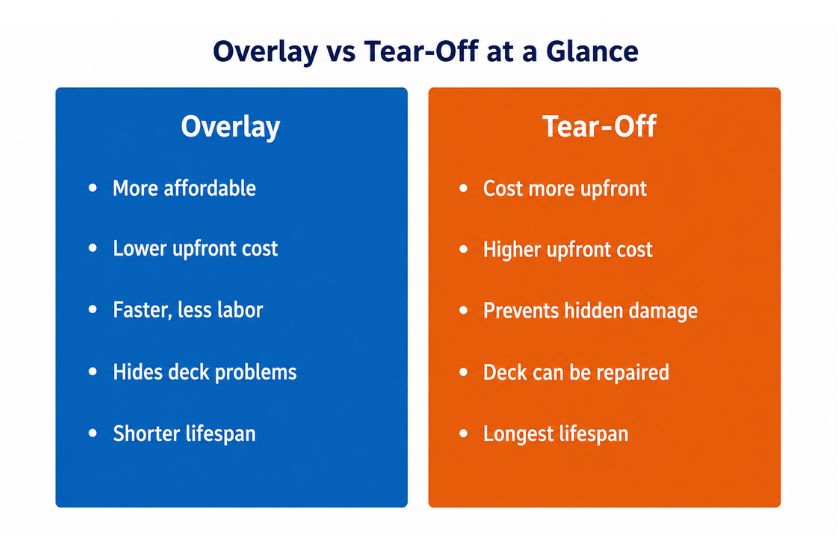
An overlay costs less and goes faster, but it hides deck problems and does not last as long. A tear-off costs more and takes longer, but it reveals hidden damage and gives the longest new lifespan.
In short, an overlay saves money now, and a tear-off saves money over the full life of the roof.
The right answer depends on your roof and your plans. If you are staying in the home for years, the tear-off usually wins. If money is very tight and the roof is sound, an overlay can bridge the gap.
Can You Always Do an Overlay?
No. There are clear rules and limits. An overlay is only an option in certain cases, and it is often not allowed at all.
Most building codes allow a maximum of two roof layers. If your roof already has two layers, a tear-off is required by law, no exceptions. The roof also has to be sound, with no rot, sagging, or major damage underneath.
Local rules matter here. Our guide on roof replacement permits in Illinois covers the code side, which often decides whether an overlay is even possible.
When Does an Overlay Make Sense?
An overlay is not always the wrong choice. In the right situation, it can be a reasonable, budget-friendly option.
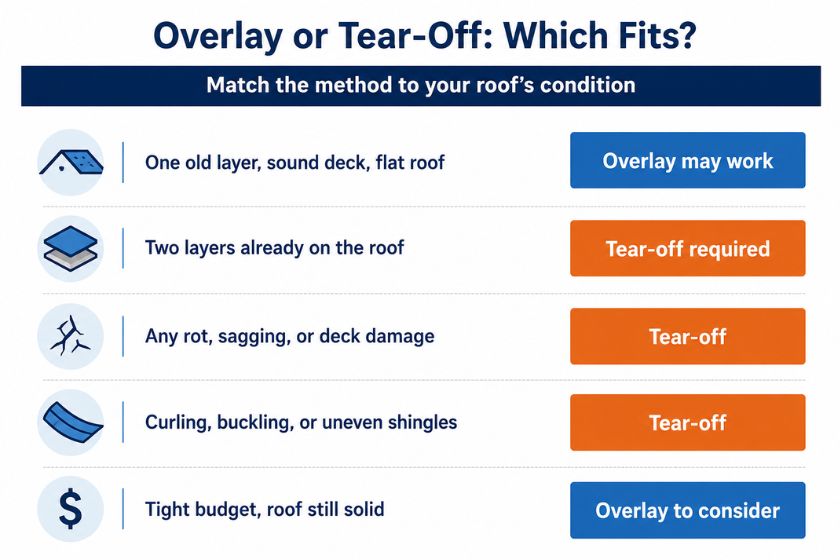
An overlay can work when the roof has just one existing layer, the deck is solid, the shingles lie flat, and the budget is tight. If all of those are true, an overlay may buy you good years at a lower cost.
If any of them is not true, a tear-off is the safer call. One rotted board or a second layer already in place tips the decision to tear-off.
Why Most Roofers Prefer a Tear-Off
Given the choice, most experienced roofers recommend a tear-off. There are good reasons for that.
A tear-off lets them fix the deck, install proper underlayment, and lay a flat, clean roof that reaches its full lifespan. It also comes with a better warranty, since the whole system is new.
There is also pride in the work. A good roofer knows an overlay can hide a problem that will call them back in a year. A clean tear-off means the job is done right the first time.
Underlayment is one of the layers an overlay skips. Our guide on roof underlayment and why it matters shows what an overlay leaves out. A tear-off also lets the crew check the attic ventilation that protects the roof from below.
Does an Overlay Affect Your Warranty?
This is a point many homeowners miss. An overlay can limit or shorten your new roof warranty.
Some shingle makers reduce their warranty when the shingles are installed over an old roof instead of a clean deck. The reason is simple: they cannot guarantee shingles laid over an uneven, aging surface.
It is worth reading the fine print before you choose. Our guide on roofing warranties explained covers the difference between material and workmanship cover, and how installation affects both.
What Are the Risks of an Overlay?
An overlay saves money upfront, but it carries real risks that are worth knowing before you decide.
The new shingles follow the bumps of the old ones, so the finished roof is never perfectly flat. The extra weight of two layers puts more load on the structure. And because problems stay hidden, a small issue can grow unseen until it becomes a big, costly repair.
There is a resale angle too. When you sell the home, a buyer or inspector who finds a double-layer roof may ask for a price cut or a full replacement. A single, clean roof is an easier sell.
An overlaid roof also tends to age faster, because the trapped heat between layers wears the shingles. Our guide on how long asphalt shingles really last shows how much lifespan you can lose.
Overlay vs Tear-Off: Which Costs More?
An overlay costs less today. A tear-off costs less over the life of the roof. That is the honest trade-off.
An overlay saves on labor and disposal now. But it lasts fewer years, hides problems that get expensive later, and can make the next replacement cost more, since two layers must eventually come off.
We never guess at prices online. Our guide on what a new roof costs in Illinois breaks down the real factors for either method.
How Do You Know How Many Layers Your Roof Has?
Before any overlay talk, you need to know how many layers are already up there. This decides whether an overlay is even legal.
A roofer can check by lifting a shingle at the edge or looking along the roofline for extra thickness. From the ground, a roof with two layers often looks noticeably thicker at the edges than a single-layer roof.
The safest way to know is a professional inspection. Guessing wrong here can lead to an overlay that breaks code and has to be torn off anyway.
Frequently Asked Questions
Can you put a new roof over an old one?
Often, yes. This is called an overlay, and it works on a sound roof with only one existing layer. It costs less and goes faster, but it hides deck problems and does not last as long as a tear-off.
How many layers of shingles are allowed?
Most building codes allow a maximum of two layers. If a roof already has two, a tear-off is required by law before a new roof can go on.
Is an overlay cheaper than a tear-off?
Yes, upfront. An overlay skips the tear-off and disposal, so it costs less now. Over the full life of the roof, a tear-off is often the better value.
Does an overlay last as long as a tear-off?
No. An overlaid roof usually lasts fewer years, partly because trapped heat wears the shingles faster. Watch for the signs you need a new roof sooner on an overlaid roof.
Should I choose an overlay or a tear-off?
A tear-off is the better long-term choice for most homes. An overlay only makes sense on a sound, single-layer roof with a tight budget. A full replacement with a tear-off gives the longest-lasting result.