

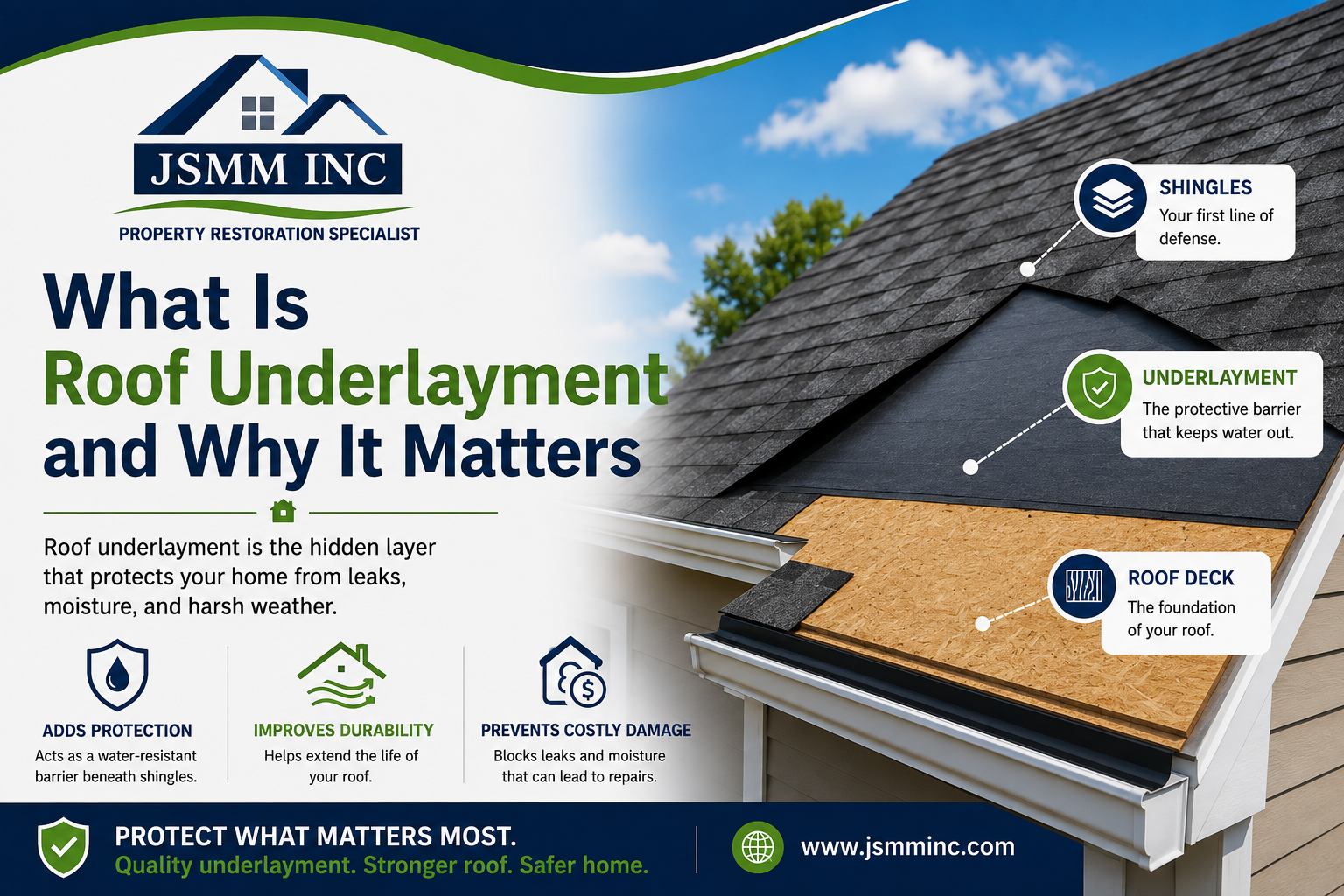
Roof underlayment is the water-resistant layer that sits between your roof deck and your shingles. You never see it once the roof is finished, but it does a big job. It works as a second line of defense, keeping water out when wind, ice, or a cracked shingle lets moisture through.
Most homeowners in Highland Park focus on the shingles they can see and forget the layer underneath. That layer is often the difference between a roof that stays dry and one that leaks after the first hard storm.
At JSMM Inc., we have installed roofs across the North Shore for more than 30 years, and we never skip the underlayment. This guide explains what roof underlayment is, the main types, and why it matters for your home.
Call (847) 410-7060 today to schedule your inspection.
Table of Contents
ToggleWhat Does Roof Underlayment Actually Do?
Underlayment is quiet protection. It sits out of sight and steps in when your shingles cannot do the job alone.
You pay for it once, and it works silently for the life of the roof.
- It blocks water that slips past the shingles during wind-driven rain.
- It shields the wood deck from moisture, which prevents rot and mold.
- It helps your shingles reach their full lifespan by keeping the deck below them dry.
- It gives your roof a dry, safe base during install, before the shingles go on.
Think of it as a backup. Even good shingles can lift or crack in a storm, and when they do, the underlayment keeps a small problem from turning into a roof leak inside your home.
Where Does Roof Underlayment Sit on Your Roof?
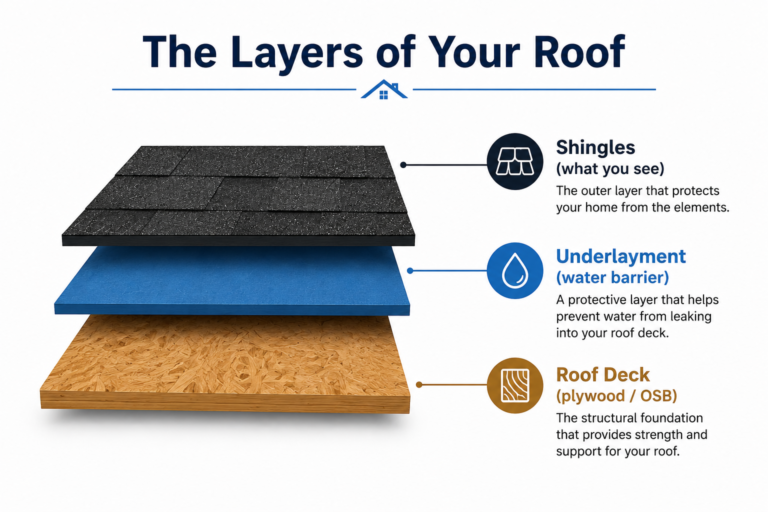
Your roof is built in layers. From the bottom up, there is the wood deck, then the underlayment, then the shingles on top.
The underlayment goes down first during a roof installation in Illinois, rolled out across the whole deck. Only after it is in place do the shingles go on.
Some spots get extra care. Roofers add a tougher, self-sealing layer along the eaves and in the valleys, where water tends to collect and back up.
Before any of this, the deck itself has to be sound. If the crew finds soft or rotted wood, they replace it first. Good underlayment cannot make up for a bad deck underneath it.
What Are the Main Types of Roof Underlayment?
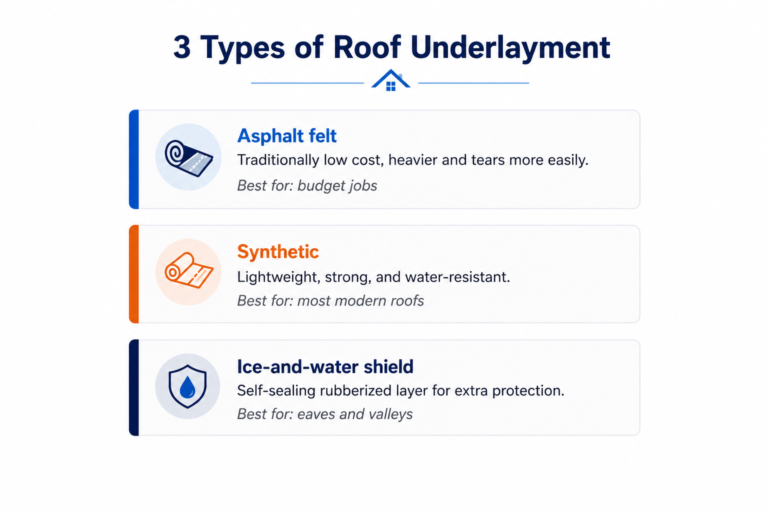
Three types cover almost every home. Each has a job it does best.
- Asphalt felt is the traditional choice. It is low cost, but heavier and easier to tear.
- Synthetic underlayment is lighter, stronger, and more water-resistant. It is what most new roofs use today.
- Rubberized ice-and-water shield is a self-sealing layer used at the eaves and valleys for extra protection.
Your roofer may use one type across the roof and a stronger one in the trouble spots. That mix gives you full coverage without paying premium prices for the whole deck.
Felt vs Synthetic Underlayment:Which Is Better?
For most homes, synthetic wins. It weighs less, resists water better, and holds up longer than felt. It also lays flat and stays put in the wind while the crew works.
Felt still has a place on budget jobs and smaller projects. It does the job, but it soaks up water if it is left exposed, and it can wrinkle over time.
If you are getting quotes, ask which underlayment each roofer plans to use. It is a small part of the price, but a big part of how your roof performs.
Synthetic also handles foot traffic better during the install, which matters on a steep Illinois roof. Fewer tears mean fewer weak spots once the shingles are on.
How Much Does Roof Underlayment Cost?
Underlayment is a small slice of a roofing bill, usually a few hundred dollars for an average home. Synthetic costs a little more than felt, but the gap is minor next to the price of shingles and labor.
That small cost buys real protection. Because a failed underlayment can lead to deck repairs and interior damage worth thousands, most homeowners find the upgrade to synthetic is money well spent.
Ask your roofer to list the underlayment on the written quote. A clear line item tells you the crew is not cutting corners where it counts.
Why Does Roof Underlayment Matter So Much in Illinois?
North Shore weather is hard on roofs. Winters bring snow, ice, and freeze-and-thaw cycles. Summers bring storms and wind-driven rain. Underlayment is your roof’s defense in both seasons.
In winter, melting snow can refreeze at the roof edge and force water back under the shingles. A rubberized shield along the eaves is your best guard against that damage, so it pairs well with simple steps to prevent ice dams.
In summer, wind can lift a shingle just long enough for rain to sneak in. The underlayment catches that water before it reaches your deck.
That is why we plan the underlayment around the local climate, not a one-size template. The right layer in the right spot is what keeps a North Shore roof dry through a long winter.
What Happens If Underlayment Is Skipped or Done Wrong?
Cutting corners on underlayment is a costly mistake. The damage often hides for months before it shows up as a stain on your ceiling.
By the time you notice, the fix is rarely just a patch.
- Water reaches the wood deck and causes rot.
- Damp wood grows mold and weakens the roof structure.
- Leaks appear inside your home and ruin insulation and drywall.
- Your shingle warranty can be voided if the roof was not built to spec.Skipping or misplacing underlayment is one of the more common roof installation mistakes we get called to fix. By then the job is bigger, and it often means a roof repair inside the home too.
Planning a New Roof?
Make sure the underlayment is installed correctly the first time. Our experienced team provides free roof replacement estimates throughout Illinois, helping you choose the right roofing system with confidence.
Get Your Free Estimate →How Does JSMM Install Your Underlayment?
Our process is simple and careful. We treat the layer under your shingles as seriously as the shingles themselves.
- We inspect and repair the wood deck first, so the underlayment sits on a solid base.
- We roll out synthetic underlayment across the full roof, sealed and overlapped correctly.
- We add ice-and-water shield at the eaves, valleys, and around every vent and chimney.
- We photograph the deck and underlayment before the shingles go on, so you can see the work that will soon be hidden.
This is standard on every job, as part of our residential roofing services. Homeowners across the North Shore rely on us for a full roof replacement in Highland Park that is built to last from the deck up.
Frequently Asked Questions
Is roof underlayment required?
Yes. Building codes require underlayment under asphalt shingles, and shingle makers require it to keep the warranty valid.
How long does roof underlayment last?
Synthetic underlayment can last as long as the roof itself, often 25 to 30 years. Felt tends to break down sooner. In practice, it should be replaced whenever the roof is replaced, so the whole system ages together.
Can underlayment be reused during a reroof?
No. A proper reroof includes fresh underlayment, since the old layer is usually worn or torn during the tear-off.
Does underlayment stop every leak?
No. It is a backup layer, not a cure-all. It buys time and limits damage, but broken shingles still need repair.
Do I need ice-and-water shield in Illinois?
For most North Shore homes, yes. Our winters make eave and valley protection well worth the small added cost. It is especially useful on low-slope sections and north-facing roofs that hold snow longer.
Ready to Protect Your Roof from the Deck Up?
The team at JSMM Inc. will inspect your roof, explain our findings, and provide a FREE estimate. Call (847) 410-7060 or visit our Highland Park office to get started.