

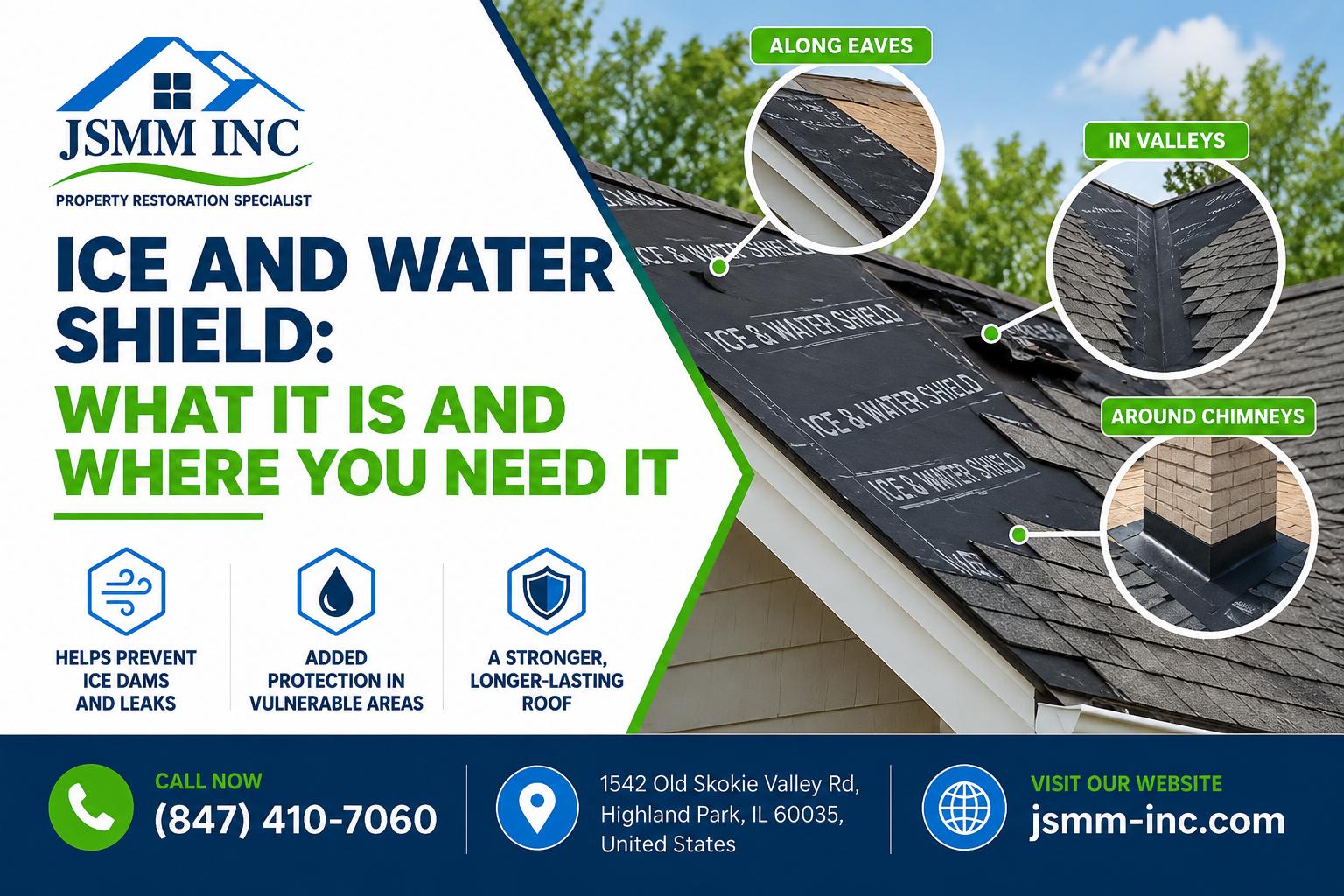
Ice and water shield is a sticky, waterproof membrane that seals the most leak-prone parts of a roof, such as the eaves, valleys, and areas around chimneys and skylights. It sticks tightly to the deck and blocks water even when ice dams or wind-driven rain push water backward under the shingles.
It is one of the most important layers on a roof, and one of the least understood. Put simply, it is the last line of defense against water at the spots most likely to leak.
This guide explains what ice and water shield is, where it goes, and why it matters. It works alongside the roof underlayment that covers the rest of the deck, but it does a different, tougher job.
Table of Contents
ToggleGetting A New Roof And Want It Protected Properly?
Contact JSMM Inc. for a free consultation. We install ice and water shield in all the right places, so your roof is sealed where it counts.
What Is Ice and Water Shield?
Ice and water shield is a self-adhesive, rubberized membrane that sticks directly to the roof deck. It creates a fully waterproof seal at the roof’s weakest points.
What makes it special is how it seals. It bonds to the wood, and it seals tightly around every nail that goes through it. So even if water gets under the shingles, it cannot get past the shield to the deck below.
Regular underlayment resists water, but ice and water shield stops it completely. That is the key difference between the two.
The nail-sealing part is what really sets it apart. Every roof has thousands of nails driven through it, and each one is a tiny hole. The shield closes around each nail so water cannot follow it into the deck.
How Is It Different From Underlayment?
This is where many homeowners get confused. Underlayment and ice and water shield are both layers under the shingles, but they are not the same thing.
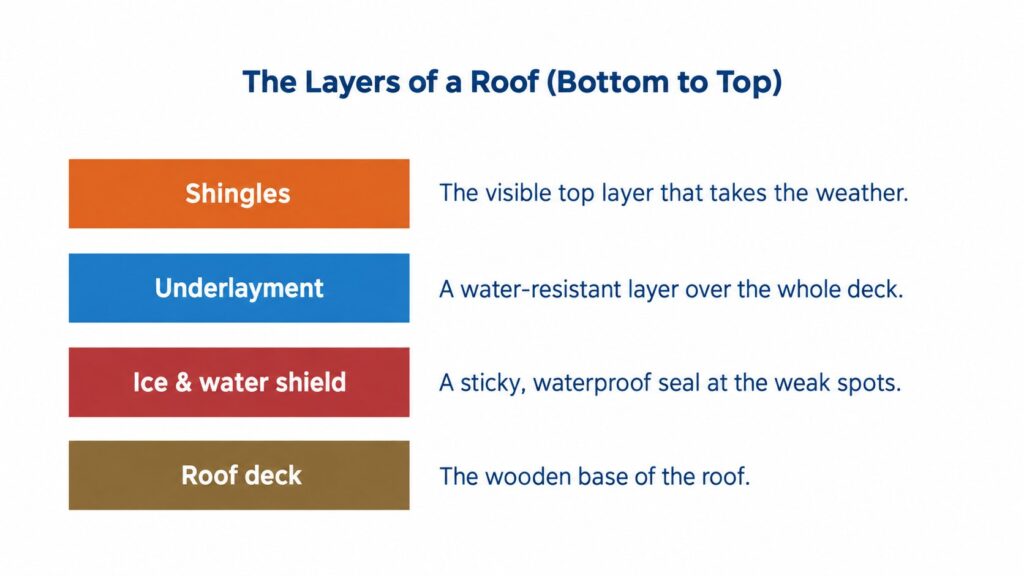
Underlayment is water-resistant and covers the whole roof deck. Ice and water shield is fully waterproof and goes only at the high-risk spots. You use both: the shield at the weak points, and underlayment everywhere else.
Think of underlayment as a raincoat for the whole roof, and ice and water shield as a heavy-duty patch on the spots that get hit hardest. Together they keep water out.
Where Do You Need Ice and Water Shield?
The shield goes only where water is most likely to sneak in. These are the parts of the roof that leak first.
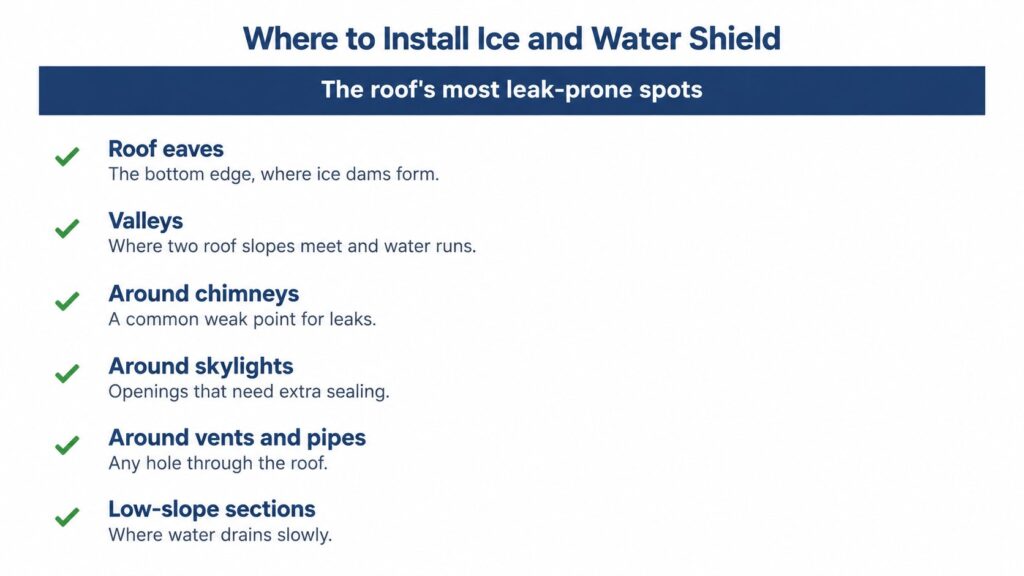
The most important spot is the eaves, the bottom edge of the roof, where ice dams form in winter. It also goes in the valleys where two slopes meet, and around anything that pokes through the roof, like chimneys, skylights, vents, and pipes.
Low-slope sections of the roof are another good place for it, since water drains slowly there and has more time to work its way in. A good roofer knows to add extra protection wherever water tends to linger.
Chimneys are a classic leak point. Our guide on chimney leak repair shows why these spots need the extra protection a shield provides.
Want A Roof Sealed At Every Weak Point?
Call JSMM Inc. at (847) 410-7060 for a free inspection. We make sure the shield goes exactly where your roof needs it.
How Does It Stop Ice Dams?
This is the reason it has ice in its name. In winter, ice dams are one of the biggest threats to a roof, and the shield is the main defense against them.
An ice dam forms when snow melts, runs down the roof, and refreezes at the cold eaves. The ice builds up and traps water behind it, which then backs up under the shingles. Ice and water shield at the eaves stops that trapped water from reaching the deck.
Without the shield, that trapped water has nowhere to go but into your home. This is the single most common winter roof leak, and it is exactly what the shield is designed to prevent.
Ice dams are a serious problem in Illinois winters. Our guide on how to prevent ice dams covers the other steps that work with the shield to keep your roof safe.
Do You Really Need Ice and Water Shield?
In a cold, snowy climate like Illinois, yes. It is not an optional extra here. It is one of the most valuable parts of a roof.
Many building codes now require ice and water shield at the eaves in cold regions, exactly because ice dams cause so much damage. Even where it is not required, skipping it is a false saving.
Illinois roofs face heavy snow and freeze-thaw cycles all winter. Our guide on roof snow load and safe snow removal covers the wider cold-weather care your roof needs.
Is Ice and Water Shield Worth the Extra Cost?
Ice and water shield adds a small amount to the cost of a new roof. For a home in a cold climate, it is money very well spent.
The cost is minor next to the price of fixing water damage. A single ice-dam leak can ruin insulation, ceilings, and drywall, and lead to mold. The shield costs a fraction of that repair.
Think of it as cheap insurance. You pay a little more once, and you avoid a much bigger bill down the line. That is why most good roofers include it as standard in cold regions.
What Happens Without It?
Skipping ice and water shield is a gamble that often does not pay off. Without it, the roof’s weak points are only protected by underlayment and shingles.
When an ice dam or heavy wind-driven rain pushes water backward, that water can reach the deck, soak into the wood, and leak into the home. The result is water stains, rot, and mold that cost far more to fix than the shield would have cost to install.
That backed-up water often shows up as stains on the ceiling first. Our guide on the most common causes of roof leaks shows how these hidden leaks start.
When Is Ice and Water Shield Installed?
It goes on during a roof replacement or a new roof installation, before the underlayment and shingles. It cannot be added later without lifting the roof, so it is important to get it right the first time.
This is one more reason a full tear-off matters. Our roof replacement service in Illinois includes proper ice and water shield at every weak point, and a solid roof deck underneath for it to bond to.
Does Ice and Water Shield Affect the Warranty?
It can help. Installing it correctly is often part of meeting a manufacturer’s requirements for a full warranty.
Many shingle warranties expect the roof to be built to spec, including proper flashing and sealing at the weak points. Our guides on roof flashing and roofing warranties explain how these details protect your cover.
How Do You Know If Your Roof Has It?
Since the shield is hidden under the shingles, you cannot see it from the ground. But there are a few ways to find out.
Check your roof paperwork or the original installation invoice, which should list the materials used. If you are not sure, a roofer can tell you during an inspection, or by checking at the eaves during any repair work.
If your roof is older or was installed on the cheap, there is a good chance it was skipped. That is worth knowing before the next hard winter, so you can plan ahead.
Frequently Asked Questions
What is ice and water shield?
It is a self-adhesive, waterproof membrane that seals the leak-prone parts of a roof, like the eaves, valleys, and areas around chimneys. It sticks to the deck and blocks water even when it is pushed backward under the shingles.
Where do you need ice and water shield?
At the eaves, in the valleys, and around chimneys, skylights, vents, and pipes. These are the spots most likely to leak, especially from ice dams and wind-driven rain.
Is ice and water shield the same as underlayment?
No. Underlayment is water-resistant and covers the whole deck. Ice and water shield is fully waterproof and goes only at the high-risk areas. A good roof uses both.
Do I need ice and water shield in Illinois?
Yes. In cold, snowy climates it is one of the most valuable roof layers, and it is often required by code at the eaves. It works best alongside good attic ventilation that keeps the roof cold and even.
Can ice and water shield be added to an existing roof?
Not easily. It goes under the shingles, so it is installed during a new roof or a winter-ready roof replacement. It cannot simply be added on top of an existing roof.
Planning A New Roof And Want It Done Right?
Contact JSMM Inc. or call (847) 410-7060 . We install ice and water shield in all the right places across Highland Park and the North Shore, so your roof stays dry through every winter.