

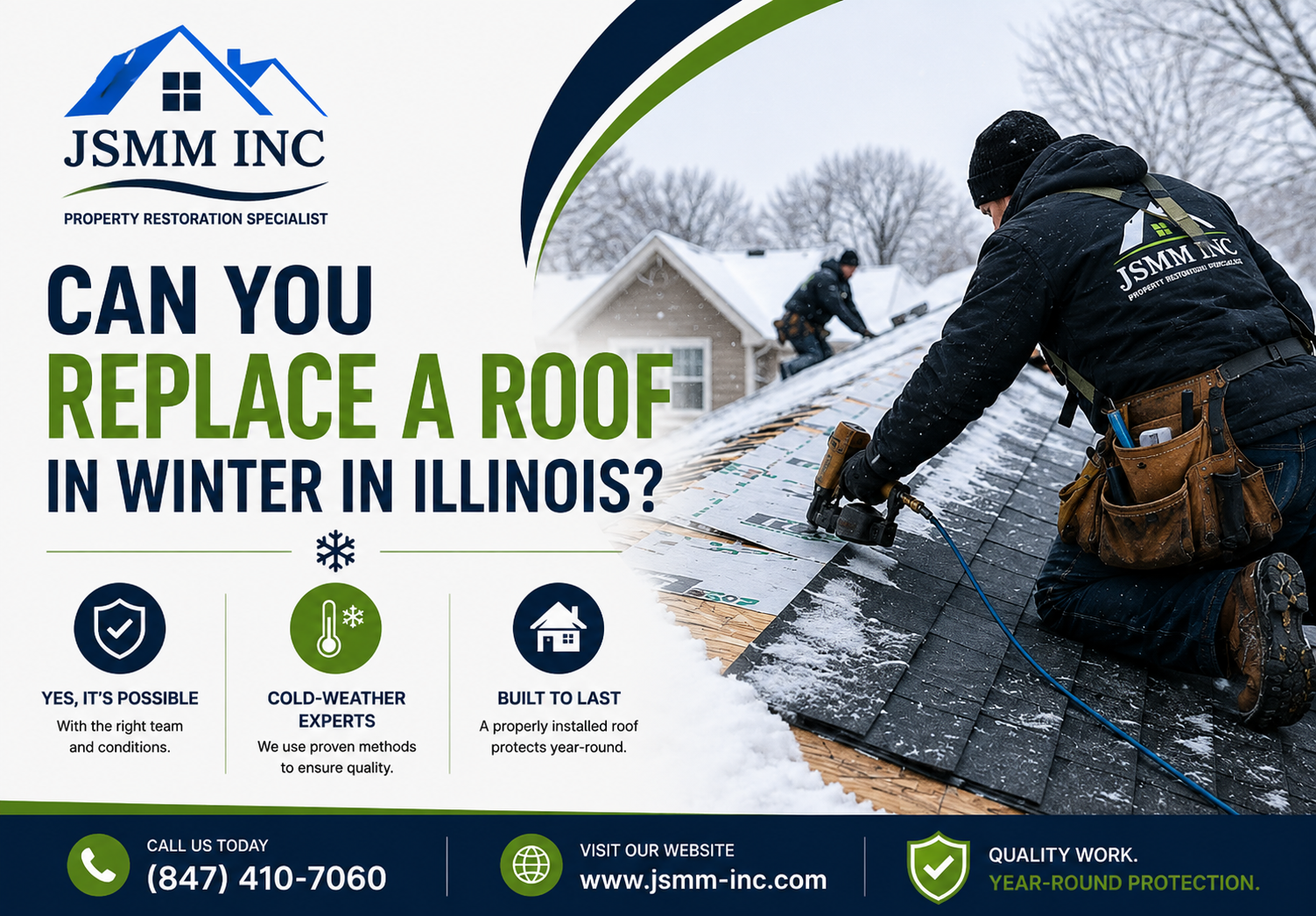
The best results come when the air is above 40 degrees Fahrenheit, but skilled crews still work down to around 26 degrees by hand-sealing shingles and adjusting their methods. Below that, most roofers recommend waiting for a warmer window or a milder day.
This guide explains when winter roofing works, when it does not, and how to decide if your roof can wait. If your roof is already leaking or storm-damaged, our guide on the signs you need a new roof helps you judge how urgent the job is.
Need an honest, itemized roof estimate? Get a FREE inspection & quote from JSMM Inc.
Contact Us 📞 (847) 410-7060Table of Contents
ToggleWhy Does New Roof Cost Vary So Much in Illinois?
Roofing is not a flat-rate service. Every home is different, and the price reflects that. A small ranch house with a simple low-pitch roof costs far less than a two-story home with dormers, valleys, and a steep pitch.
Illinois adds its own variables. Lake-effect weather on the North Shore, local permit requirements, and the condition of older decks all affect what a replacement costs here versus downstate.
Understanding those variables is the fastest way to understand your quote. Here is what goes into every Illinois roof replacement estimate, and you can see the full replacement process on our roof replacement in Illinois page.
Is It Safe to Replace a Roof in Winter?
Yes. A roof replacement in winter is safe when the crew is experienced and the weather cooperates. Roofers install on dry, calm days and avoid ice, heavy snow, and deep-freeze temperatures.
The main concern in cold weather is how asphalt shingles seal. Shingles have a strip of adhesive that bonds them together, and that adhesive activates with warmth from the sun. In winter, it seals more slowly, so a good crew hand-seals each shingle with roofing cement to lock it down right away.
What Temperature Is Too Cold to Install a Roof?
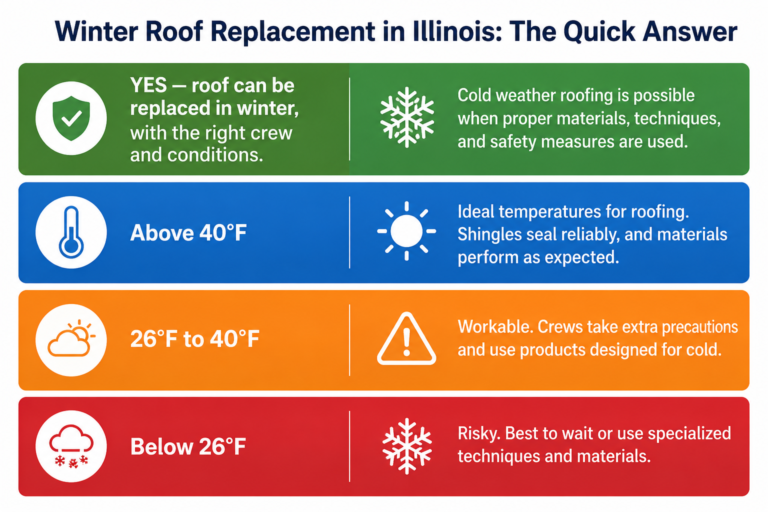
Most manufacturers recommend installing asphalt shingles when it is above 40 degrees Fahrenheit. That is the point where the shingles stay flexible and the seal bonds on its own.
Between 26 and 40 degrees, a professional crew can still install by hand-sealing and keeping shingles warm until they go on the roof. Below 26 degrees, shingles become brittle and can crack when handled, so most roofers pause work or use special cold-weather methods.
An experienced roof installation contractor in Illinois knows how to read the forecast and schedule around the coldest days, which is the single biggest factor in a successful winter install.
What Are the Pros and Cons of Winter Roof Replacement?
Winter roofing has real advantages and a few tradeoffs. Knowing both helps you decide.
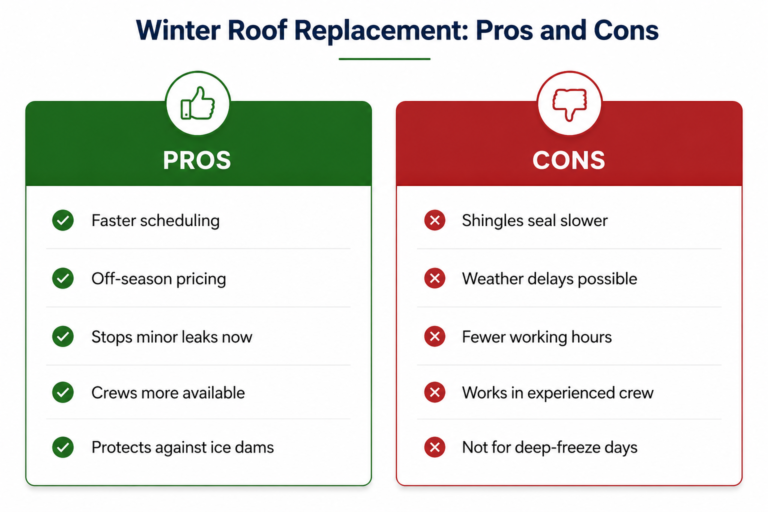
On the plus side, roofers are less booked in winter, so you often get faster scheduling and sometimes off-season pricing. If your roof is leaking now, waiting until spring risks months of water damage. A winter replacement stops that immediately.
The tradeoffs are weather-driven. Shingles seal more slowly, short daylight means fewer working hours, and a snowstorm can push your date back. Winter is also when ice dams form, so a fresh, properly ventilated roof actually protects you better through the rest of the season.
Why Would Someone Replace a Roof in Winter Instead of Waiting?
Most winter replacements happen for one of three reasons. Each one makes waiting the more expensive choice.
- An active leak. Water inside the home does not pause for the season. Every week of delay adds to the rot, mold, and interior damage.
- Storm or wind damage. A roof that lost shingles in a winter storm needs to be sealed before the next one hits.
- A failed or very old roof. If the roof is already past its life, winter weather only speeds up the failure.
When the damage is limited, a repair may hold until spring. Our guide on roof repair vs replacement lays out how to tell the difference, and a quick inspection settles it.
Permits, Disposal, and a Other Line Items
Permits are required for roof replacement in most Illinois municipalities, and Highland Park is no different. A licensed roofer handles the permit application and the required inspections. Our guide on roofing permits in Illinois explains what to expect.
Disposal of the old roofing materials is usually included in a professional quote but worth confirming. Dumpster rental or haul-away fees can add up on a full tear-off job.
Flashing replacement, new drip edge, ice-and-water shield, and ridge cap are line items that vary by roof and condition. A good quote lists them separately so you know exactly what you are getting.
How Do Roofers Install a Roof Safely in Cold Weather?
Professional crews use several cold-weather methods to get a clean, lasting install. These are the steps that separate an experienced roofer from a risky one.
- Storing shingles in a warm space until just before they go on the roof, so they stay flexible.
- Hand-sealing each shingle with roofing cement instead of waiting for the sun to activate the adhesive.
- Working only on dry days and clearing all snow and ice from the deck first.
- Using special fasteners and adjusting nail-gun pressure so brittle shingles do not crack.
Skipping any of these is where winter roofing goes wrong. This is why hiring a licensed, experienced crew matters far more in winter than in summer. Our roof replacement service in Illinois is built around doing it right in every season.
There is also a limit to how much a crew can rush. Winter days are short, so a job that takes one day in summer may spread across two. A trustworthy roofer plans for that and never cuts corners to finish before dark or before a storm rolls in.
Need a roof replaced before the next cold snap?
Book your FREE roof inspection with JSMM Inc. today.
Does Winter Roofing Cost More or Less?
Winter roofing often costs the same or slightly less than a summer job. Because roofers are less busy in the cold months, some offer off-season rates, and you rarely wait weeks for a slot.
The price of the roof itself depends on size, pitch, and material, not the season. Our guide on how much a new roof costs in Illinois breaks down what actually drives the number, and none of those factors change in winter.
The one thing to watch is weather delays. A good contractor gives you a realistic timeline and does not rush the job to beat a storm.
How Should You Prepare Your Home for a Winter Roof Replacement?
A little preparation makes a winter install smoother for everyone. None of it is difficult, and your roofer will walk you through it.
- Clear a path to the driveway and roof access so the crew and materials can move safely on snow or ice.
- Move vehicles out of the driveway so the team can stage a dumpster and load shingles close to the house.
- Cover stored items in the attic, since a tear-off can shake loose dust and debris below the deck.
Talk with your contractor about what happens if a snow day interrupts the work. Knowing the plan ahead of time keeps a weather delay from becoming a stressful surprise.
Should You Replace or Just Repair Before Spring?
If your roof has a small, contained problem, a winter repair can hold it safely until spring, when a full replacement is easier to schedule. If the roof is failing across large areas or leaking in several rooms, replacing it now is the better call.
A professional roof inspection is the fastest way to know which path fits your home. For Highland Park homeowners specifically, our roof replacement in Highland Park page covers what a local winter project looks like.
Frequently Asked Questions
Can you replace a roof in winter in Illinois?
Yes. Experienced crews replace roofs through the Illinois winter on dry days, hand-sealing shingles and avoiding deep-freeze temperatures below 26 degrees Fahrenheit.
What is the best temperature for roofing?
Above 40 degrees Fahrenheit is ideal, because shingles stay flexible and seal on their own. Between 26 and 40 degrees, crews hand-seal to get the same result.
Will a winter roof last as long as a summer roof?
Yes, when it is installed correctly. A properly hand-sealed winter roof performs just as long as a summer one. The shingle type matters far more to lifespan than the install season.
What if it snows during my roof replacement?
Work pauses until the roof is dry and clear again. A good contractor protects the exposed area and resumes as soon as conditions allow.
Is winter a good time to get a roofing quote?
Yes. Roofers are less busy in winter, so you often get faster scheduling and, in some cases, off-season pricing.
Not sure whether your roof can wait for spring?
Contact JSMM Inc. for a FREE, honest roof inspection across Highland Park and the North Shore. We install safely all winter long.