

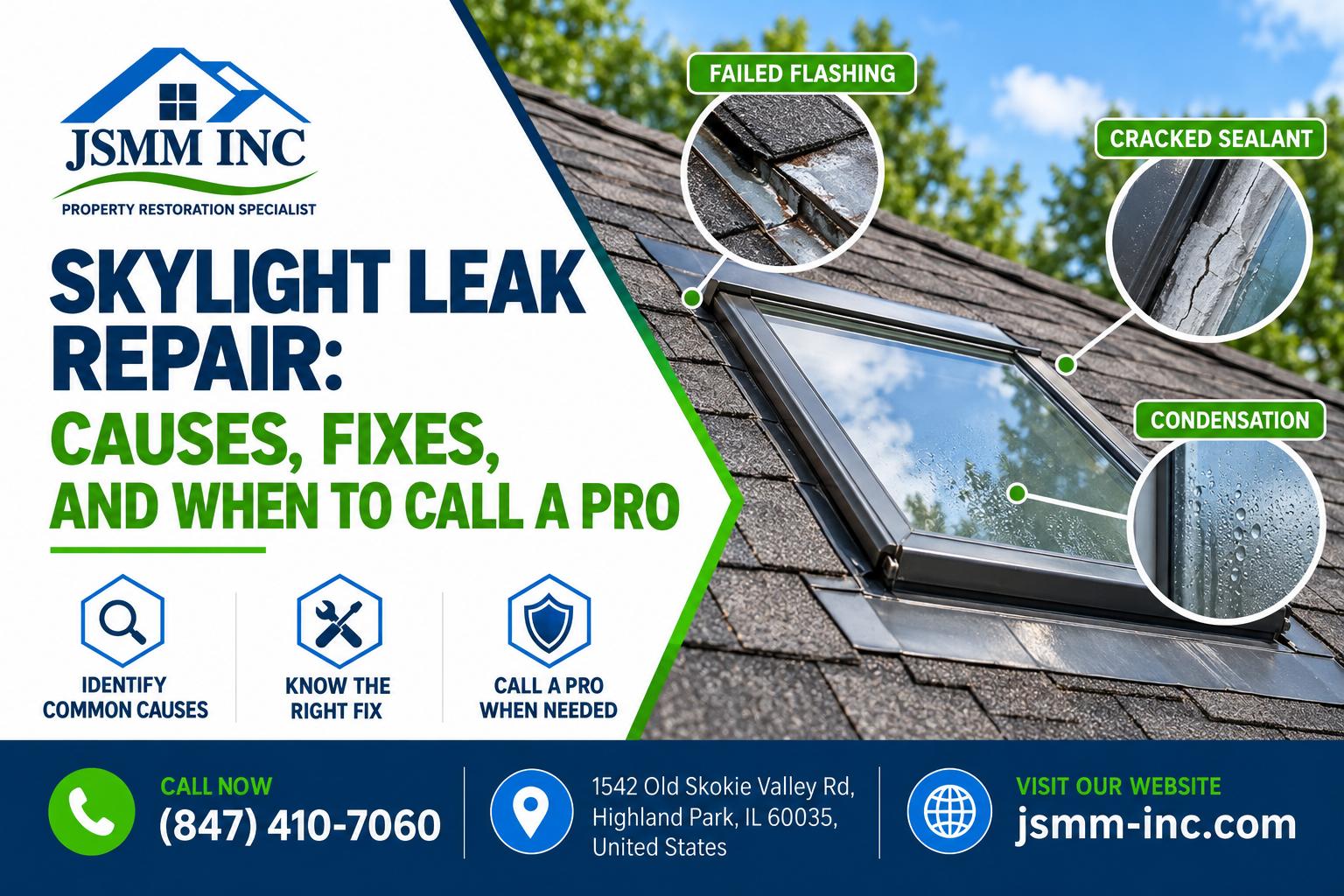
A skylight leaks for one of five reasons: failed step flashing around the frame, cracked sealant at the join, a damaged dome or glass panel, compromised underlayment beneath the unit, or what looks like a leak but is actually condensation. Identifying the right cause before doing any repair work is the only way to fix it properly the first time.
JSMM Inc. has diagnosed and repaired skylight leaks across the North Shore for over 30 years. The source is often not where the homeowner expects.
Skylight leaks are one specific type of roof leak. Our guide to the most common reasons a roof leaks covers the full picture, including other entry points that can mimic skylight problems.
Table of Contents
ToggleSkylight Dripping And Not Sure Why?
Contact JSMM Inc. for a free inspection. We find the exact source and give you a written repair quote the same day.
Is It Actually a Leak— or Condensation?
Condensation forms when warm indoor air meets cold glass. It looks like a leak — moisture on the frame, drips on the ceiling — but has nothing to do with rain or the roof seal.
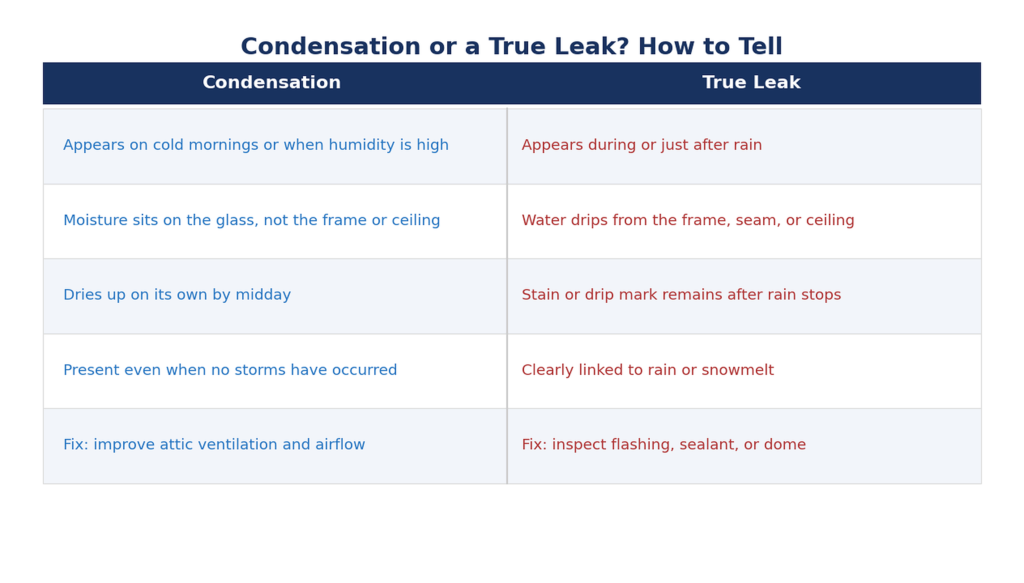
Quickest test: does moisture appear on cold dry mornings and clear by midday? That is condensation. If it appears during rain and the stain stays, you have a true leak.
Condensation problems often point to an attic airflow issue rather than a roofing problem. Poor ventilation traps humid air against cold surfaces. If condensation is your situation, our guide on what causes water leaks in ceilings explains how to trace where the moisture is actually coming from.
What Causes a Skylight to Leak?
When the moisture is a true leak, it comes from one of five places.
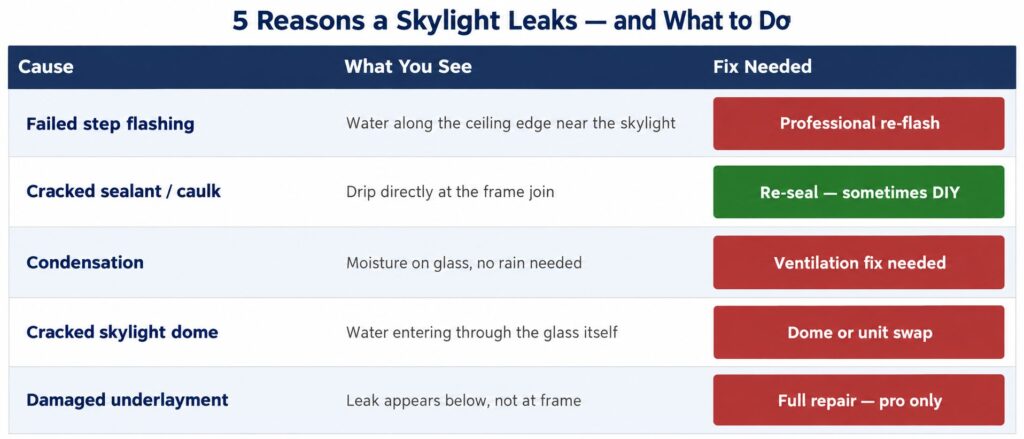
1. Failed Step Flashing
Step flashing is the most common cause — metal that runs up the sides of the frame, overlapping the shingles in a step pattern. When it lifts or corrodes, water runs behind it and onto the deck.
A flashing failure around a skylight is the same problem that causes leaks at chimneys and walls. Our guide on roof flashing — what it does and when it needs replacing gives a clear picture of how flashing works and what failure looks like.
2. Cracked Sealant at the Frame
The join between the frame and the surrounding roofing is sealed with caulk or butyl tape. UV exposure and thermal cycling crack this seal over time. When it cracks, water finds the gap. Clean the old sealant out completely, apply new roofing-grade caulk, and press firmly into the join.
The risk: applying new caulk over failed flashing fixes nothing. Confirm the flashing is sound before sealing over it.
3. Cracked Dome or Glass Panel
Older plastic domes crack and craze over time. When the glass is compromised, water enters directly. No sealant at the frame stops it. The dome or glass needs replacing — a parts job, not a re-sealing job.
4. Damaged Underlayment Below the Unit
The underlayment around the skylight cut-out is critical. If it was installed poorly, has aged, or was disturbed by a previous repair, water bypasses the flashing and enters through the deck.
This type of leak often appears well away from the skylight itself, because water travels along the deck before it drips. Our guide on what roof underlayment does and why it matters explains how this layer works and how to spot when it has failed.
5. Ice Dam Backup at the Curb
In Illinois winters, ice dams can form at the skylight curb. When snowmelt backs up against the raised frame, it forces water under the side flashing.
Ice dams at skylights are a recurring problem on poorly ventilated roofs. Our full guide on preventing ice dams on your roof this winter covers both the structural cause and the seasonal prevention steps.
Still Unsure Which Of These Is Your Situation?
Call JSMM Inc. at (847) 410-7060. We locate the exact source — whether it is flashing, sealant, glass, or the underlayment — before quoting any repair.
What Can You Fix Yourself andWhat Needs a Roofer?
The wrong DIY repair often makes the job more expensive for a roofer to fix later:
Safe to attempt yourself:
- Applying new roofing-grade sealant at the frame join — if you are confident the flashing beneath it is sound
- Clearing debris from around the skylight curb after a storm
- Checking the dome surface for visible cracks from the attic
Needs a professional:
- Any work involving step flashing — incorrect flashing is the most common cause of recurring leaks
- Dome or glass replacement — requires precise fitting and sealing to the curb
- Underlayment repair — the roof needs to be opened up around the unit
- Any leak you cannot trace clearly to the frame or glass
How to Inspect a Skylight Leak From Inside Your Home
Spend ten minutes in the attic after the next rain and check:
- Look for wet marks on the deck boards around the skylight curb — trace where the wet patch starts, not where the drip ends
- Check the underside of the flashing at the sides of the curb for corrosion or lifted edges
- Look at the underlayment around the opening for tears or gaps
- Check whether the wet mark is highest at the uphill side of the skylight — this usually points to flashing, not sealant
Taking photos of what you find makes the roofer’s job faster and reduces the inspection time on site. A professional roof inspection after any confirmed leak is the right step to make sure the repair covers the full scope of the damage.
How Much Does Skylight Leak Repair Cost?
Cost depends on the cause. Realistic ranges:
- Sealant re-application — $150 to $400 depending on access and skylight size
- Step flashing repair on one skylight — $300 to $700
- Full flashing replacement with new underlayment — $500 to $1,200
- Dome or glass panel replacement — $400 to $900 for the unit, plus installation
- Full skylight replacement (frame, glass, and flashing) — $900 to $2,500 installed
Always confirm the underlying cause before signing any repair quote. A surface fix over failed flashing will leak again within a season.
If the inspection reveals that the skylight damage has spread to the surrounding deck or shingles, our roof repair service in Illinois covers the full scope — not just the skylight component.
When Should You Replace the Skylight Instead of Repairing It?
Sometimes replacement is more practical than repair:
- The unit is more than 20 years old and has leaked multiple times
- The dome is crazed, yellowed, or cracked across the surface
- The frame has visible rot or corrosion that has spread into the curb
- The surrounding shingles and deck show widespread damage from repeated leaks
If the inspection turns up signs of wider roof damage — curling shingles, soft decking, or multiple problem areas — our guide to the warning signs your roof needs attention helps you assess whether the bigger picture also needs addressing.
How to Prevent Skylight Leaks
Most skylight leaks are preventable with basic annual care:
- Clear debris from around the skylight curb every fall — leaves and grit hold moisture and accelerate sealant breakdown
- Check the sealant line around the frame once a year — catch cracks before they open into gaps
- Trim tree branches that overhang the skylight — impact and debris are two of the main causes of dome damage
- Have the flashing inspected every two to three years — a small lift caught early is a $300 repair; left for three seasons it becomes a $1,000 one
Skylight checks are part of any sound annual roof maintenance routine. Catching a small sealant crack costs far less than repairing the deck damage it causes.
Frequently Asked Questions
Why is my skylight leaking when it rains?
The most common causes are failed step flashing, cracked sealant at the frame join, or a damaged dome or glass panel. If it appears during or after rain, it is a true roof issue. A professional inspection traces the entry point.
Can I seal a skylight leak myself?
If the cause is cracked sealant and the flashing beneath it is sound, re-sealing with roofing-grade caulk is a reasonable DIY repair. Applying sealant over failed flashing does nothing. If you are unsure about the flashing, have it inspected first.
How long does a skylight last before it starts leaking?
Most quality skylights last 15 to 25 years before the dome shows significant wear. The flashing fails earlier — typically 10 to 15 years — because of greater thermal stress. Regular inspections catch flashing wear before it becomes a leak.
How much does it cost to fix a leaking skylight?
Sealant repair: $150–$400. Flashing repair: $300–$700. Full skylight replacement with flashing and underlayment: $900–$2,500. JSMM Inc. provides written, itemised estimates after inspection.
Does homeowners insurance cover skylight leak repair?
If the leak was caused by a covered event — hail, wind, or a falling branch — your homeowners insurance may cover the repair or replacement. Gradual deterioration from age is typically excluded. JSMM Inc. documents storm-related skylight damage for insurance claims. Our Illinois roof replacement service page explains how we work with insurers on covered roofing damage.
Skylight Leaking And Ready To Get It Fixed Properly?
Contact JSMM Inc. or call (847) 410-7060. We inspect, diagnose, and repair skylight leaks across Highland Park and the full North Shore with a written quote and no surprises.