


A chimney leak almost always starts with something around the chimney, not the chimney itself. Damaged flashing, a cracked crown, or worn mortar lets water find the gaps where the chimney meets the roof. The fix depends on the cause: reseal or replace the flashing, seal the crown, or repoint the brick. The good news is that most chimney leaks are fixable once you find the true source.
Chimney leaks are one of the most common roof leaks we see, and they are easy to miss until a brown stain shows up on your ceiling. If you are still tracing the source, our guide on why your roof is leaking can help. At JSMM Inc., we have found and fixed chimney leaks on North Shore homes for more than 30 years. This guide explains what causes a chimney to leak, how to fix each cause, and when to call a pro.
Table of Contents
ToggleSeeing Water Near Your Chimney?
Even a small chimney leak can lead to costly roof and interior damage. JSMM Inc. provides FREE roof inspections across Highland Park.
What Causes a Chimney to Leak?
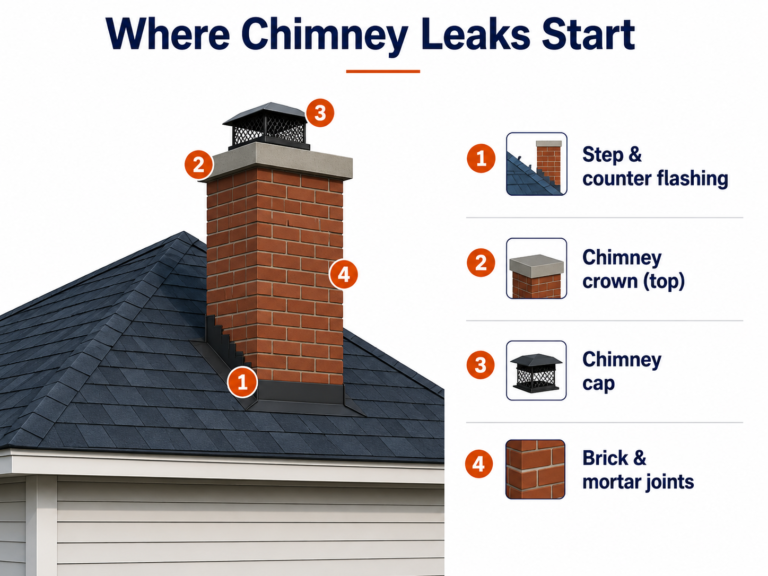
A chimney sits right where the roof is most exposed. Water can get in through several weak points, and often more than one at a time. The usual suspects are the flashing, the crown, the cap, and the brick. Rain, snow, and Illinois freeze-and-thaw cycles wear all of them down over time.
A chimney that has never leaked can start after one hard freeze or a single bad storm. Because the water often travels along the roof deck before it drips, the stain inside can appear feet away from the real problem.
Is the Flashing the Problem?
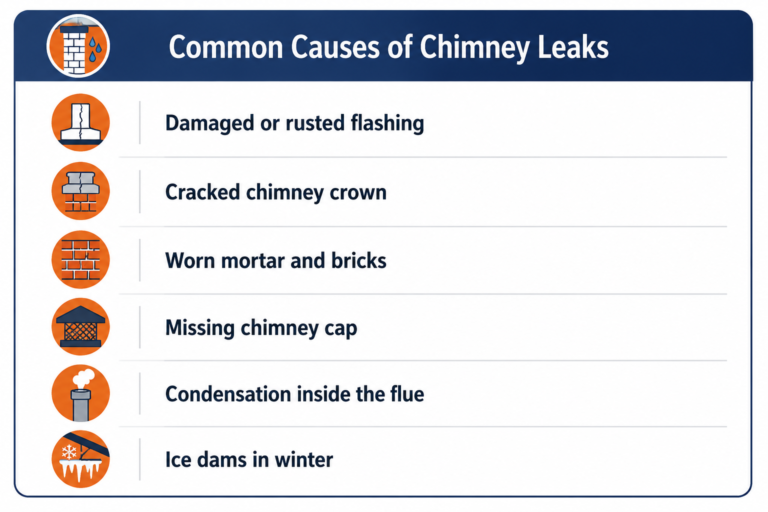
Most of the time, yes. Flashing is the metal that seals the joint where the chimney meets the roof, and it is the number one cause of chimney leaks. Over the years, flashing rusts, lifts, or loses its sealant. Once that happens, water runs straight down the side of the chimney and under the shingles. Our guide on roof flashing explains how it works and when to replace it.
A storm can speed this up. Wind and hail loosen flashing quickly, so it is worth a look after any big weather. Chimney flashing takes the full force of wind-driven rain, so it tends to wear out before the rest of the roof.
Could It Be the Chimney Crown or Cap?
The crown is the concrete top of the chimney. When it cracks, water seeps down into the masonry and into your home. The cap covers the flue opening. A missing or damaged cap lets rain fall straight down the chimney, which shows up as a leak near the fireplace.
Both are common on older homes, and both are usually a quick fix once spotted. A cracked crown is easy to miss from the ground, which is why a close inspection matters.
What About the Bricks and Mortar?
Brick and mortar soak up water like a sponge. As the mortar joints wear away, gaps open up and let moisture through. Repointing, which means replacing the worn mortar, plus a waterproof sealant, stops this kind of leak. White, chalky staining on the brick is a sign the masonry is soaking up water. Left alone, soaked brick can crack in a freeze, which turns a small leak into a much bigger repair.
Can Ice or Condensation Cause Chimney Leaks?
Yes, especially in an Illinois winter. Snow melts against the warm chimney, then refreezes at the cold roof edge and pushes water under the shingles. Ice dams around the chimney are a common winter culprit, so it helps to know how to prevent ice dams. Condensation inside an unlined or cold flue can also drip and look like a leak. This is why a chimney can seem to leak on a dry, freezing day with no rain in sight.
How Long Does Chimney Leak Repair Take?
Most chimney leak repairs are quick. Resealing flashing or adding a cap often takes only a few hours. Bigger jobs, like rebuilding a crown or repointing brick, can take a day or two. Weather and drying time both play a part. Either way, it is far faster and cheaper than fixing water damage inside your home.
What Are the Signs of a Chimney Leak?
Chimney leaks give clear warnings once you know what to look for.
- Brown stains on the ceiling or wall near the chimney.
- A damp, musty smell in the fireplace or firebox.
- White, crusty staining on the brick, called efflorescence.
- Dripping or water marks in the attic around the chimney.
- Peeling paint or wallpaper on nearby walls.
Catch these early and the fix stays small. Water that sits for months leads to rot and interior repairs. If it turns into a steady drip during storms, see our heavy-rain roof leak guide.
Water Still Coming In Around Your Chimney?
Don't let a small leak turn into costly ceiling and interior damage. JSMM Inc. will inspect your chimney flashing, reseal or replace damaged sections, and restore a watertight seal before the problem gets worse.
How Do You Fix a Chimney Leak?
The repair depends on the cause, so a proper fix starts with finding the real source.
- Flashing: reseal small gaps, or replace rusted and lifted metal.
- Crown: seal fine cracks, or rebuild a badly damaged crown.
- Cap: install a new cap to keep rain out of the flue.
- Masonry: repoint worn mortar and add a waterproof sealant.
A good roofer checks all of these, since a chimney often leaks from more than one spot at once.
Fixing only the obvious spot often leaves a hidden leak behind, so a full check saves you a second visit. That is why we always trace the water to its source before we seal anything.
Can You Repair a Chimney Leak Yourself?
A small sealant touch-up is within reach for a handy homeowner. Bigger jobs are not. Flashing, crown, and masonry work all involve height, steep roofs, and the right materials. When the damage is widespread, it may point to a larger issue, so our guide on roof repair vs replacement is worth a read. For anything beyond a dab of sealant, a pro is safer and cheaper in the long run. Roof work also carries real fall risk, which is not worth it for a leak a pro can fix in an hour.
How Do You Prevent Chimney Leaks?
A little care keeps a chimney watertight for years.
- Book a yearly roof inspection to catch small issues early.
- Keep the flashing sealed and the crown crack-free.
- Check the chimney after any storm or hail, which can loosen flashing.
Cap the flue and waterproof the brick, and most leaks never get started.
Prevention costs far less than repair, and a yearly look keeps small problems from spreading.
How Does JSMMFix Chimney Leaks?
We treat the chimney as a system, not a single part, because that is where most leaks hide.
Thirty years of North Shore chimneys have taught us where to look first.
- First we inspect the flashing, crown, cap, and masonry to find the true source.
- Then we reseal or replace the flashing and seal or rebuild the crown as needed.
- Homeowners across the North Shore rely on us for fast roof repair in Highland Park that stops the leak at its source.
Once the leak is sealed, we clean up fully and walk you through what we found, so you know your chimney is watertight for good.
Frequently Asked Questions
How much does chimney leak repair cost?
A simple flashing reseal is inexpensive, while a crown rebuild or repointing costs more. A free inspection gives you a firm number. Most repairs cost far less than the water damage a chimney leak can cause if it is left alone.
Is a chimney leak an emergency?
Not usually, but it should not wait. Water that sits leads to rot, mold, and bigger repairs.
Why does my chimney only leak sometimes?
Leaks often show up only in heavy or wind-driven rain, or during a winter thaw, which makes them tricky to trace. To pin down the exact spot, we can run a hose test that recreates the conditions.
Can a chimney leak without rain?
Yes. Condensation inside a cold flue can drip and look just like a rain leak.
Who fixes a leaking chimney, a roofer or a chimney sweep?
A roofer handles flashing, crown, and masonry leaks. A sweep handles the flue and cleaning.
Keep Your Chimney Watertight
Water can enter through damaged chimney flashing before you notice a leak. Let JSMM Inc. inspect, reseal, or replace your flashing and provide a FREE roof estimate to help protect your home.