
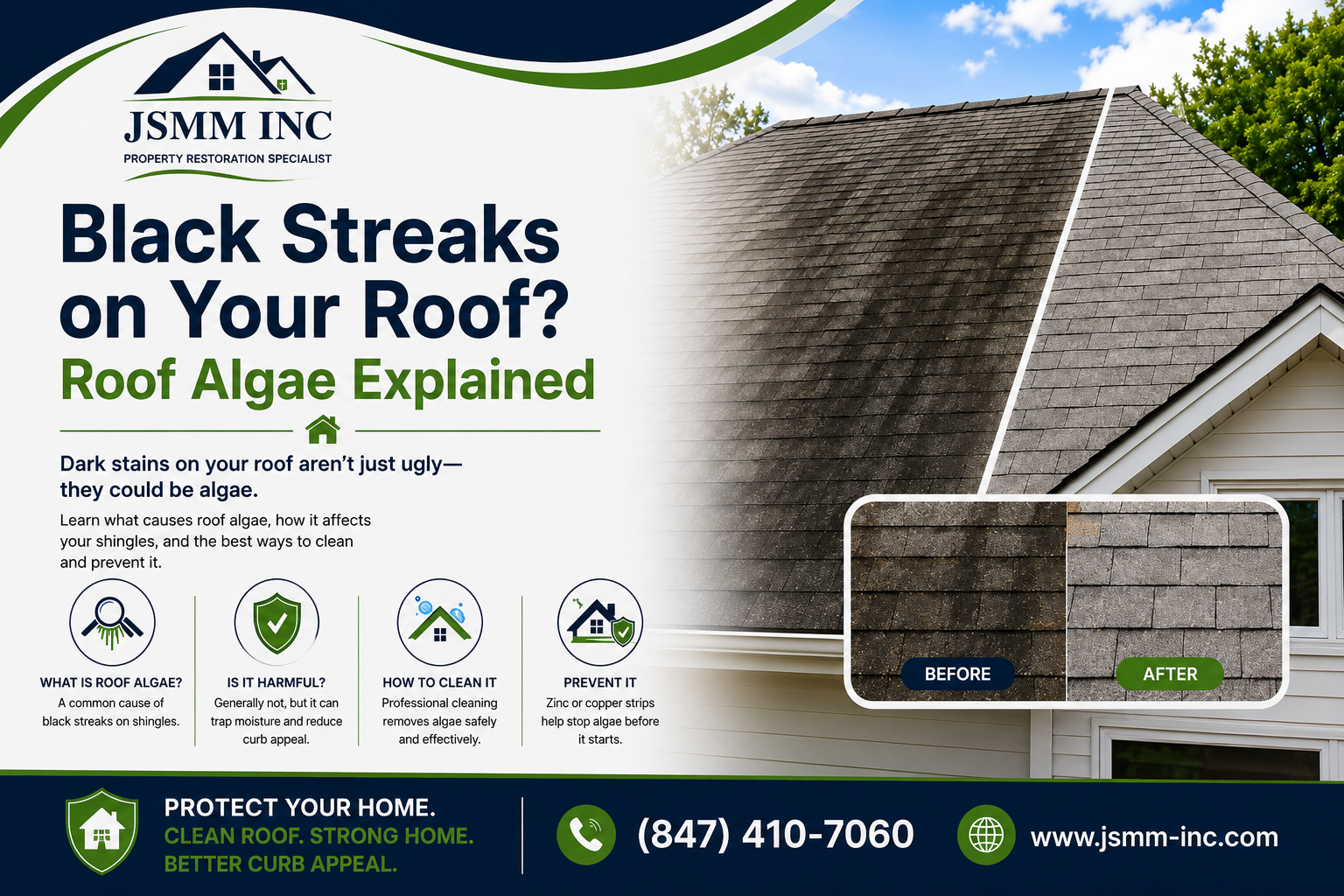
Those dark streaks running down your roof are not dirt, and they are not just an eyesore. They are roof algae, a blue-green organism called Gloeocapsa magma that feeds on the limestone filler in asphalt shingles. Left alone, it spreads across the whole roof, speeds up shingle wear, and cuts years off your roof’s life. Roof algae is not a sign your roof was installed badly or that you have not cared for your home. It shows up on roofs across Illinois every few years, and it is a manageable problem once you understand it. The fix is not complicated, but timing matters. This guide explains what roof algae is, why it grows, how to remove it safely, and how to stop it from coming back. If your roof already shows more than streaks, our guide on the signs you need a new roof can help you decide the right next step.
Table of Contents
ToggleSeeing Dark Streaks on Your Highland Park Roof?
Don't let roof stains hide potential damage. JSMM Inc. provides FREE roof inspections throughout Highland Park and the North Shore to evaluate your shingles and recommend the right solution before small issues become costly repairs.
Book Free Inspection 📞 (847) 410-7060What Exactly Is Roof Algae?
Roof algae is a type of cyanobacteria, not a true algae, though the name stuck. Its scientific name is Gloeocapsa magma, and it thrives on moisture and the limestone granules found in most asphalt shingles.
As the colonies grow, they produce a dark pigment to protect themselves from sunlight. That pigment is the black or dark-grey streak you see from the street.
Asphalt shingles, because of their limestone content, are the most vulnerable. How quickly they are affected depends partly on their age and condition. Our guide on how long asphalt shingles last explains what else affects shingle life.
Does Roof Algae Actually Damage the Roof?
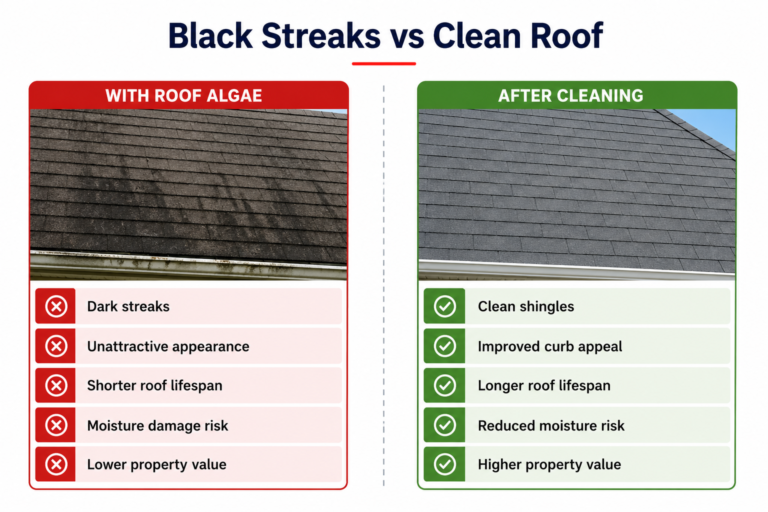
Yes, over time. Algae itself does not eat the shingles, but it holds moisture against them. That constant dampness accelerates granule loss, which is the protective coating on top of each shingle. Once the granules wear away, the shingle’s asphalt core is exposed to UV and heat. That speeds up cracking and curling, and turns a cosmetic problem into a structural one. A roof with heavy algae growth also absorbs more heat. Dark streaks lower the shingle’s ability to reflect sunlight, which pushes up attic temperatures and cooling costs through Illinois summers. Left unchecked, the damage eventually looks like the widespread wear described in our guide on the signs you need a new roof.
Why Does Roof Algae Grow in Illinois?
Illinois roofs are good hosts for algae because of the climate. Humid summers, lake-effect moisture on the North Shore, and shaded north-facing slopes all create ideal growing conditions. North-facing slopes are the most common spot in Highland Park. They dry out slowly, especially in the shoulder seasons when sun angles are low.
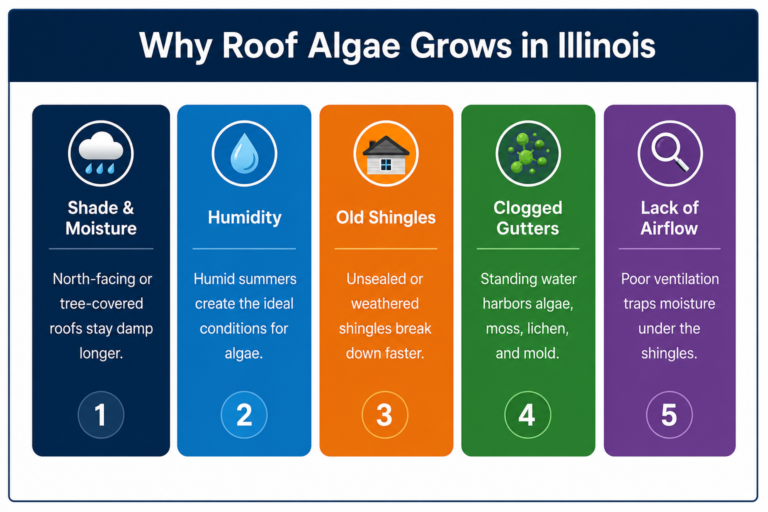
- Shaded or north-facing slopes that stay damp longer after rain.
- Humid summers and lake moisture off Lake Michigan.
- Older asphalt shingles with a high limestone filler content.
- Clogged gutters that keep the roof wet near the eaves.
- Poor attic ventilation that traps moisture under the shingles.
Improving ventilation and clearing gutters regularly makes a real difference. Better airflow also helps prevent ice dams in winter, so the benefits carry through both seasons.
How Do You Remove Roof Algae Safely?
The right method matters. Two approaches work well on asphalt shingles. Low-pressure chemical wash. This is the industry-recommended method. A diluted bleach-and-water solution or a commercial roof-cleaning product is applied, left to work, then rinsed gently. It kills the algae without forcing water under the shingles. Soft washing. Specialist equipment applies the solution at low pressure with a controlled rinse. It is safer on older shingles than a standard pressure washer. What to avoid: a high-pressure power washer. It strips granules fast and does more damage than the algae itself. Worth knowing: the streaks may still look faint for a few weeks after treatment. The algae is dead, but the staining fades gradually with rain and sun. For North Shore homes with heavy growth on steep or high rooflines, a professional is the safer and more thorough option.
How Do You Stop Roof Algae From Coming Back?
Prevention is far easier than cleaning, and a few steady habits keep algae from taking hold.
- Trim overhanging branches to let sunlight reach the roof and help it dry faster.
- Keep gutters clear so water drains properly instead of pooling near the eaves.
- Install zinc or copper strips near the ridge. Rain washes trace metals down the slope and creates conditions algae cannot survive.
- Ask for algae-resistant shingles at your next roof replacement. Most manufacturers offer copper-infused granules that resist algae for years.
- Book a yearly roof inspection to catch early growth before it spreads.
Most algae problems that reach full-coverage streaks started as a small patch on a single slope. An early catch keeps the job small and inexpensive.
Are Algae-Resistant Shingles Worth the Extra Cost?
For most Illinois homes, yes. Algae-resistant shingles contain copper-infused granules that stop Gloeocapsa magma from feeding on the limestone below.
They look identical to standard shingles, so there is no visual trade-off. Most come with a 10 to 15-year algae-resistance guarantee, and they save you cleaning cycles over the roof’s life.
Comparing materials? Our guide on the best roofing materials for Illinois winters covers what holds up in our specific climate.
Ready to Replace a Streaked, Aging Roof?
Our experienced team provides expert roof replacement and roof repair services across Illinois. Schedule your FREE roof inspection and receive an honest, no-obligation recommendation from JSMM Inc.
Book Free Inspection 📞 (847) 410-7060What About Moss and Lichen on the Roof?
Moss and lichen often appear alongside algae on shaded Illinois roofs, but they cause more damage.
Moss is a plant that roots into shingles and can lift them at the edges. Lichen bonds even more tightly and is harder to remove. Both hold more moisture against the roof than algae does. Lichen in particular can leave permanent surface scarring when it is removed, which is why catching it early matters more than with algae alone. The same prevention steps work for all three. Considering low-maintenance, moisture-resistant materials? Our eco-friendly roofing guide covers options that perform well in damp conditions.
When Should You Replace the Roof Instead?
Cleaning works when the shingles are still sound underneath. If the algae has been there for years and the granules are already gone, cleaning just reveals worn shingles.
A clean roof is also easier for a roofer to inspect properly, so cleaning before a scheduled inspection gives a clearer picture of what the shingles look like underneath. Watch for curling edges, widespread granule loss in the gutters, or a roof past its 20-year mark. At that point, roof replacement in Illinois is likely the better call. An honest inspection tells you which way to go, and ours is always free. Sometimes what looks like a staining problem from the ground is actually granule loss and shingle aging underneath. A closer look settles it.
Frequently Asked Questions
Will roof algae go away on its own?
No. Without treatment, algae colonies grow and spread further across the roof each season.
How often should I clean my roof?
Most roofs need cleaning every three to five years, depending on shade, humidity, and shingle type.
Is bleach safe on asphalt shingles?
A diluted solution applied at low pressure is standard practice. High-pressure rinsing is the part to avoid. Many professional roof cleaners use a sodium hypochlorite blend, which is effective without voiding most shingle warranties.
Will algae-resistant shingles work in Illinois?
Yes. Copper-infused granules are effective in humid Midwest climates, and they are the shingles we recommend for North Shore homes that face shade and lake moisture. They are worth asking about whenever you are getting a cost estimate for a new roof.
Can I clean the roof myself?
For single-story homes with mild growth, yes. Steep or high rooflines are best left to a professional because of the fall risk. A professional can also treat hard-to-reach valleys and ridge areas that a homeowner would likely miss.
Keep your roof clean and your shingles protected. The team at JSMM Inc. will inspect your roof and provide an honest recommendation. Schedule your FREE roof inspection today or visit our roofing company in Highland Park.