
Metal roofs cost more upfront but last 40 to 70 years, while asphalt shingles cost less and last 15 to 30 years. Metal is the better long-term value, and shingles are the better fit for a smaller budget.
That is the short answer. The right choice for your home depends on how long you plan to stay, what you can spend now, and the look you want.
This guide breaks down cost, lifespan, durability, and appearance in plain terms. If you are weighing other materials too, our guide on picking the best roofing material is a helpful companion.
Table of Contents
ToggleMetal Roof vs Shingles: The Quick Comparison
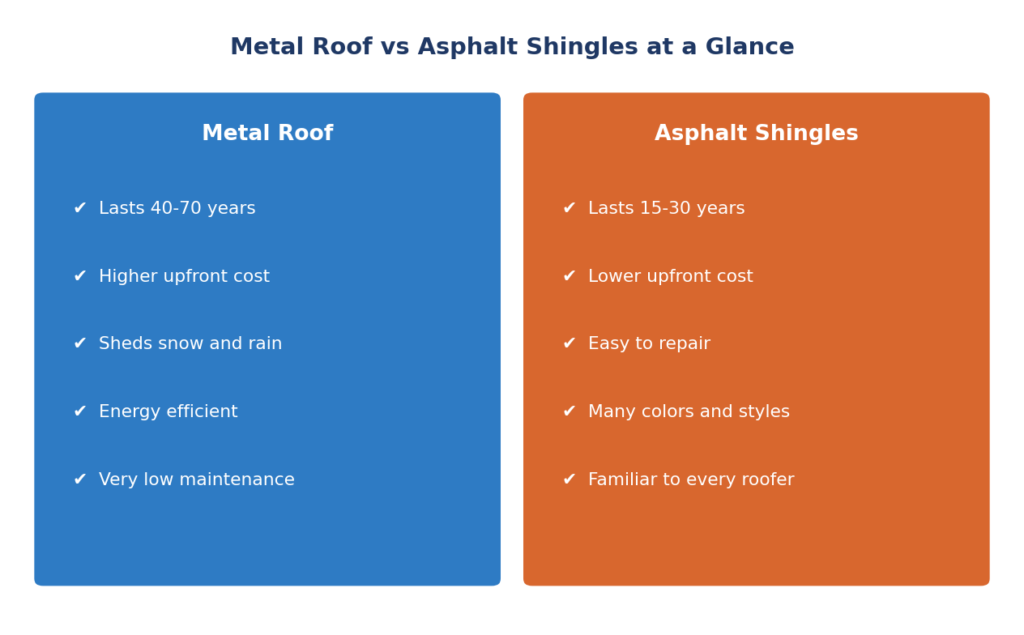
Both roofs keep your home dry, but they differ in almost every other way. Here is how they stack up side by side.
Metal wins on lifespan, energy use, and low upkeep. Shingles win on upfront cost, easy repairs, and the widest choice of colors and styles.
How Much Does Each Roof Cost?
Cost is where the two split most clearly. Asphalt shingles are the most affordable roof to install, which is why most homes have them.
A metal roof costs more upfront, often two to three times the price of shingles. That higher price buys a roof that can outlast several shingle roofs, so the cost per year of life is often lower.
The exact price depends on your roof size, pitch, and the material grade. Our guide on what a new roof costs in Illinois breaks down the factors, and roof financing options can spread either choice over time.
Think about the timeline, not just the sticker price. If you buy two shingle roofs over 50 years, the total can rival one metal roof that covers the same span. For a forever home, metal often wins on math. For a shorter stay, shingles keep more money in your pocket now.
Which Roof Lasts Longer?
Metal lasts far longer than asphalt. This is the biggest difference between the two, and it drives the value argument.
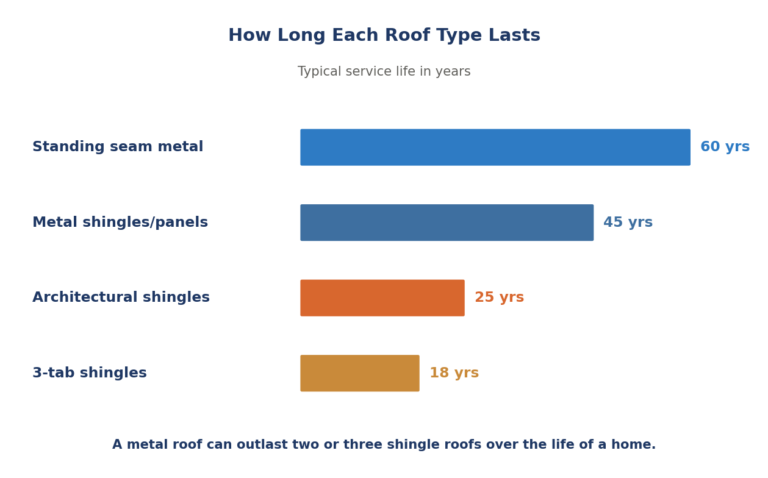
A standing seam metal roof can last 60 years or more. Architectural shingles last around 25 years, and older 3-tab shingles closer to 18.
Shingle lifespan varies with climate and care. Our detailed guide on how long asphalt shingles really last explains what shortens or extends their life.
Water is also heavy. A single inch of standing water adds more than five pounds per square foot to the roof. Over a large flat roof, that extra weight strains the structure and can deepen the low spots, which makes the ponding worse in a cycle.
How Do They Handle Weather and Durability?
Illinois roofs face heavy snow, ice, wind, and summer heat. Both materials cope, but in different ways.
Metal sheds snow and rain easily and resists wind and fire. It will not crack or curl with age. Shingles handle weather well too, but they wear faster and can lose granules or lift in high wind.
Whatever the material, good attic ventilation protects the roof from the inside and helps both types reach their full lifespan. Watch for the signs you need a new roof on either material.
For Illinois homes, the freeze-thaw cycle is the real test. Water gets into small cracks, freezes, and widens them. Metal has no seams to split this way, which is one reason it does so well in northern climates. Shingles hold up fine when maintained, but the cycle wears them faster than in milder states.
How Much Maintenance Does Each Roof Need?
Upkeep is easy to forget when comparing roofs, but it adds up over the years. This is another area where the two differ.
A metal roof needs very little. An occasional check of the fasteners and sealant, plus clearing debris, is usually enough. It will not grow moss or lose granules the way shingles can.
Shingles need a closer eye. Granule loss, curling, and the odd cracked shingle all show up over time, and storms can lift or tear them. Small repairs are simple and cheap, but they come around more often.
Either way, a yearly check keeps a roof performing. Our annual roof maintenance checklist walks through the seasonal steps for any roof type.
What Is Installation Like for Each?
Installation time and skill differ between the two, which is worth knowing before you book a job.
Shingles are quicker to install and every roofer works with them, so scheduling is easy and labor costs stay lower. A typical home can be reshingled in a day or two.
Metal takes longer and needs a crew trained in that system, since the panels must be measured, cut, and fastened precisely. The extra care is part of why metal costs more, and it is why choosing an experienced installer matters even more with metal.
This is the one place where hiring right pays off most. A poorly installed metal roof can leak at the seams, and a rushed shingle job can fail early. With either material, the crew matters as much as the product.
Which Looks Better on a Home?
Looks are personal, and both materials offer plenty of choice. This often comes down to the style of your home.
Shingles come in the widest range of colors and blend with almost any neighborhood. Metal has a cleaner, modern look and now comes in styles that mimic shingles, tile, or slate.
Color affects more than curb appeal. Our guide on the best roof shingle colors covers how shade influences energy use, and the same idea applies to metal finishes.
One more point on looks: metal keeps its finish for decades, while shingle color can fade over time in the sun. If a consistent look for many years matters to you, that is a quiet advantage for metal.
What Are the Pros and Cons of Each?
Here is the honest summary, so you can match the roof to your priorities.
Choose metal if:
- You plan to stay in the home a long time and want the last roof you will buy.
- You want low maintenance and lower energy bills.
- You like a modern look or live where snow load matters.
Choose shingles if:
- You want the lowest upfront cost.
- You want the widest choice of colors and a traditional look.
- You may move within 10 to 15 years.
If you are torn between styles of shingle rather than metal, that is a separate question worth its own look.
Our guide on architectural vs 3-tab shingles covers that choice in detail.
Which Roof Is Right for You?
There is no single best roof, only the best roof for your situation. Think about three things: your budget now, how long you will stay, and the look you want.
If a full replacement is on the table, our roof replacement service in Illinois covers both materials. If your current roof is only partly worn, our guide on roof repair vs replacement helps you decide whether you even need a new roof yet.
Frequently Asked Questions
Is a metal roof worth the extra cost?
For many homeowners, yes. A metal roof lasts two to three times longer than shingles, so the higher upfront price often works out to a lower cost per year over the life of the home.
Are metal roofs noisy in the rain?
Not usually. A metal roof installed over solid decking and underlayment is about as quiet as any other roof. The tin-roof-in-a-barn sound comes from open framing, not modern homes.
Which roof is better for resale value?
Both add value. A new shingle roof appeals to most buyers, while a metal roof can be a selling point for its long life and low upkeep.
Can you put a metal roof over shingles?
Sometimes, yes, depending on the condition of the existing roof and local code. A roofer can tell you after an inspection whether that is a safe option.
Which roof is more eco-friendly?
Metal usually edges it. It is often made from recycled material, is recyclable at end of life, and its long lifespan means fewer roofs sent to landfill.