
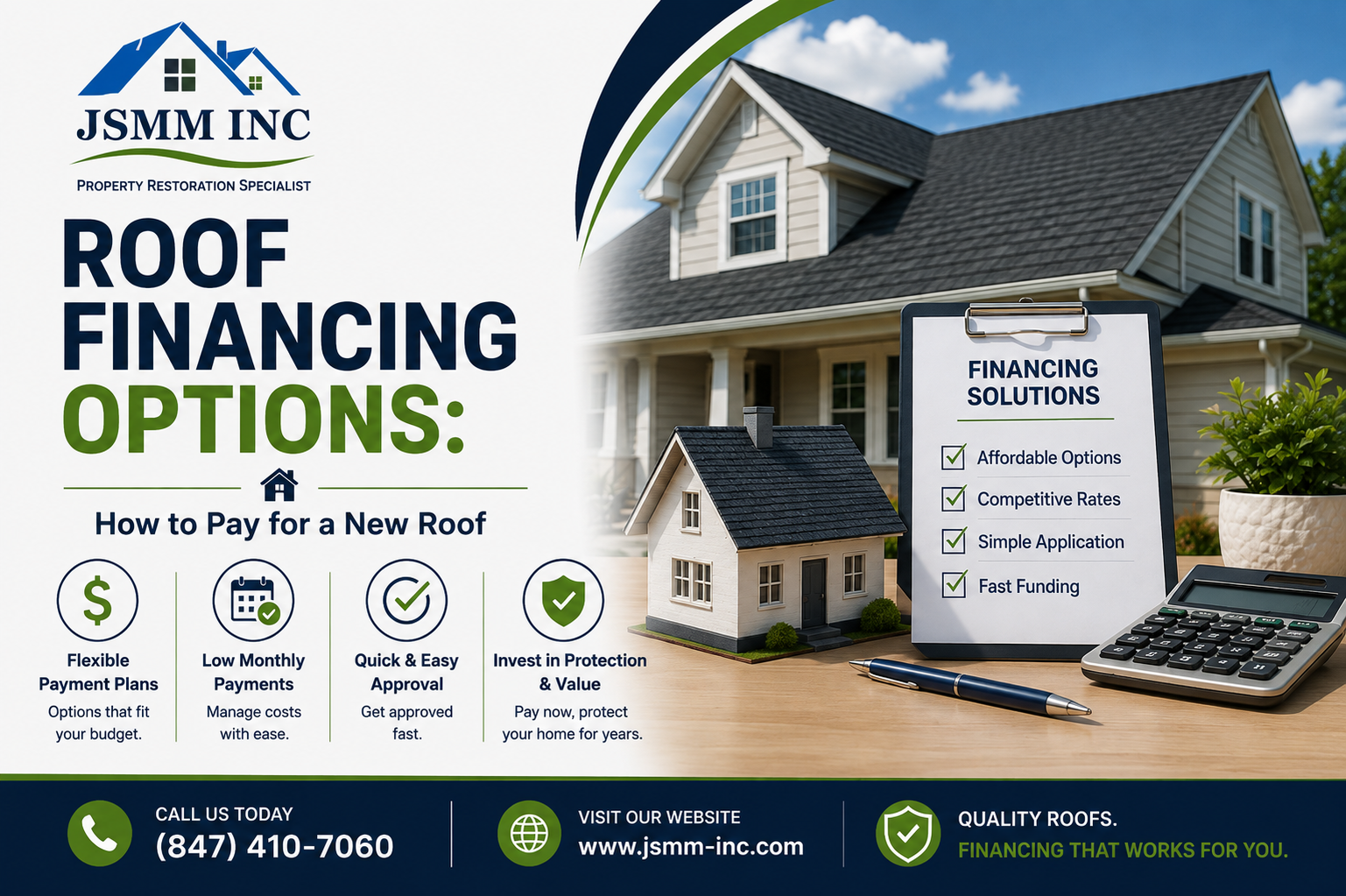
A new roof is one of the biggest home expenses you will face. Most Illinois homeowners need somewhere between a few thousand and tens of thousands of dollars, depending on size, material, and what the inspector finds under the old shingles. Our guide on what a new roof costs in Illinois explains the factors in detail. The good news is that you do not need that money sitting in a savings account before you can move forward. Several real financing options exist, and the right one depends on your credit, your home equity, and how urgent the work is. This guide walks through every option available to Illinois homeowners, what each one costs in practical terms, and how to choose the one that makes sense for your situation.
Table of Contents
ToggleNot Sure If You Need a Full Roof Replacement?
Before committing to expensive financing, let JSMM Inc. inspect your roof. Our experts provide a FREE roof inspection and an honest, no-pressure recommendation so you can make the right decision with confidence.
Contact JSMM Inc. 📞 (847) 410-7060Why Roof Financing Is Worth Understanding Before You Call a Contractor
Most homeowners call a roofer, get a number, and then scramble to figure out how to pay. Knowing your options first puts you in a much stronger position. You can compare contractor financing against your bank. You can time the project when your credit score is strongest. And you can avoid borrowing more than the job actually needs, which is easier when you already know the factors that drive cost. It also helps to know whether a repair might buy you time. Our guide on roof repair vs replacement covers when a fix is enough and when spending on a full new roof is the smarter long-term call.
Option 1: Home Equity Loan or Home Equity Line of Credit
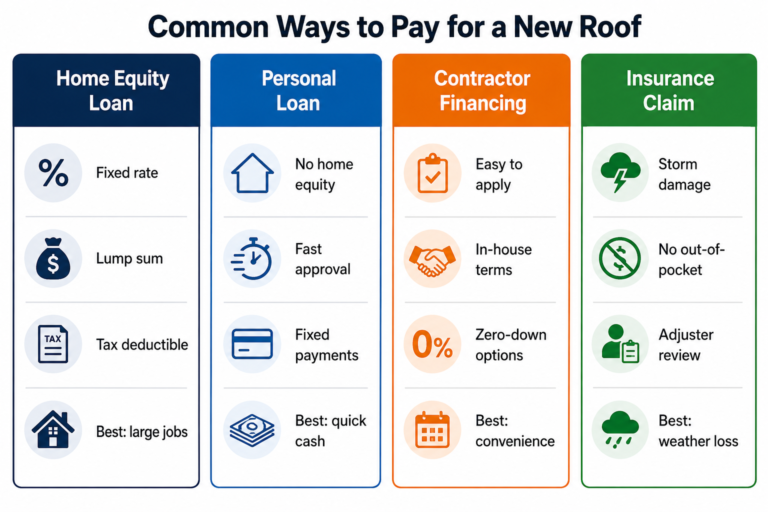
A home equity loan gives you a lump sum at a fixed interest rate, with a set monthly payment over a fixed term. A home equity line of credit, often called a HELOC, works more like a credit card, where you draw what you need up to a limit and pay interest only on what you use.
Both use your home as collateral, which usually means lower interest rates than unsecured options. The interest may also be tax-deductible if you itemize.
The downside is approval time. A home equity loan typically takes three to six weeks to close, so it is not the right tool for an emergency leak. It works best for planned replacements where you have time to shop rates.
Option 2: Personal Loan
Personal loans are unsecured, which means you do not put your home up as collateral. Approval is faster, often in one to three business days. The tradeoff is a higher interest rate than you would get with a home equity product.
This option suits homeowners who do not have enough equity built up, or who need the money faster than a home equity loan allows. Loan terms generally run two to seven years.
Shop rates from your bank, your credit union, and at least one online lender before committing. A small difference in APR adds up to real money over a five-year term.
Option 3: Contractor Financing
Many roofing contractors offer financing through a third-party lender. You apply at the same time you sign the contract, often with a same-day decision. Some plans offer zero percent interest for a promotional period, usually six to eighteen months.
Contractor financing is convenient, but read the fine print carefully. Deferred-interest plans charge all the accumulated interest if you carry any balance past the promotional window.
Ask your contractor exactly which lender they use, what the go-to rate is after any promotional period ends, and whether there are prepayment penalties. Understanding the full terms before you sign anything is one of the most important steps in any roofing project.
Option 4: Homeowner's Insurance
Insurance is not a financing option in the traditional sense, but it is often the best one. If storm, hail, or wind caused your roof to fail, your homeowner’s insurance may cover the full replacement cost minus your deductible.
JSMM Inc. has helped Illinois homeowners settle over $50 million in claims. We document the damage, work with your adjuster, and guide you through the process. Our guide on hail damage and insurance claims explains what to document before you call your insurer.
Age and wear are generally not covered. If your roof is simply old, insurance will not help, and you will need one of the other options on this list.
The most common one is using an unlicensed or manufacturer-uncertified installer. Many manufacturers require that their products be installed by a certified contractor for the warranty to apply. Hiring a company that is not registered with that manufacturer can void the material warranty before the first shingle goes on.
Not registering the warranty after installation is another common problem. Many warranties must be activated within 30 to 90 days of completion. Ask your contractor whether the registration is their responsibility or yours, and confirm it was done. A yearly roof inspection is a good time to verify your warranty documents are in order.
Poor attic ventilation is a less obvious one. Most shingle manufacturers specify minimum ventilation requirements. If your attic runs too hot or too cold because airflow is inadequate, the shingles degrade faster and the warranty may not apply.
Option 5: Government Assistance and Grants
Several assistance programs exist for homeowners who meet income or age criteria. Our guide on how to apply for roof replacement assistance covers what is available in Illinois, including HUD programs, state weatherization assistance, and local community development grants.
These programs do not move quickly, and eligibility requirements vary by county. They work best for homeowners who have time to plan and who are not dealing with an active emergency.
Local nonprofit housing organizations and your county’s community development office are often the fastest way to find out what you qualify for.
Storm Damage? We Can Help With Your Insurance Claim.
Wondering if your roof damage qualifies for an insurance claim? JSMM Inc. provides FREE storm damage inspections, documents the damage, and helps guide you through the insurance claims process from start to finish.
Schedule Free Inspection 📞 (847) 410-7060What to Do Before You Choose Any Financing Option
Picking the right financing starts with knowing exactly what you need. Here are the five steps to take first.
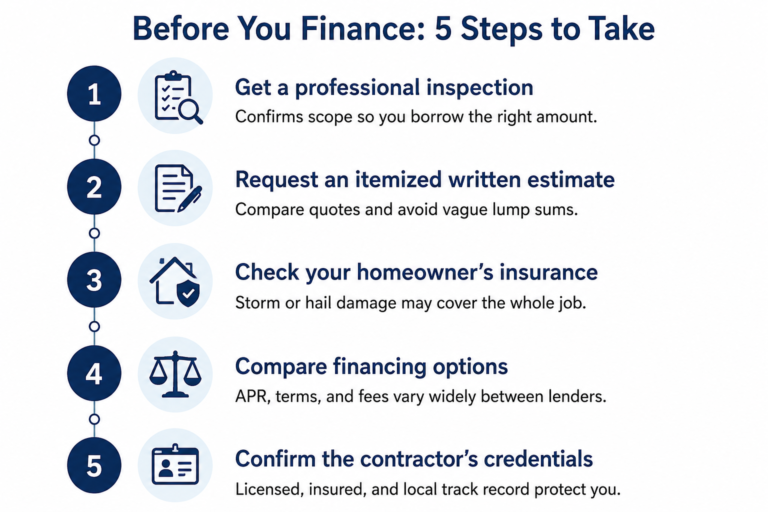
Starting with a professional roof inspection confirms the scope of work so you borrow the right amount, not a guess. Getting an itemized written estimate lets you compare quotes fairly and spots any contractor who is being vague about what they are actually doing.
Checking your homeowner’s insurance before calling a lender is the step most homeowners skip. It takes ten minutes and could save you the cost of the entire job if storm damage qualifies.
Finally, confirm your contractor is licensed, insured, and has a clean BBB record before you hand over any deposit. Knowing the signs that a roof genuinely needs replacing also helps you avoid being talked into a full replacement when a repair would do.
What About Using a Credit Card?
Using a credit card works in limited situations. If your card has a zero-percent promotional rate and you can pay the balance before it expires, it can be an interest-free short-term loan.
For anything beyond a minor repair, a credit card is usually the most expensive way to pay. Standard credit card interest rates are significantly higher than home equity or personal loan rates, and roofing projects rarely fit neatly into a short billing cycle.
A credit card also does not give you any protection if the contractor fails to complete the work. It is best reserved for smaller, well-defined jobs where the cost is under a few thousand dollars. For anything larger, your options on roof replacement in Illinois deserve a structured financing conversation first.
How Long Will the Roof Last Once You Pay for It?
Understanding the return on whatever you borrow matters. An architectural asphalt shingle roof installed correctly typically lasts 25 to 30 years. Our guide on how long asphalt shingles last explains what affects that number and what you can do to reach the top end of the range.
Spreading a financing cost over three to five years against a roof that lasts three decades makes the math very manageable for most homeowners.
Frequently Asked Questions
Can I finance a roof with bad credit?
Yes, though your options narrow. Some contractor financing programs accept lower credit scores, and secured options like a home equity loan depend more on your equity than your score.
How do I compare financing offers?
Look at the APR, the total amount you will repay over the loan term, any fees, and whether there are penalties for paying early. Total repayment is a more honest comparison than the monthly payment.
Does financing affect my ability to get a good contractor?
It should not. A reputable contractor cares that you can pay, not how. Be cautious of any contractor who pressures you toward a specific lender.
What if I cannot afford any of these options right now?
Talk to your local housing authority about weatherization or emergency repair grants. Even a temporary tarp-and-repair can buy time while you arrange financing.
Is roof financing tax-deductible?
Interest on a home equity loan or HELOC used for home improvements may be deductible if you itemize. A personal loan is not. Consult a tax professional for your specific situation.
Ready to Plan Your New Roof?
Get a free, itemized estimate from JSMM Inc.. We'll explain your roofing options, insurance coverage, and financing solutions so you can make an informed decision with confidence.