

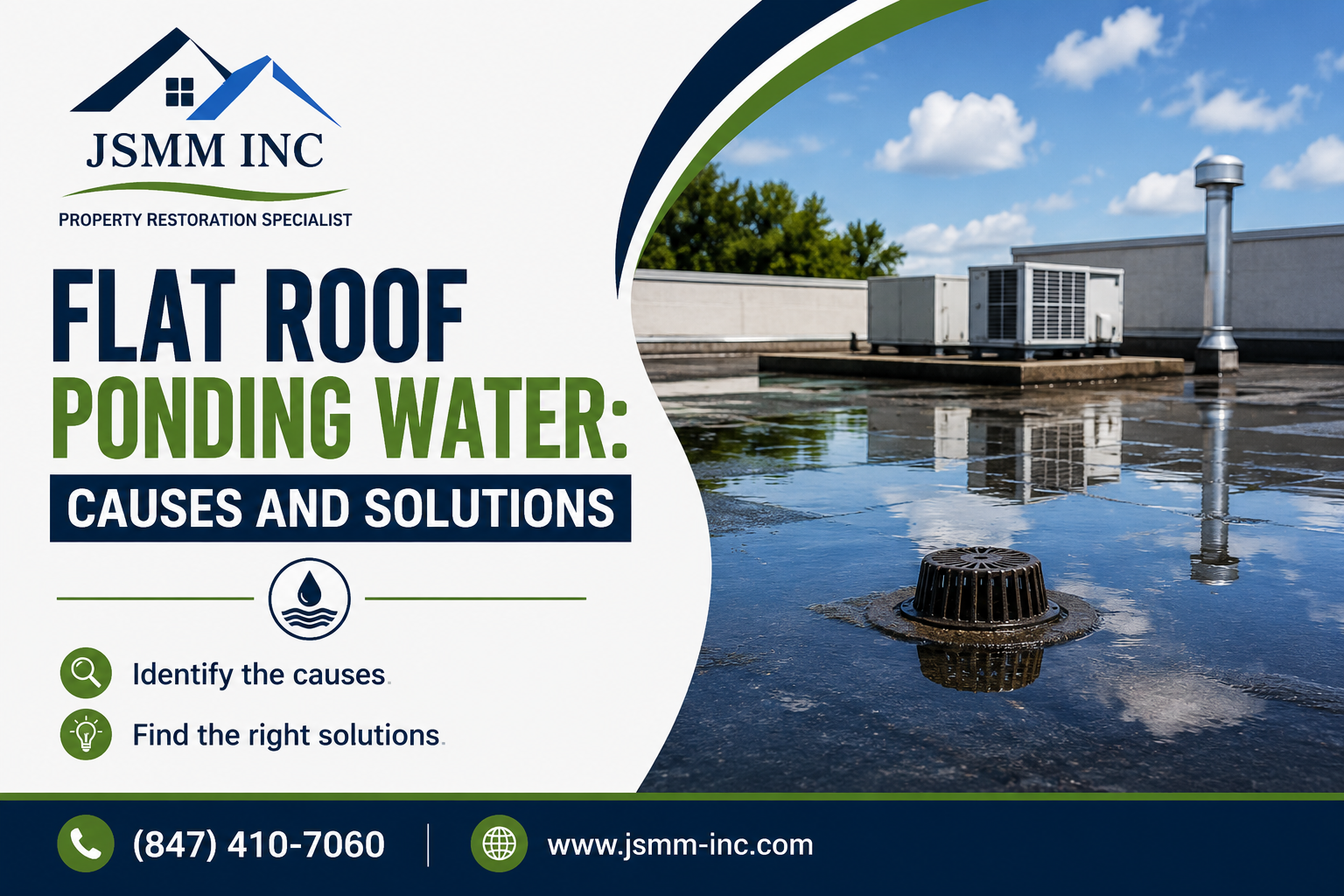
Ponding water is water that stays on a flat roof for more than 48 hours after rain. It is one of the most common flat-roof problems, and left alone, it slowly breaks down the roof and leads to leaks. A little water after a storm is normal. Water that is still sitting there two days later is not. That standing water is a sign the roof is not draining the way it should, and it is worth fixing before it causes real damage.
This guide explains what causes ponding water, why it is a problem, and the solutions that actually work. It applies to both commercial and low-slope roofs. If you manage a business property, our commercial roofing services cover flat-roof issues like this across the North Shore.
Table of Contents
ToggleSeeing Standing Water on Your Flat Roof?
Schedule a FREE roof inspection before minor drainage issues become costly repairs.
What Is Ponding Water on a Flat Roof ?
Ponding water is any water that remains on a flat or low-slope roof for 48 hours or more after it stops raining. Roofing professionals use that 48-hour mark as the line between normal drainage and a real problem.
No flat roof is truly flat. A well-built one has a slight slope, usually a quarter inch of drop per foot, that guides water toward drains. When that slope or drainage fails, water pools instead of running off, and it stays there until it evaporates.
Ponding shows up most on commercial and low-slope roofs, which is why it comes up often in our commercial roof repair work across Illinois.
What Causes Ponding Water on a Flat Roof?
Ponding almost always comes down to a drainage problem. Here are the four main causes.
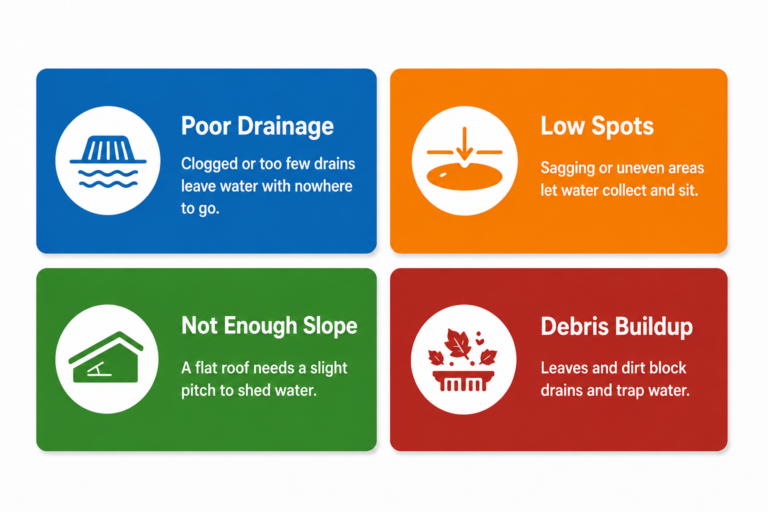
Poor drainage is the top cause. Drains that are clogged, too few, or placed poorly leave water with nowhere to go. Low spots are next, where the roof sags or settles unevenly and water collects in the dip.
Not enough slope is another cause, common on older roofs that were never built with proper pitch. Debris buildup ties it all together, since leaves and dirt block drains and create dams. Clogged drainage is also a frequent source of roof leaks, so the two problems often appear at once.
Why Is Ponding Water a Problem?
Ponding water may look harmless, but it works against the roof every hour it sits there. The damage builds up in stages.
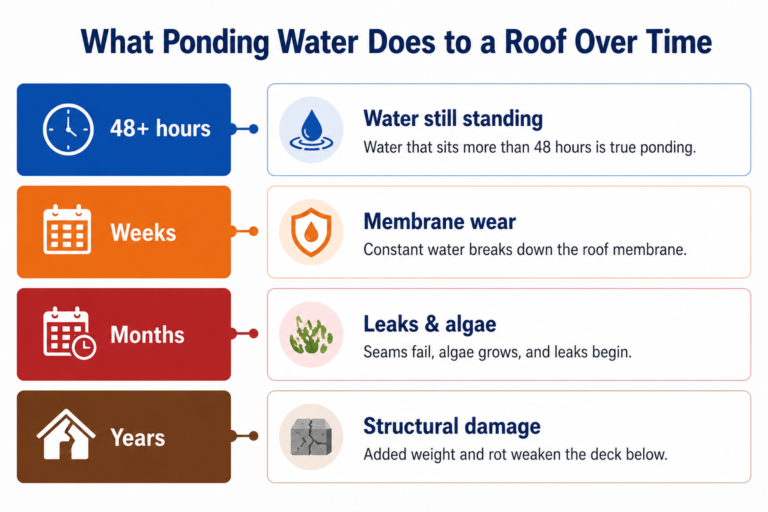
First, the constant moisture breaks down the roof membrane, the top waterproof layer. Over weeks and months, seams weaken, algae and plant growth take hold, and small leaks begin.
Water is also heavy. A single inch of standing water adds more than five pounds per square foot to the roof. Over a large flat roof, that extra weight strains the structure and can deepen the low spots, which makes the ponding worse in a cycle.
How Do You Fix Ponding Water on a Flat Roof ?
The right fix depends on the cause, which is why an inspection comes first. These are the main solutions a roofer will consider.
- Clear and add drains, so water has a fast, clear path off the roof.
- Install tapered insulation, which builds a gentle slope over low spots to guide water to the drains.
- Apply a new roof coating, which can smooth minor low areas and reseal a worn membrane.
- Fix or replace the affected section when the membrane or deck is already damaged.
For a roof with widespread ponding and an aging membrane, a full commercial roof replacement with proper slope built in is often the most cost-effective long-term fix. A roofer will tell you honestly whether a repair or a replacement makes more sense.
Stop Ponding Water Before It Causes Damage
Get a FREE roof inspection
We find the cause of standing water and deliver a long-term drainage solution.
How Do Roofers Find the Cause of Ponding?
A roofer diagnoses ponding by looking at where the water sits and why it is not draining. The location of the puddle usually points straight to the cause.
They check the drains and scuppers for blockages, measure the slope across the roof, and look for low spots that hold water. They also inspect the membrane and the flashing around drains and edges, since a worn seal there often leaks first.
The metal flashing around drains and roof edges is a common weak point, so our guide on roof flashing is worth a read if your ponding is near an edge or a drain. A trained eye catches these details long before they turn into an interior leak.
Can You Prevent Ponding Water?
Yes. Most ponding is preventable with regular care and good drainage. A few simple habits keep water moving off the roof.
- Clear drains, gutters, and scuppers of leaves and debris a few times a year.
- Schedule a professional roof inspection at least once a year, and after major storms.
- Address low spots early, before they deepen and start holding water.
A yearly roof inspection is the single best prevention step, because a professional spots low spots and drainage problems long before they turn into standing water and leaks.
On low-slope roofs with attic space below, good attic ventilation also helps, since trapped moisture underneath can soften the deck and create the low spots where water collects.
Does Ponding Water Always Mean a Leak?
Not always, but it is a strong warning sign. A brand-new, well-sealed membrane can hold standing water for a while without leaking. The problem is that ponding wears that membrane down faster than normal, so a leak becomes far more likely over time.
Ponding also hides other issues. It can cover a small crack or a bad seam that would be easy to spot on a dry roof. This is why standing water is worth investigating even when there is no leak yet, and why our guide on why roofs leak lists it among the early warning signs.
Should You Repair or Replace a Ponding Roof?
It depends on how bad the ponding is and how old the roof is. A roof with one or two low spots and a sound membrane can often be fixed with drainage work or tapered insulation. A roof with widespread ponding, a worn membrane, and recurring leaks usually needs replacing.
Our guide on roof repair vs replacement walks through how to weigh the two. If the roof is also showing the signs it needs replacing, investing in a new roof with proper slope solves the ponding for good rather than fighting it every year.
The cheapest option in the short term is not always the cheapest over time. Repeated patch jobs on a failing roof often add up to more than a single replacement that fixes the drainage once.
Frequently Asked Questions
What is ponding water on a flat roof?
Ponding water is water that stays on a flat roof for more than 48 hours after rain. It signals that the roof is not draining properly and can lead to damage and leaks.
How long can a flat roof hold standing water?
Water that sits longer than 48 hours is considered ponding. A new membrane may hold it for a while without leaking, but the standing water wears the roof down and should be fixed.
Is ponding water covered by a roof warranty?
Often not. Many manufacturer warranties specifically exclude damage from ponding water, which is one more reason to fix drainage problems early.
How much water on a flat roof is too much?
Any water that remains after 48 hours is too much. Depth matters too, since one inch of water adds over five pounds per square foot of weight.
Can ponding water be fixed without replacing the roof?
Yes, in many cases. Clearing drains, adding drains, tapered insulation, or a new coating can fix minor ponding. Widespread ponding on an old roof may need replacement.
Ready to Eliminate Ponding Water for Good?
Schedule a FREE roof inspection with JSMM Inc.
We identify drainage issues and provide lasting solutions for flat and commercial roofs.