

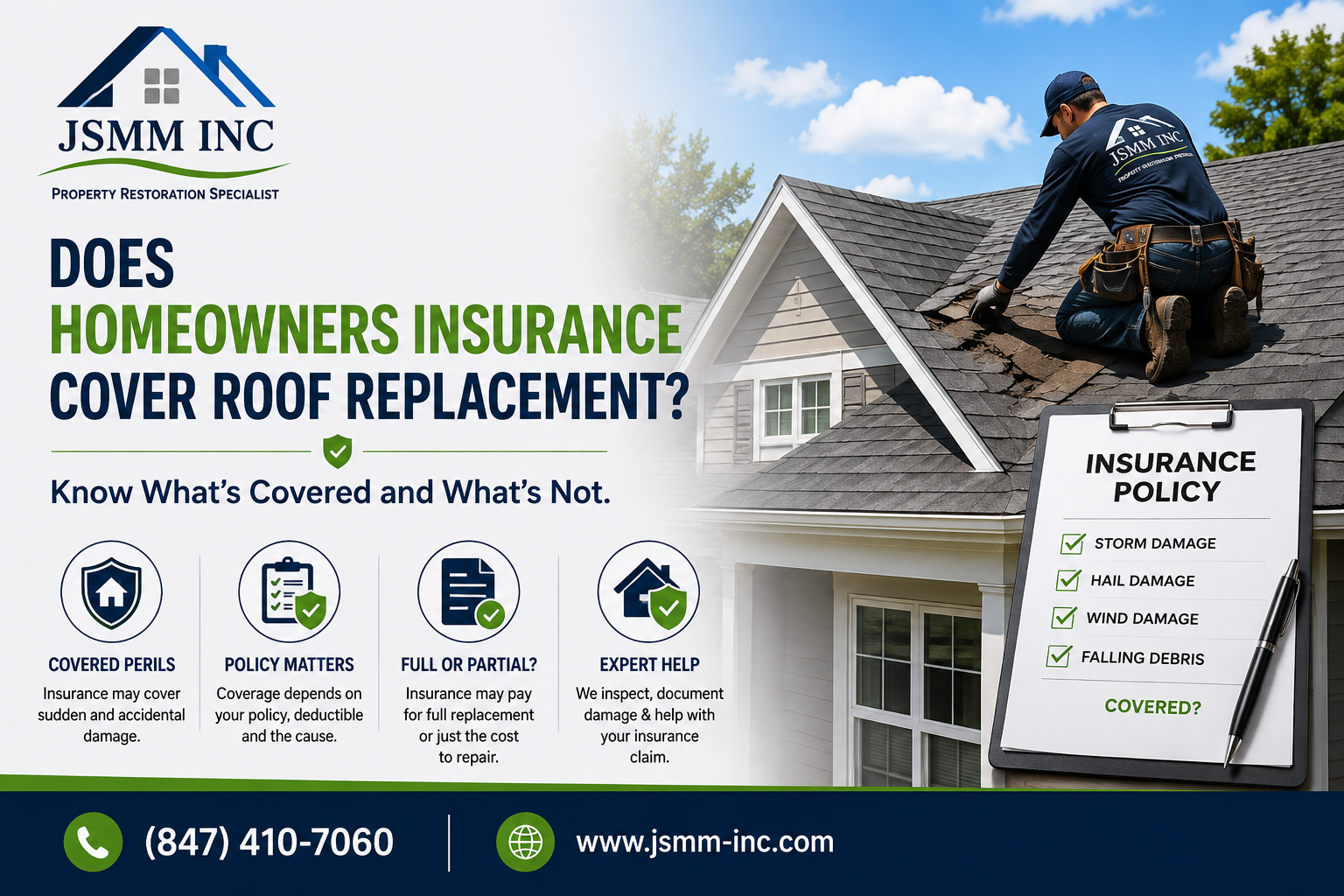
Yes, homeowners insurance usually covers roof replacement when the damage comes from a sudden event like a storm, hail, wind, fire, or a fallen tree. It generally does not cover a roof that has simply worn out from age or poor maintenance.
That single distinction, sudden damage versus slow wear, decides most roof insurance claims. If a storm tears shingles off your roof, your policy is likely to help. If your roof is 25 years old and finally giving out, the cost is usually yours.
This guide explains what is covered, what is not, and how to file a claim that succeeds. JSMM Inc. has helped Illinois homeowners settle over $50 million in insurance claims, so this is ground we know well. If your roof was recently hit by a storm, our guide on hail damage is a useful companion to this one.
Table of Contents
ToggleSuspect Storm Damage to Your Roof?
Schedule a FREE roof inspection with JSMM Inc.
We document the damage and help you build a stronger insurance claim.
What Does Homeowners Insurance Usually Cover?
Standard homeowners policies cover roof damage caused by sudden, accidental events. These are the situations where a claim is most likely to succeed.
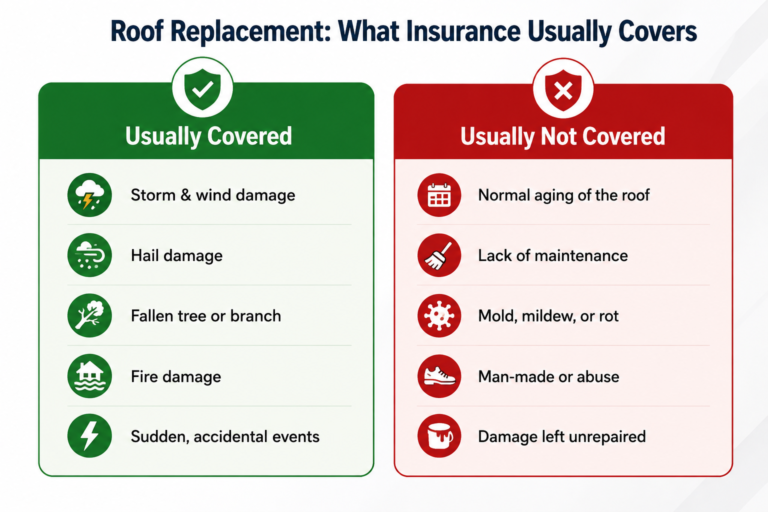
Storm and wind damage, hail, fire, and damage from a fallen tree or branch are the most common covered causes. The key word your insurer uses is sudden. If a specific event caused the damage on a specific date, you have a covered claim.
Storm and wind damage, hail, fire, and damage from a fallen tree or branch are the most common covered causes. The key word your insurer uses is sudden. If a specific event caused the damage on a specific date, you have a covered claim.
Hail and wind are the leading causes of roof claims in Illinois. Our guide on hail damage and what to document walks through exactly what to photograph before you call your insurer.
What Does Insurance Usually Not Cover?
Insurance is not designed to replace a roof that has reached the end of its life. These are the situations where a claim is usually denied.
- Normal age and wear, since every roof eventually wears out and that is expected.
- Lack of maintenance, where a problem was ignored until it became serious damage.
- Old, worn-out roofs that were already near failure before any event.
- Manufacturer defects, which are covered by the product warranty instead, not insurance.
This is why keeping up with regular roof inspections matters for insurance, not just for the roof. A documented history of care makes it far harder for an insurer to blame damage on neglect.
- Doors or windows that suddenly stick or are hard to open, which can mean the frame is under pressure.
- New cracks in interior walls or ceilings, especially near the center of the house.
- A sagging or dipping roofline, or creaking and popping sounds from the roof.
- Leaks or water stains appearing on ceilings during a thaw.
A sagging ceiling or loud creaking is a serious warning. If you notice it, keep people out of that part of the house and call a professional. Some of these signs overlap with other roof problems, so our guide on why roofs leak can help you tell them apart.
How Does Roof Age Affect Coverage?
Roof age is one of the biggest factors in a claim. Many insurers reduce or change coverage once a roof passes a certain age, often 15 or 20 years.
There are two main ways a policy pays out. Replacement cost value pays what it costs to replace the roof today. Actual cash value pays that amount minus depreciation for the roof’s age, which can be much less on an older roof.
Check which type of coverage you have before you need it. On an older roof, the difference can be thousands of dollars. Our guide on what a new roof costs in Illinois helps you understand the full number your policy is measured against.
Start at the roof edge and work upward, pulling snow toward you in small amounts. Clearing the bottom few feet of the roof does the most good, because that is where ice dams form and where the gutters need to drain.
Never climb onto a snowy or icy roof yourself. Falls from roofs are one of the most common winter injuries, and a snow-covered roof hides the slick surface underneath. If the snow is deep, the roof is high, or you see warning signs of stress, the job belongs to a professional with the right equipment.
How Does Your Deductible Work on a Roof Claim?
Your deductible is the amount you pay before insurance covers the rest. On a roof claim, the insurer subtracts your deductible from the payout, so you cover that part yourself.
For example, if a covered replacement costs a certain amount and your deductible is a set figure, the insurer pays the difference and you pay the deductible. Some Illinois policies use a separate, higher deductible for wind and hail, so check that number before a storm hits, not after.
Knowing your deductible ahead of time helps you decide whether a claim is worth filing. For small damage, the repair may cost less than the deductible, in which case paying directly is smarter. Our guide on roof repair vs replacement helps you judge the scale of the damage first.
How Do You File a Roof Insurance Claim?
Filing a successful claim comes down to good documentation and moving quickly. Here are the steps that give a claim the best chance.
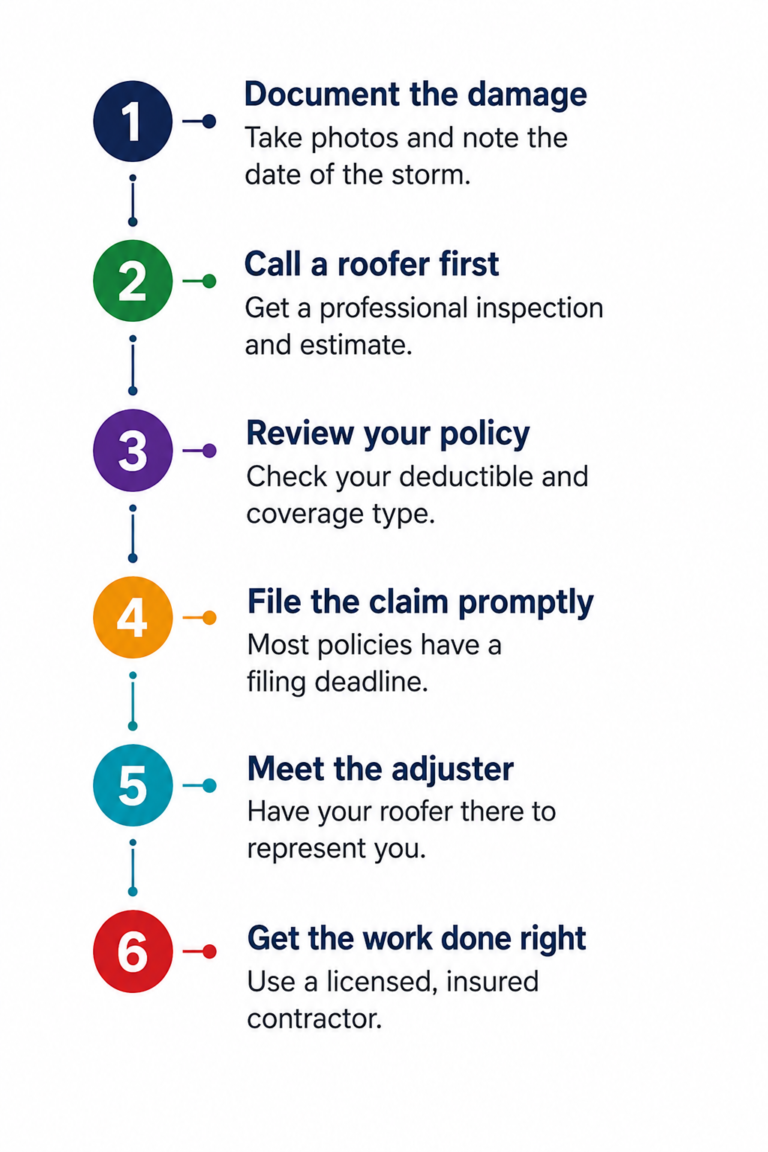
Start by documenting the damage with photos and the date of the storm. Then call a roofer for a professional inspection before you call your insurer, so you know what you are actually claiming.
Review your policy for your deductible and coverage type, file the claim before any deadline, and have your roofer present when the adjuster visits. A roofer who deals with adjusters regularly, like our team with $50 million in settled claims, makes sure the damage is fully counted and not low-balled.
How Do You Prevent Snow Load Problems Before Winter?
Start by documenting the damage with photos and the date of the storm. Then call a roofer for a professional inspection before you call your insurer, so you know what you are actually claiming.
Review your policy for your deductible and coverage type, file the claim before any deadline, and have your roofer present when the adjuster visits. A roofer who deals with adjusters regularly, like our team with $50 million in settled claims, makes sure the damage is fully counted and not low-balled.
Why Should a Roofer Inspect Before You Call the Insurer?
Calling a roofer first is the single most useful step most homeowners skip. A professional inspection tells you whether the damage is worth a claim at all, and how much of the roof is affected. It also protects you. Filing a claim that gets denied can still count against your record. Knowing you have genuine, covered damage before you file keeps your claim history clean.
An inspection also catches damage an untrained eye misses, like lifted shingles or bruised areas from hail. If the damage turns out to be minor, our guide on roof repair vs replacement helps you decide whether a claim is even the right move.
Not Sure If Your Roof Damage Qualifies for a Claim?
Get a FREE roof inspection before filing your insurance claim.
What If Your Claim Is Denied?
A denied claim is not always the end. Insurers sometimes deny a claim because the damage was not documented well or the adjuster missed something during a quick visit.
You can request a second inspection or an independent adjuster review. Having a roofer who documented the damage clearly gives you strong evidence to appeal. Our team has helped many Illinois homeowners get denied claims reconsidered, which is part of the reason our roof replacement service in Illinois includes claims support from start to finish.
If the denial holds because the roof was simply old, replacement becomes an out-of-pocket project. That is not the end of the road either.
What If Insurance Will Not Cover Your Roof?
If your roof needs replacing but does not qualify for a claim, you still have options. Age-related replacement is a planned expense, and most homeowners finance it rather than pay all at once.
Our guide on roof financing options covers the ways to pay, from home equity loans to contractor financing. Spreading the cost over several years against a roof that lasts decades is manageable for most budgets. A worn-out roof only gets more expensive to ignore, since leaks lead to interior and structural damage. If you are seeing the signs you need a new roof, acting sooner saves money in the long run. Planning the replacement on your own timeline is also less stressful than a sudden emergency after a leak. You get to compare contractors, choose materials, and schedule the work when it suits you.
Frequently Asked Questions
Does homeowners insurance cover roof replacement?
Yes, when the damage comes from a sudden event like a storm, hail, wind, fire, or a fallen tree. It usually does not cover a roof that wore out from age or poor maintenance.
Will insurance cover an old roof?
It depends on the cause and your policy. Storm damage to an old roof may still be covered, but the payout can be reduced for age if you have actual cash value coverage.
How long do I have to file a roof claim?
Most policies set a filing deadline, often one year from the date of damage. File as soon as you spot the damage to avoid missing the window.
Does filing a roof claim raise my premium?
It can, depending on your insurer and claim history. This is one reason to confirm you have genuine covered damage before filing.
Do I need a roofer to file a claim?
You are not required to, but a professional inspection and estimate make a claim far stronger and help ensure the damage is fully counted.
Need Help With Roof Damage or an Insurance Claim?
Over $50 million in settled claims for Illinois homeowners.
Call (847) 410-7060 for trusted guidance from JSMM Inc.