

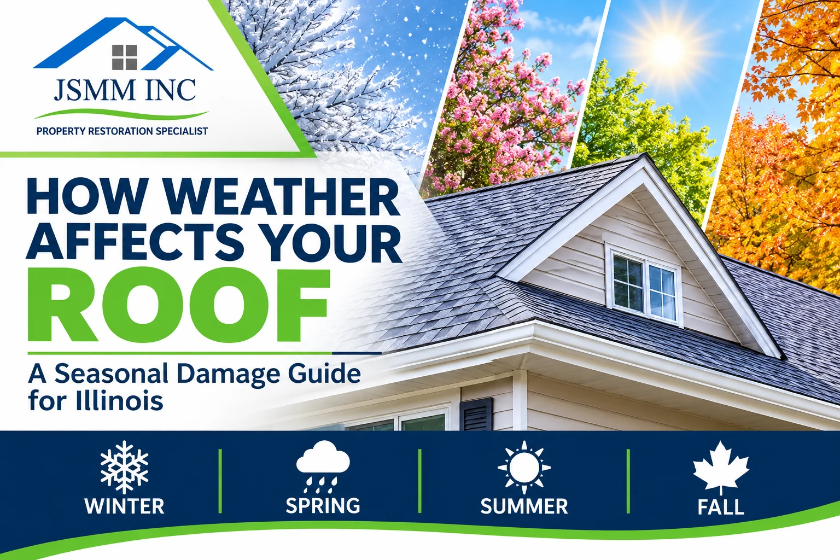
Weather is the biggest reason roofs wear out before their time. In Illinois, your roof faces heavy snow and ice in winter, strong storms and rain in spring, intense heat and hail in summer, and falling leaves in fall. Each season brings a different kind of damage. Over time, these changes crack shingles, loosen flashing, and open small gaps that let water in.
This guide explains how weather affects your roof in each season, the warning signs to look for, and simple steps to protect your home all year.
Table of Contents
ToggleWorried your roof already has weather damage?
Book a free inspection with JSMM Inc. Call (847) 410-7060 or reach our team for a same-week visit.
Why Illinois Weather Is Hard on Roofs
Illinois has a tough climate for roofing. The state swings from freezing winters to hot, humid summers. These large temperature changes make roofing materials expand and shrink again and again. This slow movement weakens shingles, sealant, and flashing over the years.
The real problem is the freeze-thaw cycle. Water gets into tiny cracks, freezes, and grows larger. When it melts, the crack is bigger than before. Repeat this hundreds of times each winter and small flaws turn into leaks. Add spring storms and summer hail, and a roof here works harder than one in a mild climate. This is also why roofs in Illinois often age faster than the national average, as our guide to asphalt shingle lifespan explains.
Humidity plays a part too. Warm, damp summer air can get into a poorly vented attic, where it condenses on cold mornings and slowly rots the deck from below. Many homeowners blame a leak when the real cause is trapped moisture.
Winter: Snow, Ice, and Freeze-Thaw Damage
Winter is the hardest season on an Illinois roof. Snow and ice sit on the surface for weeks, and the weight adds stress to the whole structure.
The most common winter problem is the ice dam. Warm air from your attic melts snow on the roof. The water runs down and freezes again at the cold edge. This ridge of ice blocks the next round of meltwater, which then backs up under the shingles and leaks inside. You can lower this risk with good attic insulation and airflow, which our guide on stopping ice dams covers in detail.
Snow that melts and refreezes at the roof edge is one of the most common causes of winter leaks we see on the North Shore. The damage usually shows up as a brown stain on an upstairs ceiling.
Other common winter issues include cracked shingles that turn brittle in the cold, heavy snow load that strains older or low-slope roofs, and frozen, blocked gutters that force water sideways under the roof edge.
Choosing the right materials helps too. Some products handle cold far better than others, as shown in our look at roofing for cold Illinois winters.
Spring: Rain, Wind, and the First Storms
Spring brings melting snow and heavy rain at the same time. This is when hidden winter damage finally shows up as a leak.
Strong spring winds can lift or tear shingles, especially ones already loosened by the cold. Once a shingle is gone, the layer underneath is exposed to every storm that follows. Wind-driven rain then pushes water under the remaining shingles and into the roof deck.
If a storm hits and water starts coming in, act fast. Our guide on what to do during a heavy-rain leak walks you through the first steps before help arrives.
Spring is also the start of storm season. If wind or hail causes real damage, you may have a claim. Our walkthrough on filing a roof insurance claim shows how to document it the right way.
Summer: Heat, UV Rays, and Hail
Summer damage is slower but just as serious. Long hours of direct sun heat the roof surface to very high temperatures. This bakes the shingles, dries out their protective oils, and makes them brittle. Over many summers, the sun alone can shorten a roof’s life by years.
Daily heating and cooling also makes the roof expand and shrink, which loosens nails and seals. On flat and low-slope roofs, trapped heat speeds up wear even more. A hot attic also raises your cooling bills.
Then there is hail. Illinois sees strong summer storms that can bruise or crack shingles in minutes. The damage is not always easy to see from the ground. Our guide on spotting hail damage explains what to check after a storm.
Not sure if summer storms hurt your roof?
A quick professional check gives you a clear answer. Contact JSMM Inc. or call (847) 410-7060 to schedule your inspection.
Fall: Leaves, Debris, and Temperature Swings
Fall is your chance to get ready for winter. The weather is mild, but new problems start here. It is also when many homeowners spot the first signs of trouble.
Falling leaves and twigs collect in gutters and valleys. When gutters clog, water cannot drain. It pools, backs up, and rots the roof edge and fascia. Clogged gutters are also a leading cause of ice dams later in winter.
Fall temperatures also swing from warm days to cold nights. This early freeze-thaw movement reopens small cracks before winter even starts.
Fall is the best time for a full check-up. A yearly professional roof inspection finds loose shingles, worn sealant, and weak flashing while repairs are still cheap and easy.
Illinois Roof Damage by Season
Here is a quick view of what each season does to your roof and what to watch for.
| Season | Main weather threats | Warning signs to watch | What to do |
|---|---|---|---|
| Winter | Ice dams, snow load, freeze-thaw | Icicles, interior stains, sagging ceilings | Improve attic airflow, clear heavy snow safely |
| Spring | Heavy rain, wind, early hail | Missing shingles, ceiling leaks, damp walls | Check after storms, fix leaks fast |
| Summer | Heat, UV rays, hail | Curling, cracked, or bruised shingles | Inspect after hail, replace worn shingles |
| Fall | Leaves, debris, cool nights | Clogged gutters, water at the roof edge | Clean gutters, book a fall inspection |
Common Weather Damage by Roof Part
Different parts of the roof fail from different weather. This table shows where to look.
| Roof part | Weather cause | What you will see |
|---|---|---|
| Shingles | Heat, hail, wind | Curling, cracks, bald spots, missing pieces |
| Flashing | Freeze-thaw, rust | Gaps or lifting around chimneys and vents |
| Gutters | Leaves, ice | Overflow, sagging, water near the foundation |
| Attic | Poor airflow, ice dams | Damp insulation, musty smell, water stains |
| Roof deck | Long-term leaks | Soft spots, sagging, dark patches |
How to Protect Your Roof Through Every Season
You cannot control Illinois weather, but you can reduce its damage with a simple routine.
- Clean gutters twice a year, in spring and fall.
- Trim branches that hang over the roof.
- Check the attic for damp spots and good airflow.
- Look at the roof after every major storm.
- Fix small problems early, before they spread.
A written record also helps. Note the date of each cleaning, repair, and storm. Insurers and manufacturers both ask for this history when you file a claim.
Most weather damage starts small. A minor repair today is far cheaper than a new roof later. When damage does appear, our team handles roof repair across Illinois quickly and cleanly.
When Weather Damage Means Repair or Replacement
Sometimes weather wears a roof past the point of repair. If leaks return in several spots, or the roof is near the end of its life, a full roof replacement may cost less over time than repeated fixes. Not sure which you need? Our guide on repair versus replacement helps you decide with clear, honest advice.
Frequently Asked Questions
What type of weather damages roofs the most in Illinois?
Winter is the hardest season. Snow, ice, and the freeze-thaw cycle cause the most damage by forcing water into small cracks and widening them over time.
How often should I inspect my roof in Illinois?
Twice a year is best, once in spring and once in fall, plus a check after any major storm. This catches damage early in both the hot and cold seasons.
Can hail damage a roof even if I cannot see it?
Yes. Hail can bruise or crack shingles without leaving obvious holes. The damage often shows up as leaks months later, so a professional check after a hailstorm is worth it.
Does the hot summer sun really hurt my roof?
It does. Constant sun and heat dry out shingles and make them brittle. Over many summers, this can shorten a roof’s life by several years.
How do I prevent ice dams in winter?
Protect your Illinois roof before the next season.
Illinois weather never takes a break, and neither should your roof care. Whether you need a storm check, a small repair, or expert advice, JSMM Inc. is here to help. Contact us or call (847) 410-7060, or visit 1542 Old Skokie Valley Rd, Highland Park, IL 60035.