
A roof coating is a liquid layer that forms a waterproof film on top of your existing roof. It works best on dry, sound, flat, or low-slope roofs, where it can extend the roof’s life and delay a full replacement. The main types are acrylic, silicone, polyurethane, and asphalt, and industry groups advise against coating asphalt shingles.
JSMM Inc. has served Highland Park and the North Shore for more than 30 years. Our commercial roof repair services in Illinois include cool-roof coating. This guide compares each type, shows which roofs can take a coating, and explains when replacement is the better choice.
Table of Contents
ToggleFind Out If a Coating Fits Your Roof
JSMM Inc. offers free roof inspections across Highland Park and the North Shore. Contact us or call (847) 410-7060.
How Does a Roof Coating Work?
A crew applies the coating wet over a clean, dry roof. It cures into a continuous film that seals pinholes and hairline cracks and shields the surface from sun and rain. Many roof coatings are elastomeric, which means they can stretch and recover as the roof expands and contracts.
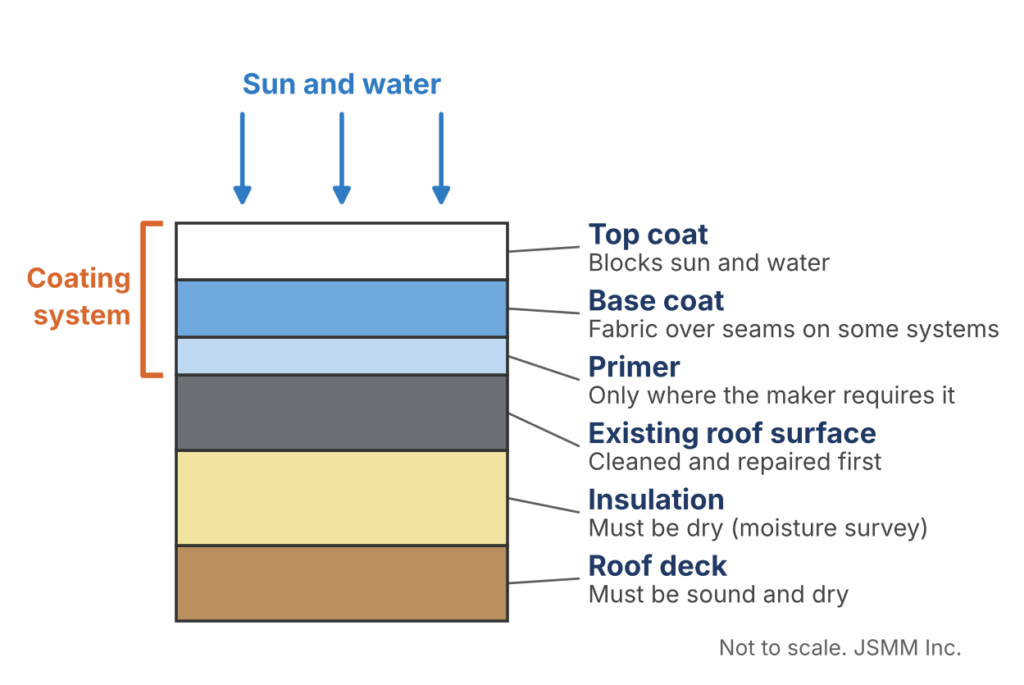
A coating does not replace the insulation, the deck, or the existing roof surface. Those layers must stay dry and sound, or the coating has nothing solid to protect.
What Are the Main Types of Roof Coatings?
Each type suits a different roof and climate. This table compares the four you will hear about most.
| Type | Best for | Standing water | Cost per sq ft | Main drawback |
|---|---|---|---|---|
| Acrylic | Sloped roofs that drain well | Poor | $0.50 to $3 | Breaks down under standing water |
| Silicone | Flat roofs, humid areas, and ponding water | Strong | $1.50 to $4.50 | Collects dirt and is slippery when wet |
| Polyurethane | Hail areas and heavy foot traffic | Check the product. | $1.50 to $4 | Some types are less stable in sunlight. |
| Asphalt | Built-up and modified bitumen roofs | Check the product. | $1 to $2.50 | Usually black, so it reflects little sun. |
Costs are installed national averages from HomeAdvisor, so Chicago-area quotes will differ. Ponding means water that stays on the roof more than 48 hours after rain, and it is hard on acrylic coatings. Fix drainage first, as our guide to ponding water causes and solutions explains.
What Are the Benefits Roof Coating?
A coating cannot make an old roof new. On a sound roof, it brings these benefits:
- Waterproofing. The film seals pinholes, hairline cracks, and small gaps.
- Sun protection. The top coat shields the surface from ultraviolet light, which wears roofs down over time.
- A cooler roof. A cool roof coating is light in color, so it reflects more sunlight than a gray roof. On a typical summer afternoon, a clean white roof that reflects 80% of sunlight stays about 50°F cooler than a gray roof that reflects 20%, according to ENERGY STAR.
- Less cooling energy. The Department of Energy says a cool roof can cut a single-story building’s yearly air-conditioning use by up to 15% in warm climates. Illinois savings may be smaller, and a cool roof may raise winter heating use.
- Lower cost than replacement. A coating usually costs less than a tear-off and a new roof.
- Less disruption. With no tear-off, the job creates less waste and disturbs the building less.
Which Roofs Can You Coat?
Coatings work on many single-ply, metal, and built-up roofs, so flat roof coating suits many commercial buildings. If you are weighing a flat roof against a pitched one, see our comparison of flat versus pitched roofs. The roof surface decides whether a coating will bond, so use this table as a starting point.
| Roof type | Can you coat it? | What to know |
|---|---|---|
| Modified bitumen or built-up (layered asphalt) | Yes. | A common candidate. Clean and repair the surface first. |
| TPO, EPDM, or PVC | Yes, with testing | The coating must pass an adhesion test. Many systems also need a primer. |
| Metal | Yes. | Clean the roof, remove rust, and prime if the maker requires it. |
| Asphalt shingles | No | Not advised. See the note below the table. |
Single-ply membranes and metal panels are compared in our guide to TPO, EPDM, and metal roofing. Shingle roofs are the exception.
ARMA and GAF advise against field-applied coatings over shingles. ARMA says they can loosen granules, trap moisture, and may affect the roof’s fire rating. If your shingles look worn, read how long asphalt shingles last before you decide on a fix.
When Is a Roof Coating the Right Choice?
A coating works when the roof is dry, sound, and still has useful life. A moisture survey finds wet insulation hidden under the surface, so it should come first. Use this table to match your roof’s condition to the right move.
| Roof condition | Coat it? | What to do |
|---|---|---|
| Worn surface, but dry with no leaks | Yes. | Clean, repair the seams, and coat. |
| Wet insulation in under 25% of the roof | Maybe | Replace the wet areas first, then coat. |
| Wet insulation in 25% or more | No | Consider a tear-off and a new roof. |
| Leaks at seams or flashings | Not yet | Repair them and let the roof dry first. |
| Water stands for over 48 hours. | Yes, with silicone | Choose silicone and improve drainage. |
| Soft or rotted deck | Not yet | Repair or replace the deck first. A coating cannot fix structure. |
| Roof near the end of its life | No | Plan a replacement. |
A coating cannot add life back to a roof that is past its service life. If you suspect your roof is near the end, read our list of signs that a commercial roof needs replacement.
Get an Honest Answer About Your Roof
JSMM Inc. will inspect it and tell you whether to coat, repair, or replace. Request a free inspection or call (847) 410-7060.
How Is a Roof Coating Applied?
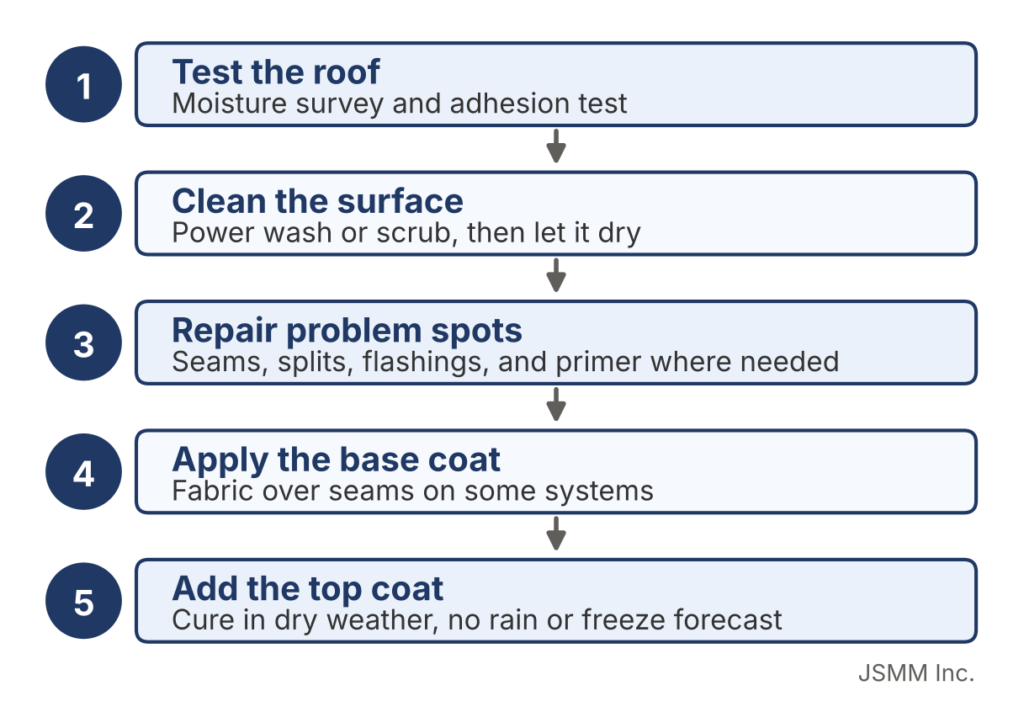
A coating job has five steps, and the prep work comes first.
- Test the roof. Run a moisture survey, then an adhesion test to see whether the coating will bond.
- Clean the surface. Power wash with a cleaner if needed, then let the roof dry fully.
- Repair problem spots. Fix seams, splits, and flashings. Add a primer if the manufacturer requires one.
- Apply the base coat. Many systems press reinforcing fabric into the coating over seams.
- Add the top coat. It needs dry weather to cure, and some systems need two coats.
How Long Does a Roof Coating Last, and What Does It Cost?
Contractor guidance puts acrylic at about 10 to 15 years and silicone at about 15 to 20 years with proper upkeep. These numbers assume a sound roof, and they are not a promise.
Roof coating costs run about $1 to $4 per square foot installed, based on national averages. A 5,000 square foot flat roof would run roughly $5,000 to $20,000 before any repairs. For comparison, see typical roof replacement costs in Illinois.
A coating still needs regular care. Keep drains clear, rinse off dirt, and check the roof after storms. Our annual roof maintenance checklist lists the checks to make.
What Should Illinois Building Owners Know?
Weather limits when a coating can go on. One major manufacturer’s guide calls for 55°F or higher for acrylic and 40°F or higher for silicone. The temperature must hold for 24 hours, and the forecast must show no rain or freezing weather in that time.
In the Chicago area, that usually means late spring through early fall, and silicone can go on in cooler weather. Freeze and thaw cycles also make roofs expand and contract, so pick a flexible, elastomeric product.
Hail is the other risk. The Roof Coatings Manufacturers Association suggests polyurethane for hail-prone areas, but coating warranties typically exclude hail. Read our guide to roofing warranties before you sign, and always follow the label for the product on your roof.
Roof Coating FAQs
What is the difference between acrylic and silicone roof coating?
Acrylic costs less and suits sloped roofs that drain well. Silicone costs more and suits flat roofs and standing water. Acrylic breaks down under ponding water, while silicone is built for it.
Does a roof coating stop leaks?
It can seal pinholes and hairline cracks. It is not a cure for an active leak, so repair the leak and let the roof dry before coating.
Can you put a roof coating on an asphalt shingle roof?
No. Roofing groups advise against it, because a coating can loosen granules and trap moisture. A worn shingle roof usually needs repair or replacement instead.
Can you recoat a roof?
Yes, after a cleaning and an adhesion test. Check that the new coating is compatible with the old one. One major maker’s guide says acrylic cannot go over existing silicone.
Is roof coating worth it?
It can be, if the roof is dry, sound, and has useful life left. A coating usually costs less than a tear-off. It is not worth it on a wet or worn-out roof, so get an inspection first.
Find Out If Your Roof Qualifies for a Coating
Schedule your free roof inspection or call (847) 410-7060. You can visit us at 1542 Old Skokie Valley Rd, Highland Park, IL 60035, and we also serve Glenview, Winnetka, Northbrook, and Lake Forest.