

Roof lifespan depends heavily on the material. Slate can last over 100 years, clay tile 90 or more, metal 40 to 70, wood shake around 35, and flat roofs about 20 to 25. Asphalt shingles, the most common choice, last 15 to 30 years.
Knowing how long each material lasts helps you plan and budget for your next roof. The right choice depends on your home, your climate, and how long you want the roof to last.
This guide walks through each roof type and what shortens or extends its life. For a deep look at the most common option, our guide on how long asphalt shingles really last covers that material in detail.
Table of Contents
ToggleRoof Lifespan by Material: The Full Picture
Every roofing material ages differently. Here is how the common ones compare on service life.
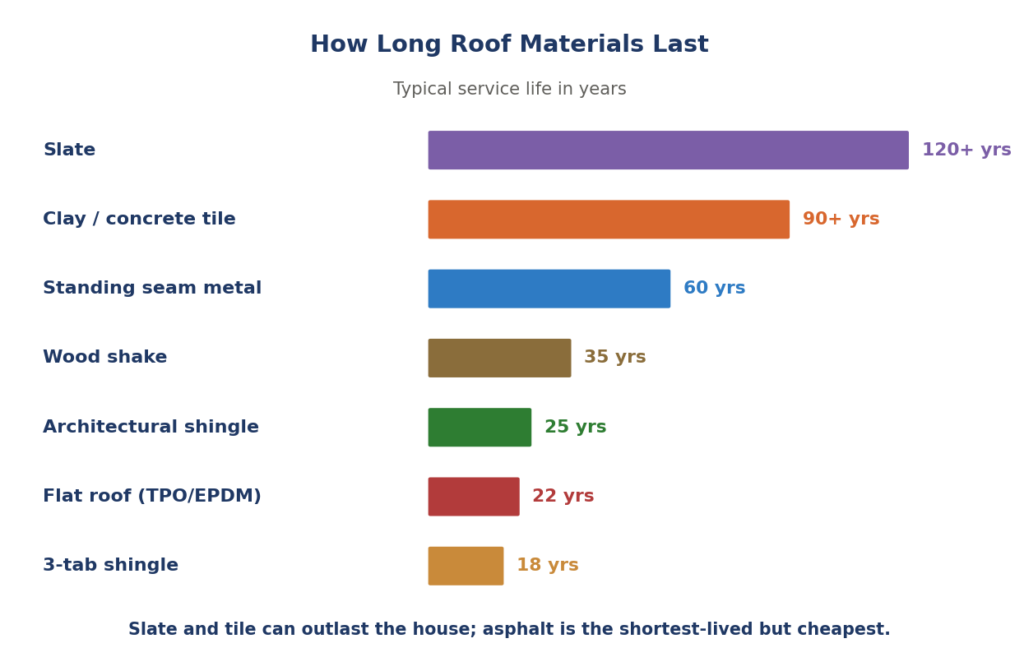
The pattern is clear: heavier, natural materials like slate and tile last longest, metal sits in the middle, and asphalt is the shortest-lived but most affordable. Price usually tracks lifespan.
These are typical ranges, not guarantees. A well-cared-for asphalt roof can beat a neglected metal one. The number on the chart is the ceiling, and how you look after the roof decides how close you get to it.
How Long Does a Wood Shake Roof Last?
Wood shake and shingle roofs last around 30 to 40 years with good care. They give a natural, rustic look that many older homes were built with.
Wood shake is also less common than it once was, partly because of fire codes in some areas. If you love the look, treated versions with better fire ratings are available.
Wood needs more upkeep than most materials. It must stay dry and clear of debris, and it can be prone to rot or moss without airflow. Strong attic ventilation is especially important for keeping a wood roof healthy.
How Long Do Tile and Slate Roofs Last?
Clay and concrete tile last 90 years or more. Slate is the longest-lasting roof of all, often passing 100 years and sometimes reaching 150.
These are premium roofs. They cost the most upfront and are heavy, so the home needs a frame strong enough to carry the weight. In return, they can be the last roof the house ever needs.
The math can work in their favor over a lifetime. A slate roof may cost several times more than asphalt, but if it lasts five or six times as long, the yearly cost can be lower. For a home you plan to keep for generations, that changes the picture.
Tile and slate are common on historic and high-end homes for exactly this reason. The tradeoff is cost, weight, and the need for a specialist to install and repair them.
One thing to know: individual tiles or slates can crack and be replaced without redoing the whole roof. Cared for properly, these roofs rarely need full replacement, which is part of why they can last a century.
How Long Do Flat Roofs Last?
Flat and low-slope roofs, common on modern and commercial buildings, last about 20 to 25 years. The exact figure depends on the membrane, usually TPO or EPDM.
Good drainage is the key to reaching that lifespan. A flat roof that clears water quickly lasts far longer than one where water sits and works at the seams.
Flat roofs have one weakness the others do not: standing water. Our guide on flat roof ponding water explains how pooled water shortens their life, and our comparison of flat vs pitched roofs covers which suits an Illinois home.
What Makes a Roof Last Longer or Fail Sooner?
Material sets the ceiling, but care decides whether a roof reaches it. The same roof can last decades longer with the right upkeep.
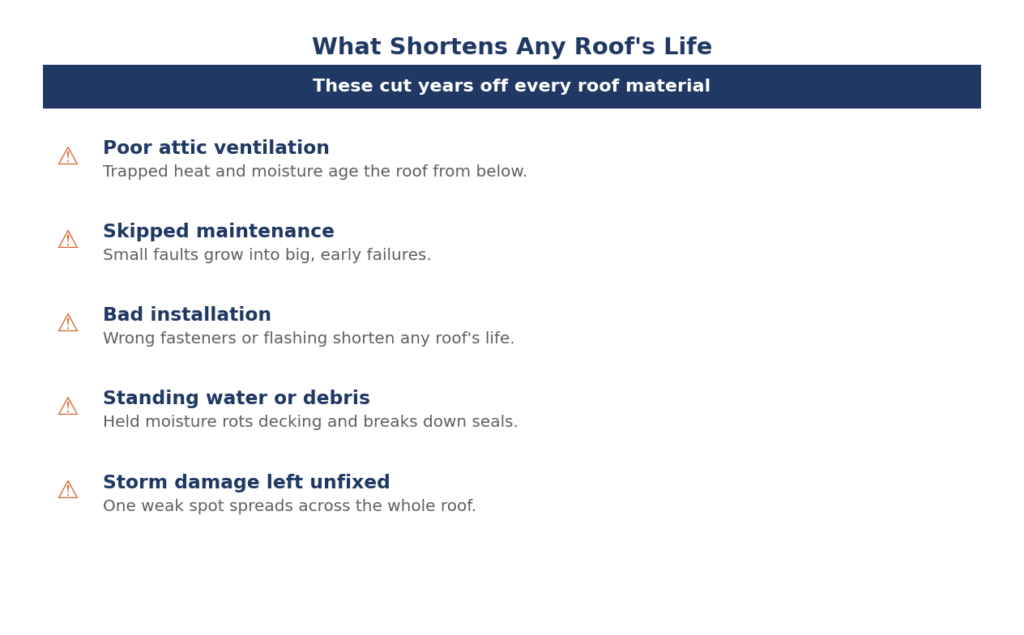
Poor ventilation, skipped maintenance, and bad installation are the big three. Trapped attic heat and moisture age a roof from below, missed repairs let small faults grow, and wrong fasteners or flashing undermine even the best material.
Installation matters most of all. The finest slate or metal will fail early if it is fitted wrong, while a modest asphalt roof installed well can reach the top of its range. This is why choosing an experienced, licensed roofer protects your investment more than the material alone.
A simple routine protects your investment. Our annual roof maintenance checklist and a yearly professional roof inspection together add years to any roof.
Do Roof Materials Affect Resale and Insurance?
The material on your roof can influence more than its lifespan. It also plays a role in resale value and, sometimes, your insurance.
Longer-lasting roofs like metal, tile, and slate can be a selling point, since a buyer knows they will not face a replacement soon. A newer asphalt roof still appeals to most buyers because it is familiar and easy to maintain.
Some insurers offer better terms for fire-resistant or impact-rated materials like metal and tile. It is worth asking your provider whether your roof choice affects your premium before you decide.
Which Roof Material Should You Choose?
There is no single best material, only the best fit for your home and plans. Think about three things.
- Budget: asphalt costs least now, slate and tile cost most but last longest.
- How long you will stay: a forever home may justify metal, tile, or slate.
- Your home’s structure: heavy materials need a frame built to carry them.
There is also the look to consider. Slate and tile suit historic and upscale homes, metal fits modern designs, and asphalt blends with almost any street. The best material balances all of these against your budget.
When it is time to act, our roof replacement service in Illinois covers every material, and our guide on what a new roof costs in Illinois helps you budget for the one you choose.
Which Roof Is Right for You?
There is no single best roof, only the best roof for your situation. Think about three things: your budget now, how long you will stay, and the look you want.
If a full replacement is on the table, our roof replacement service in Illinois covers both materials. If your current roof is only partly worn, our guide on roof repair vs replacement helps you decide whether you even need a new roof yet.
Frequently Asked Questions
What is the longest-lasting roof material?
Slate is the longest-lasting, often passing 100 years and sometimes reaching 150. Clay and concrete tile are close behind at 90 years or more.
How long does the average roof last?
Most homes have asphalt shingles, which last 15 to 30 years. That is why the average roof is replaced every couple of decades, even though other materials last far longer.
Does climate affect how long a roof lasts?
Yes. Heavy snow, ice, heat, and storms all wear a roof faster. In Illinois, the freeze-thaw cycle is especially hard on materials that can crack or lift.
Can you make a roof last longer?
Yes. Good ventilation, yearly inspections, prompt repairs, and clearing debris all extend a roof’s life. Watching for the signs you need a new roof also helps you act before small problems spread.
Is a more expensive roof always worth it?
Not always. A long-lasting material only pays off if you stay in the home long enough to benefit. For a shorter stay, a quality asphalt roof is often the smarter spend.