

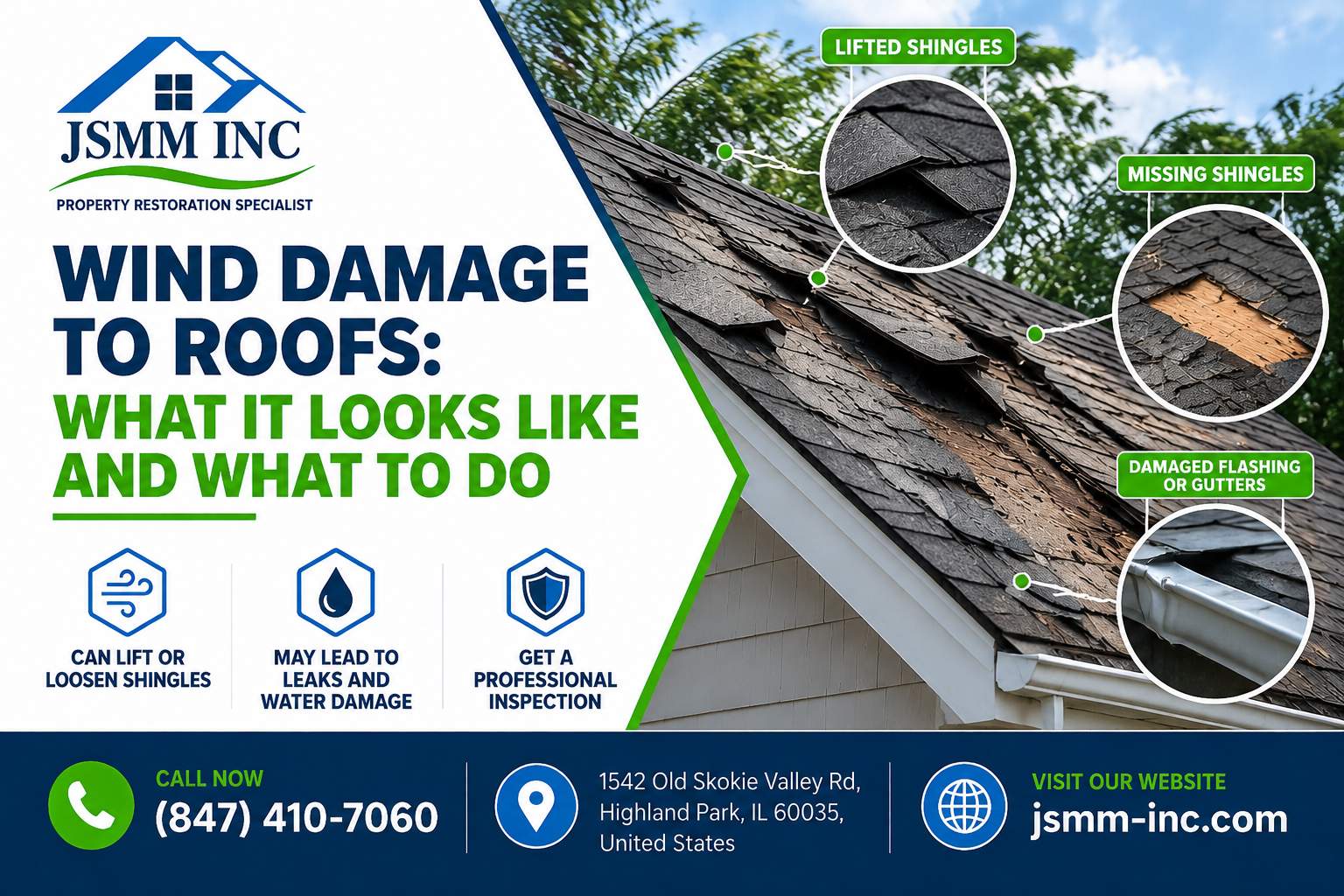
Roof wind damage shows up as missing, lifted, or curled shingles, shingle debris in the yard, bent flashing, and leaks inside the home. If you spot any of these after a windstorm, document the damage, cover any leaks, and call a roofer for a full inspection.
Strong wind is one of the most common causes of roof damage, and much of it is easy to miss from the ground. Catching it early stops small problems from turning into leaks and rot.
This guide shows what wind damage looks like and the exact steps to take. Wind often comes with hail, so our guide on hail damage and what homeowners need to know is a useful companion.
Table of Contents
ToggleWorried a Storm Damaged Your Roof?
Contact JSMM Inc. for a free storm-damage inspection. We find hidden problems and help with your insurance claim.
How Does Wind Damage a Roof?
Wind does not hit a roof evenly. It catches edges, corners, and any spot that is already a little loose, then works to peel it back.
Once wind lifts the edge of a shingle, it breaks the seal that holds it down. Even if the shingle drops back into place, that broken seal lets water and future wind get underneath. Over time, the shingle loosens further and can tear away. This is why one windstorm can set up damage that only shows itself months later.
This is why wind damage is often hidden. A roof can look fine from the street while the seals are broken and the roof is quietly failing.
Wind also drives rain sideways, pushing water under shingles and into gaps it would never reach in a normal shower. This is how a windstorm can cause a leak even when no shingles are missing.
What Does Roof Wind Damage Look Like?
Some signs are obvious, like a bare patch where shingles blew off. Others are subtle and easy to miss. Here is what to look for after a windstorm.
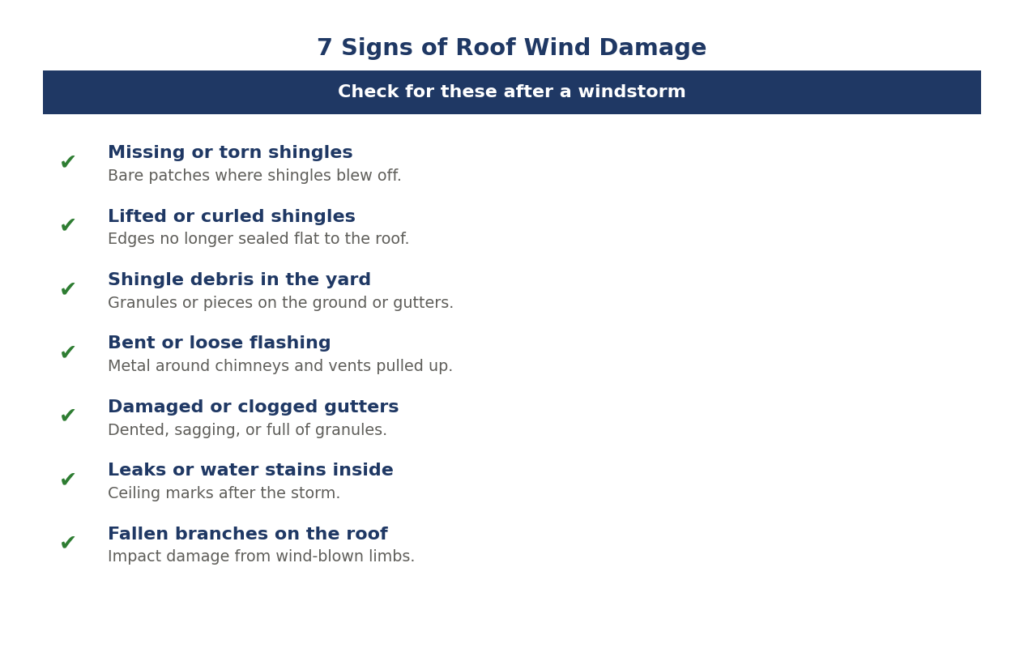
Start with the easy checks: missing shingles, pieces in the yard, and granules in the gutters. Then look for lifted or curled edges, bent flashing around chimneys and vents, and any water stains on your ceilings.
Flashing is a common weak point in high wind. Our guide on roof flashing and when to replace it explains why these metal pieces matter so much.
How to Check for Wind Damage Safely
You can spot most wind damage without climbing onto the roof. Staying on the ground is safer and still tells you a lot.
Walk around your home and look up at the roof from several angles. Use binoculars or your phone camera to zoom in on the shingles, ridges, and flashing. Check the gutters and the ground for shingle pieces and granules.
Inside, look at your ceilings and the attic for fresh water stains or damp spots. If you see daylight through the roof boards in the attic, that is a clear sign of damage that needs a roofer right away.
Leave the rooftop inspection to a professional. Roofers know what to look for and have the gear to do it safely.
What Wind Speeds Cause Roof Damage?
Roof damage can begin at surprisingly low wind speeds. Gusts of 45 to 57 miles per hour can lift and loosen shingles, and winds above 58 miles per hour are classed as damaging.
You do not need a hurricane to damage a roof. A regular North Shore thunderstorm or a strong gust front can lift shingles, especially on an older roof where the seals are already weak.
Illinois sees plenty of these storms each year, from spring gust fronts to summer thunderstorms. That steady exposure is why local roofs need a check after any major blow, not just after a rare big event.
Older roofs are far more likely to suffer wind damage. Our guide on how long asphalt shingles really last helps you judge whether your roof’s age puts it at higher risk.
Not Sure How Bad The Damage Is?
Call JSMM Inc. at (847) 410-7060 for a free inspection. We climb up so you do not have to, and provide an honest report.
What to Do After Wind Damages Your Roof
Acting quickly protects your home and makes your insurance claim easier. Follow these steps in order.
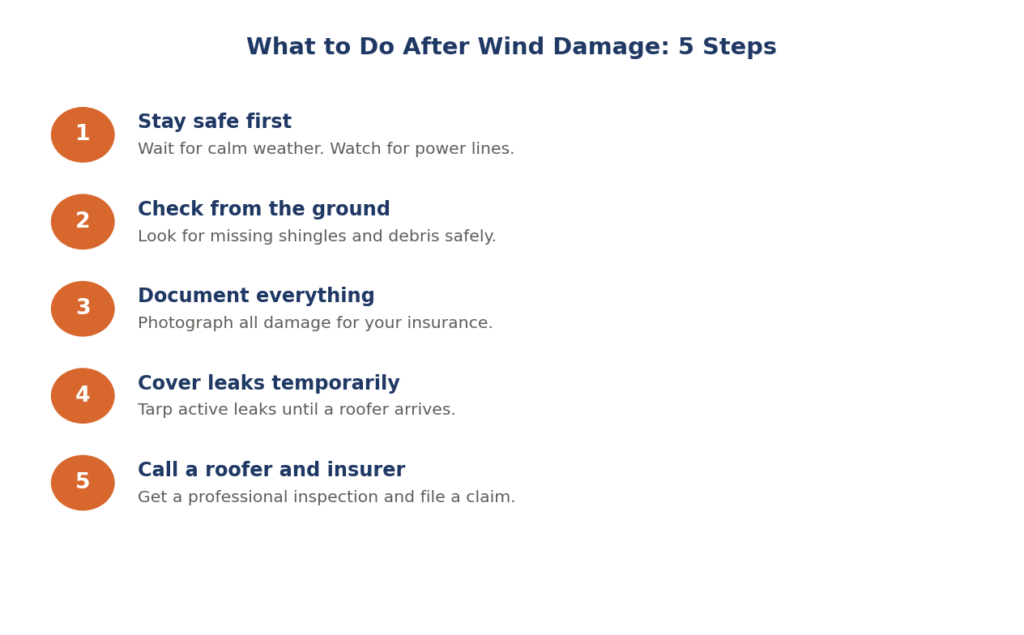
Stay safe first, and wait for calm weather before checking anything. Look over the roof from the ground, photograph every bit of damage you can see, and note the date of the storm.
If wind left a hole or torn area that is letting water in, cover it. Our guide on how to tarp a roof after storm damage shows the safe way to do that until a roofer arrives.
Does Insurance Cover Roof Wind Damage?
Yes, most homeowners insurance policies cover sudden wind damage. Wind is one of the most commonly covered causes of roof damage, so it is worth filing a claim.
The key is acting fast and documenting well. Take clear photos, keep any receipts for emergency work, and report the damage to your insurer promptly.
A good roofer can help here too. Many, including us, document the damage properly and work directly with your insurer, which takes a lot of stress out of the process.
The claims process has a few steps. Our guides on filing a roof insurance claim and whether insurance covers roof replacement walk you through it so nothing is missed.
Why You Should Not Ignore Minor Wind Damage
It is tempting to ignore a couple of missing shingles, especially if there is no leak yet. That is a costly mistake.
A few missing or unsealed shingles let water reach the underlayment and deck. Over months, that hidden moisture leads to rot, mold, and a much bigger repair. What could have been a quick fix becomes a major job.
There is also an insurance clock to watch. Many policies have a time limit for reporting storm damage. Wait too long, and you may lose the chance to have the repair covered.
A professional look catches what you cannot see from the ground. A roof inspection after a big storm finds the hidden damage before it spreads.
Repair or Replace After Wind Damage?
It depends on how much of the roof was affected. A few lost shingles usually mean a simple repair. Widespread damage across an older roof may call for replacement.
An inspector checks the whole roof, not just the obvious spot, using a full inspection checklist to judge the scale. Our guide on roof repair versus replacement then helps you weigh the choice.
Age matters in this decision. Wind damage on a roof that is already near the end of its life is often the push toward replacement, since patching an old roof only buys a little time.
For the fix itself, our roof repair service in Illinois handles wind and storm damage from first inspection to finished roof.
Watch Out for Storm-Chaser Scams
After a big storm, out-of-town contractors often appear door to door. Some are fine, but many are storm chasers who do rushed work and disappear.
Be careful with anyone who pressures you to sign on the spot, asks for full payment upfront, or has no local address. A trustworthy roofer is licensed, insured, and easy to find in your area.
The safest choice after a storm is a local, established roofer who will still be here if you need them years later. Take your time, and do not let panic push you into a bad deal.
Frequently Asked Questions
What does wind damage on a roof look like?
Missing, lifted, or curled shingles, shingle pieces and granules in the yard or gutters, bent flashing, and water stains on inside ceilings. Some signs are clear, others are easy to miss from the ground.
At what wind speed does a roof get damaged?
Shingles can lift at 45 to 57 miles per hour, and winds above 58 miles per hour are classed as damaging. Older roofs with weak seals can be damaged at lower speeds.
Does homeowners insurance cover wind damage?
Usually, yes. Sudden wind damage is one of the most commonly covered causes. Document the damage with photos and report it to your insurer promptly.
Should I repair or replace a wind-damaged roof?
A few lost shingles usually need only a repair. Widespread damage on an older roof may need replacement. Watch for the wider signs you need a new roof to judge the scale.
How soon should I get my roof checked after a storm?
As soon as it is safe. The sooner the damage is found and covered, the less water gets in and the smoother your insurance claim will be.
Storm Damage And Roof Concerns?
Contact JSMM Inc. or call (847) 410-7060 . We provide free storm-damage inspections across Highland Park and the North Shore, and help with insurance paperwork.