

Roof restoration renews your existing roof with cleaning, minor repairs, and a protective coating, adding years of life without a full tear-off. Roof replacement removes the old roof completely and installs a brand-new one. Restoration costs less and suits aging but sound roofs; replacement costs more and suits old or badly damaged roofs.
Both keep your home dry, but they are very different jobs. Knowing which one your roof needs can save you thousands of dollars and years of worry.
This guide explains each option in plain terms and helps you choose. If you are also weighing a simple fix, our guide on roof repair versus replacement covers that third path.
Table of Contents
ToggleWhat Is Roof Restoration?
Roof restoration is the process of renewing a roof that is still in fair shape. It brings an aging roof back to a healthy, watertight condition without replacing it.
A typical restoration includes a deep clean, small repairs to damaged areas, resealing, and a protective coating over the whole roof. The result is a roof that looks better, performs better, and lasts several more years.
Restoration works best on roofs that are worn but not failing. If the structure and most of the surface are sound, restoration can be a smart, lower-cost choice.
It is popular with homeowners who want to protect a roof that still has life left, but is starting to show its age. Instead of waiting for problems to grow, they renew the roof early and get more good years from it.
The order rarely changes. What varies is the time each step takes, which depends on your roof size, the weather, and how much deck repair is needed.
Understanding the flow helps you spot a good roofer from a rushed one. A crew that skips the inspection or glosses over the deck is cutting corners you will pay for later.
How Does Roof Restoration Work?
Restoration follows a few clear steps. Knowing them helps you see what you are paying for.
First, the roofer inspects the roof and cleans it fully, removing dirt, moss, and debris. Next, they repair any damaged spots, reseal joints, and replace the odd broken shingle.
Finally, they apply a protective coating across the whole roof. This coating seals small cracks, reflects heat, and adds a fresh layer of protection against rain and sun.
The whole job is usually quick and clean, with no tear-off and very little mess around your home.
What Is Roof Replacement?
Roof replacement means removing the entire old roof and installing a new one. The crew strips off the old shingles, checks and repairs the wooden deck, and lays down fresh underlayment, flashing, and shingles.
This is the right choice when a roof is old, badly damaged, or leaking in many places. A new roof resets the clock and can last 20 to 50 years, depending on the material you choose.
Because the whole roof comes off, the crew can also fix hidden problems in the deck and add better underlayment or ventilation while they work. This is a chance to improve the roof, not just replace it.
Replacement is a bigger job, but for a worn-out roof it is often the only real fix. Our guide on the signs you need a new roof helps you spot when that point has arrived.
Restoration vs Replacement: The Key Differences
The two jobs differ in cost, time, and how long the result lasts. Here is a simple side-by-side view.
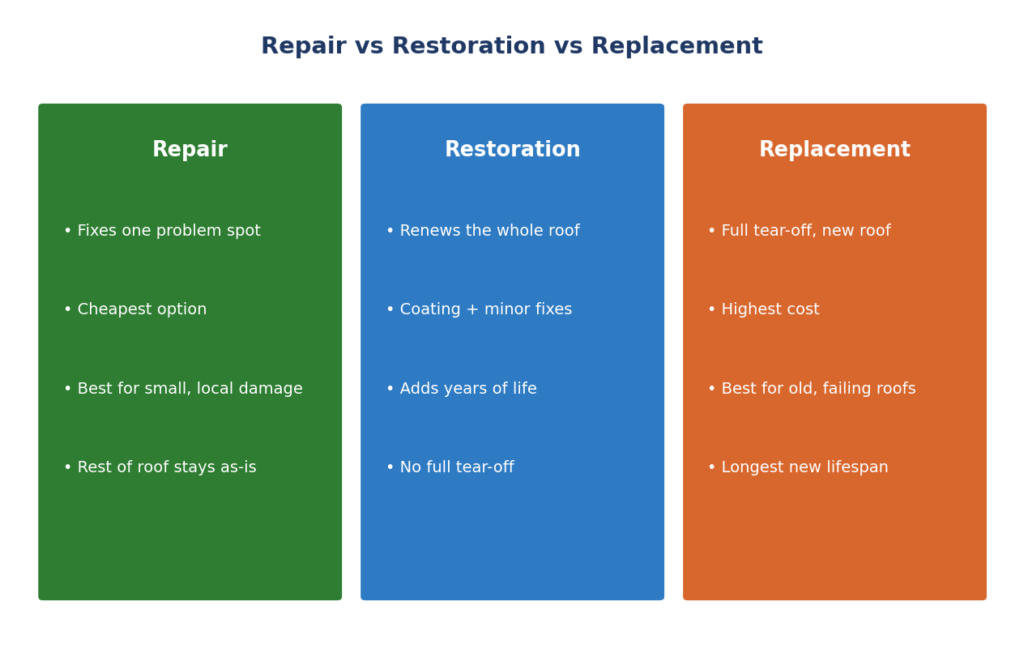
Restoration keeps your existing roof and renews it, so it costs less and takes less time. Replacement removes everything and starts fresh, so it costs more but gives the longest new lifespan.
Think of it this way: restoration extends the life you already have, while replacement gives you a whole new roof and a fresh warranty.
Time is another difference. A restoration is often done in a day or two, while a full replacement can take several days from tear-off to cleanup. If you want the least disruption, restoration wins on that front.
How Much Does Each One Cost?
Restoration usually costs a good deal less than replacement, because there is no tear-off and far less material. For a sound roof, it can be one of the best-value options available.
Replacement costs more, since you are paying for a full removal and a complete new roof. The exact price depends on your roof size, pitch, and the material you pick.
We never guess at prices online. Our guide on what a new roof costs in Illinois breaks down the real factors, and roof financing options can spread either cost over time.
Which Option Does Your Roof Need?
The right choice comes down to the age and condition of your roof. This quick guide points you in the right direction.
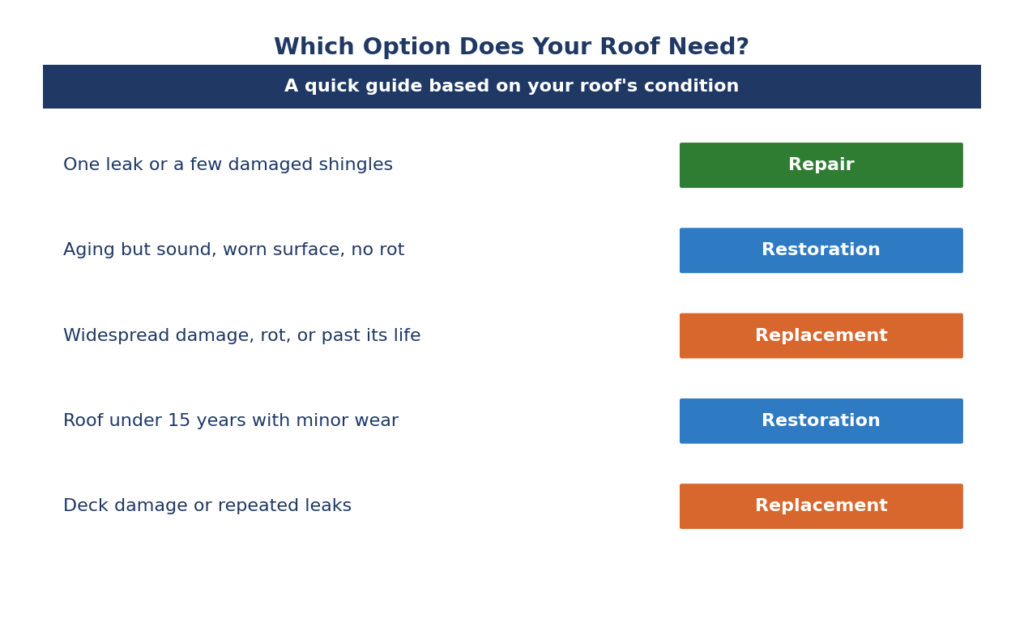
A roof that is aging but still solid is often a good candidate for restoration. A roof with rot, deck damage, or leaks in several rooms usually needs full replacement.
Age is a useful first clue. A roof under 15 years old with only surface wear is often a strong restoration candidate. A roof past 20 years with real damage usually points to replacement.
The only way to know for sure is a professional look. A proper roof inspection checks the surface, the flashing, and the deck, so you get the right answer for your home.
What Are the Benefits of Roof Restoration?
For the right roof, restoration offers real advantages. It is worth considering before you commit to a full replacement.
- Lower cost, since there is no tear-off and less material.
- Faster work, often finished in a day or two.
- Less mess and disruption around your home.
- Added years of life and a fresh, clean look.
- A more eco-friendly choice, since the old roof is not sent to landfill.
Keeping up with regular care extends the benefit. Our annual roof maintenance checklist shows the simple steps that help any roof last longer after restoration.
When Is Replacement the Smarter Choice?
Restoration is not always enough. Some roofs are too far gone, and spending on a coating would only delay the inevitable.
Replacement is the smarter choice when the roof is near or past its expected life, when the deck is rotted, or when leaks keep coming back after repairs. In those cases, a new roof saves money over time.
Roof age is a big factor here. Our guide on how long asphalt shingles really last helps you judge whether your roof is close to the end of its life.
Does This Apply to Commercial Roofs Too?
Yes. Restoration and replacement both apply to flat and commercial roofs, and coatings are especially common on them. The same rule holds: renew a sound roof, replace a failing one.
For a business, restoration can be even more appealing, since it means less downtime and no need to close during a long tear-off. A quick coating job keeps the business running while protecting the building.
For business owners, our guide on the signs a commercial roof needs replacement covers the warning signs specific to flat roofs.
Common Mistakes to Avoid
When choosing between restoration and replacement, a few common mistakes cost homeowners money. Here is what to watch for.
- Restoring a roof that is already failing. A coating cannot save a rotted roof, and the money is wasted.
- Replacing a roof that only needed restoring. A sound roof can often be renewed for far less.
- Skipping the inspection. Guessing without a professional look leads to the wrong choice.
- Choosing on price alone. The cheapest option today can cost more over the life of the roof.
The safest path is a proper inspection and honest advice, so you spend on what the roof actually needs.
Frequently Asked Questions
What is the difference between roof restoration and replacement?
Restoration renews your existing roof with cleaning, repairs, and a coating, without a tear-off. Replacement removes the old roof completely and installs a new one. Restoration costs less; replacement lasts longer.
Is roof restoration cheaper than replacement?
Yes. Restoration usually costs much less than replacement, because there is no tear-off and far less material. For a sound roof, it is often the better value.
How long does a restored roof last?
A good restoration can add several years of life, often 10 or more, depending on the roof’s condition and the coating used. A full replacement lasts far longer, from 20 to 50 years.
Can any roof be restored?
No. Restoration only works on roofs that are still structurally sound. A roof with rot, deck damage, or widespread failure needs replacement. A roof repair may be enough for a single small problem.
How do I know which one my roof needs?
A professional inspection is the only sure way. A roofer checks the age, surface, flashing, and deck, then recommends restoration, replacement, or a simple repair based on what they find.