

Roof snow load is the total weight of snow and ice sitting on your roof. Most homes in Illinois are built to hold about 20 to 30 pounds per square foot, but wet, heavy snow can pass that limit faster than people expect. When too much snow builds up, it can strain the roof structure, cause leaks, or in rare cases lead to a collapse. The good news is that the danger is easy to manage if you know the warning signs and remove snow the safe way. This guide explains how much snow a roof can hold, the signs of too much weight, and how to clear it without risking your safety or damaging the roof. If you are also dealing with ice dams, the two problems often go together in an Illinois winter.
Table of Contents
ToggleWorried About Heavy Snow on Your Roof?
Schedule a FREE roof inspection with JSMM Inc. to catch winter damage before it becomes a costly repair.
Contact Us 📞 (847) 410-7060How Much Snow Can a Roof Hold?
Most modern homes in Illinois are designed to hold a snow load of around 20 to 30 pounds per square foot. That sounds like a lot, but the weight depends far more on the type of snow than the depth. Fresh, fluffy snow is light. Wet, packed snow is many times heavier. Ice is heaviest of all. This is why a roof can handle two feet of powder but struggle under a few inches of frozen slush.
How Much Does Snow Actually Weigh?
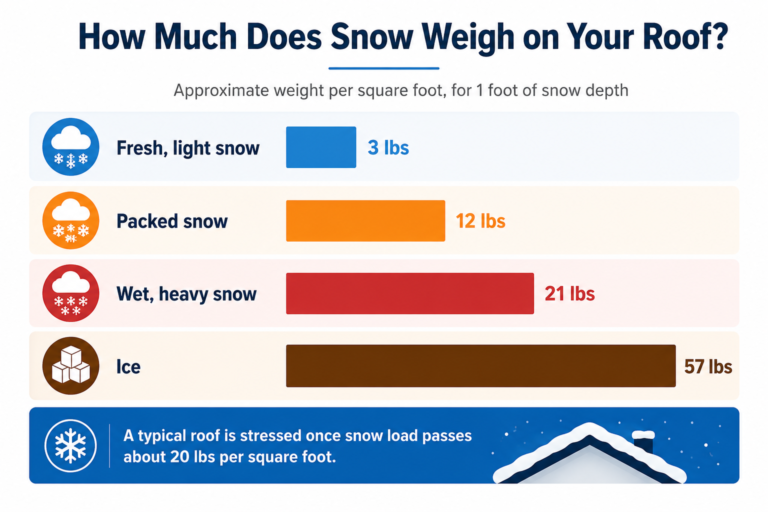
The weight difference between snow types is the key thing to understand. A single foot of snow can weigh anywhere from a few pounds to over fifty per square foot.
- Fresh, light snow weighs about 3 pounds per square foot per foot of depth.
- Packed snow weighs around 12 pounds per square foot.
- Wet, heavy snow can reach 21 pounds or more per square foot.
- Ice weighs about 57 pounds per square foot, nearly twenty times fresh snow.
Because ice is so heavy, a roof with ice dams or a thick frozen layer is under far more stress than the snow depth alone would suggest.
What Are the Warning Signs of Too Much Roof Snow?
Your home usually gives clear signals before snow load becomes dangerous. Watch for these signs during and after a heavy storm.
- Doors or windows that suddenly stick or are hard to open, which can mean the frame is under pressure.
- New cracks in interior walls or ceilings, especially near the center of the house.
- A sagging or dipping roofline, or creaking and popping sounds from the roof.
- Leaks or water stains appearing on ceilings during a thaw.
A sagging ceiling or loud creaking is a serious warning. If you notice it, keep people out of that part of the house and call a professional. Some of these signs overlap with other roof problems, so our guide on why roofs leak can help you tell them apart.
How Do You Remove Snow From a Roof Safely?
The safest way to remove roof snow is from the ground, using a roof rake. A roof rake is a long, lightweight tool that lets you pull snow down from the edges while standing safely below.
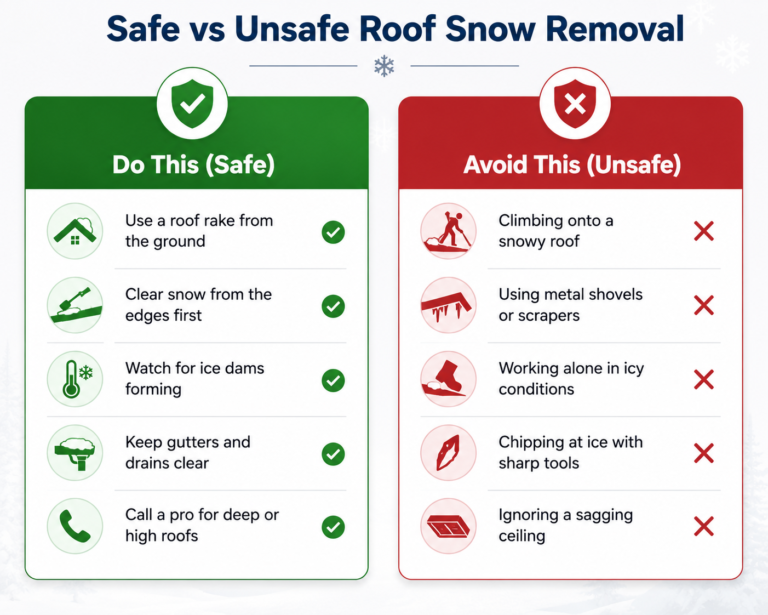
Start at the roof edge and work upward, pulling snow toward you in small amounts. Clearing the bottom few feet of the roof does the most good, because that is where ice dams form and where the gutters need to drain.
Never climb onto a snowy or icy roof yourself. Falls from roofs are one of the most common winter injuries, and a snow-covered roof hides the slick surface underneath. If the snow is deep, the roof is high, or you see warning signs of stress, the job belongs to a professional with the right equipment.
What Should You Avoid When Clearing Roof Snow?
A few common mistakes do more harm than the snow itself. Avoid these to protect both yourself and the roof.
- Do not use a metal shovel or sharp tool on the shingles, since it can gouge and damage them.
- Do not try to chip away ice, which almost always breaks shingles and flashing underneath.
- Do not work alone, on a ladder, in icy conditions, or near power lines.
Chipping at ice is especially damaging because it harms the flashing and seals that keep water out. It is far safer to prevent ice buildup in the first place, which comes down to insulation and airflow in the attic.
Why Do Ice Dams and Snow Load Go Together?
Ice dams form when heat escaping from the attic melts the snow on the roof. The water runs down to the cold edge, refreezes, and builds a wall of ice that traps more water behind it.
That trapped water backs up under the shingles and leaks into the home, while the ice itself adds serious weight to the roof edge. Good attic ventilation keeps the roof surface cold and even, which is the best defense against both ice dams and uneven snow load. Our full guide on preventing ice dams covers the fixes in detail.
Solving the airflow problem protects your roof from both dangers at once, which is why roofers treat them as one issue.
When Should You Call a Professional?
Call a roofing professional any time the snow is deep, the roof is steep or high, or you notice signs of structural stress. It is never worth risking a fall or a collapse to save the cost of a service call.
A professional also spots damage you might miss. After a hard winter, a roof inspection checks for cracked shingles, damaged flashing, and weakened decking before they turn into spring leaks. If the winter revealed a deeper problem, our guide on roof repair vs replacement helps you plan the next step.
Snow Piling Up on Your Roof?
Book a FREE roof inspection with JSMM Inc. and protect your home from winter damage.
Contact Us 📞 (847) 410-7060How Do You Prevent Snow Load Problems Before Winter?
The best time to prepare for snow load is before the first storm. A few steps in fall make the whole winter safer.
Have your roof inspected in the fall, seal any weak spots, clear the gutters, and make sure the attic is well insulated and ventilated. Our roof maintenance checklist walks through the seasonal steps that keep a roof strong. A roof in good shape before winter handles snow load far better than one that is already worn.
If your roof is already old or showing wear, replacing it before winter is worth considering. A new roof replacement in Illinois with proper ventilation and fresh decking is built to handle the load a failing roof cannot.
Frequently Asked Questions
How much snow can a roof hold in Illinois?
Most Illinois homes are built to hold about 20 to 30 pounds per square foot. Wet, heavy snow and ice reach that limit faster than light, fresh snow.
When should I remove snow from my roof?
Remove snow when it builds up more than about a foot, when it is wet and heavy, or when you notice warning signs like a sagging roofline or sticking doors.
Is it safe to remove roof snow myself?
Clearing snow from the ground with a roof rake is safe. Climbing onto a snowy roof is not, and it is one of the most common winter injuries. Call a professional for deep snow or high roofs.
Can too much snow cause a roof to collapse?
It is rare but possible, usually with wet snow, ice buildup, or an already weakened roof. Warning signs like creaking, sagging, or new wall cracks come first, so act on them quickly.
Does a roof rake damage shingles?
A plastic roof rake used gently does not. Metal shovels, sharp tools, and chipping at ice do cause damage, so avoid those.
Want Peace of Mind About Your Roof This Winter?
Schedule a FREE roof inspection with JSMM Inc..
We'll identify potential snow and ice damage before it becomes an expensive repair.