

Most homeowners only think about their roof when something goes wrong. By then, a small problem has usually had months to grow into an expensive one. A simple annual maintenance routine changes that. Illinois weather is especially tough on roofs. Lake-effect snow, freezing temperatures, summer heat, and spring hail all take a toll across the North Shore. A roof that gets checked once a year holds up far longer than one that is ignored until it leaks. This checklist walks through exactly what to look for each season, what you can handle yourself, and when to call a professional. If you are unsure how often a professional should look at your roof, our guide on roof inspection frequency covers that in full.
Table of Contents
ToggleWant a Professional Eye on Your Roof This Season?
Stay ahead of costly repairs with a FREE roof inspection. JSMM Inc. helps homeowners across Highland Park and the North Shore identify potential issues early and keep their roofs performing at their best.
Timing affects how well a new roof seals and how smoothly the job runs. Here is how the seasons compare in Illinois.
Why Does Roof MaintenanceMatter in Illinois?
Illinois puts more demands on a roof than many other states. Winters bring ice dams and heavy snow loads. Spring means wind and hail. Summer heat blisters shingles and dries out sealants. Fall debris clogs gutters and holds moisture against the deck.
Each of these events leaves a small mark. Over a few years without attention, those small marks add up to cracked flashing, lifted shingles, and the kind of slow leak that causes mold and rot before it ever shows on the ceiling. Our guide on roof flashing explains one of the most common failure points a maintenance check catches early.
A few hours of attention each year keeps all of it in check.
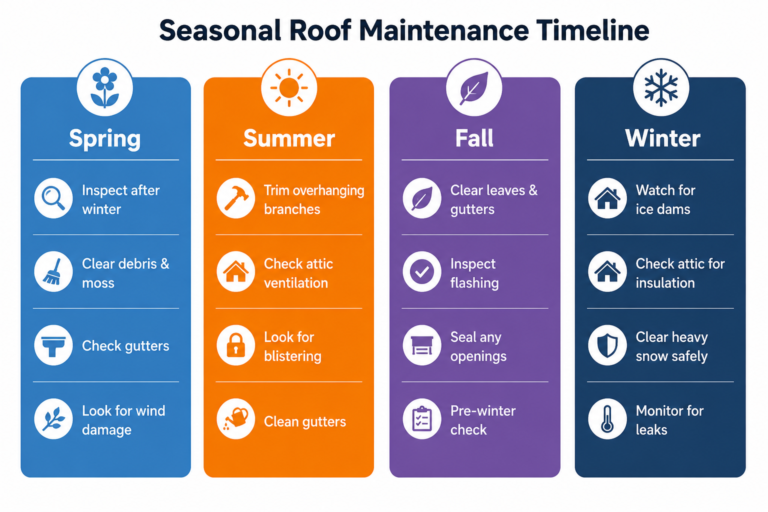
Spring Roof Maintenance: Recovering From Winter
After the freeze-and-thaw cycle of an Illinois winter, spring is the most important season to check your roof. Here is what to look for.
- Shingles: look for any that are cracked, curling, missing, or lifted at the edges.
- Gutters: clear leaves, debris, and any granules that washed off the shingles over winter.
- Flashing: check the metal seals around the chimney, vents, and skylights for rust or gaps.
- Moss or algae: early growth on the north-facing slopes is easier to treat before it spreads.
If winter left an ice dam, spring is the time to seal the spots where it pushed water under the shingles. Our ice dam prevention guide explains how they form and what to do next time.
A granule-filled gutter after winter is a reliable sign the shingles are aging and worth a closer look.
Summer Roof Maintenance: Heat, Storms, and Ventilation
Summer heat is quieter than winter storms, but it does real damage over time. Hot attics speed up shingle aging, and a summer hailstorm can leave dents and cracks that are easy to miss.
- Attic ventilation: check that ridge and soffit vents are clear so hot air can escape.
- Storm damage: after any hail or wind event, inspect the roof from the ground. Our hail damage guide explains the signs that need professional attention.
- Tree branches: trim anything within a few feet of the roofline before late-summer storms arrive.
- Blistering or buckling shingles: these point to trapped heat and poor ventilation below.
Good attic airflow in summer also reduces cooling costs, so checking the vents has a year-round payoff.
Fall Roof Maintenance: Getting Ready for Winter
Fall is the best time to fix anything before Illinois winter arrives. Repairs are easier in mild weather, and sealing gaps before the first freeze prevents ice dams and moisture buildup.
- Gutters and downspouts: clear them fully so water drains away from the foundation.
- Flashing seals: reseal any loose or cracking areas around the chimney and vents. Our roof flashing guide shows what failed flashing looks like.
- Shingle condition: replace any cracked or lifted pieces before snow and ice lock them in place.
- Attic insulation: check that it is even and undisturbed to prevent heat loss that causes ice dams.
A fall maintenance visit is the one that pays off most over winter. Everything caught in October is cheaper to fix than in February.
Winter Roof Maintenance: What to Watch For
Active roof work is not safe in icy conditions, but there are things to monitor from inside and from the ground.
- Ice dams: a ridge of ice at the eave is a warning sign. Our ice dam guide explains how to address them safely.
- Attic moisture: damp insulation or frost inside the attic during a warm spell means cold air is getting in somewhere.
- Active leaks: dripping water or new ceiling stains during snow melt need fast attention. Our roof leak in heavy rain guide covers immediate steps.
- Snow load: heavy, wet snow is hard on older roofs. Clear it with a roof rake if it builds above six inches.
Most winter damage is detected from inside. Check the attic ceiling and your interior walls near the roofline after any big snowfall.
Your Full Annual Roof Maintenance Checklist
Print this and run through it once a year, ideally in early spring or fall when conditions are mild.
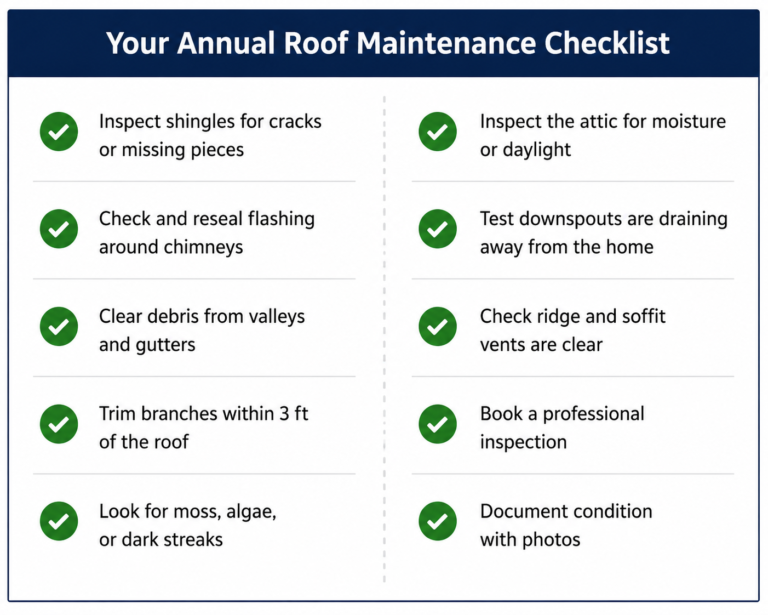
- Inspect shingles for cracks, curling, or missing pieces.
- Check and reseal flashing around chimneys, vents, and skylights.
- Clear debris and granules from valleys, gutters, and downspouts.
- Trim branches within three feet of the roofline.
- Look for moss, algae, or dark streaks, which can indicate early roof algae growth
- Inspect the attic for moisture, daylight, or damp insulation.
- Confirm downspouts are directing water away from the foundation.
- Check ridge and soffit vents are open and unobstructed.
- Book a professional roof inspection to cover what you cannot safely see from the ground.
- Take photos of the roof surface and any concerns for your records.
Need Help Checking Your Roof?
Let JSMM Inc. handle the inspection for you. Our experienced team checks every key roofing component, explains any issues we find, and helps you protect your home with honest recommendations.
How Long Does a Properly Maintained Roof Last?
Maintenance makes a measurable difference. An asphalt shingle roof that is inspected and cared for regularly can reach its full expected lifespan, often 25 to 30 years, as we cover in how long asphalt shingles last. One that is ignored usually needs replacing 5 to 10 years earlier. Regular maintenance also means you replace the roof on your schedule, not in an emergency after a bad winter. Knowing the signs you need a new roof helps you plan. When a repair can extend the roof’s life by a few years, our roof repair in Illinois team can tell you honestly whether it is worth it.
What Maintenance Can You Do Yourself?
Ground-level tasks are safe for most homeowners: clearing gutters from a ladder, trimming branches, and checking the roof from the ground with binoculars. Anything that requires getting on the roof, especially sealing flashing or replacing shingles, carries a real fall risk. A professional does it faster, safer, and with a warranty on the work. The honest split: do the ground-level tasks yourself and leave the roof-level work to someone with the right gear.
Frequently Asked Questions
How often should I inspect my roof?
Once a year is the minimum, with an extra check after any major storm. Spring and fall are the best times for a full walkthrough.
Can I clean the gutters myself?
Yes, clearing gutters from a stable ladder is a safe DIY task for most homeowners. Just never lean a ladder against the gutter.
How do I know if my roof has storm damage?
Look for dents on the ridge cap, missing granules, or lifted shingles from the ground. If you suspect hail damage, our hail damage guide covers exactly what to look for.
What is the most overlooked part of roof maintenance?
Attic ventilation. Poor airflow accelerates shingle aging from the inside out, and most homeowners never check it.
When should I call a roofer instead of doing it myself?
Any time you need to step onto the roof itself, or when a problem looks bigger than a single shingle.
Keep Your Roof Performing at Its Best
From routine inspections to expert repairs, JSMM Inc. helps homeowners across Highland Park and the North Shore protect their roofs year-round with reliable roofing solutions and honest advice.
📞 (847) 410-7060