

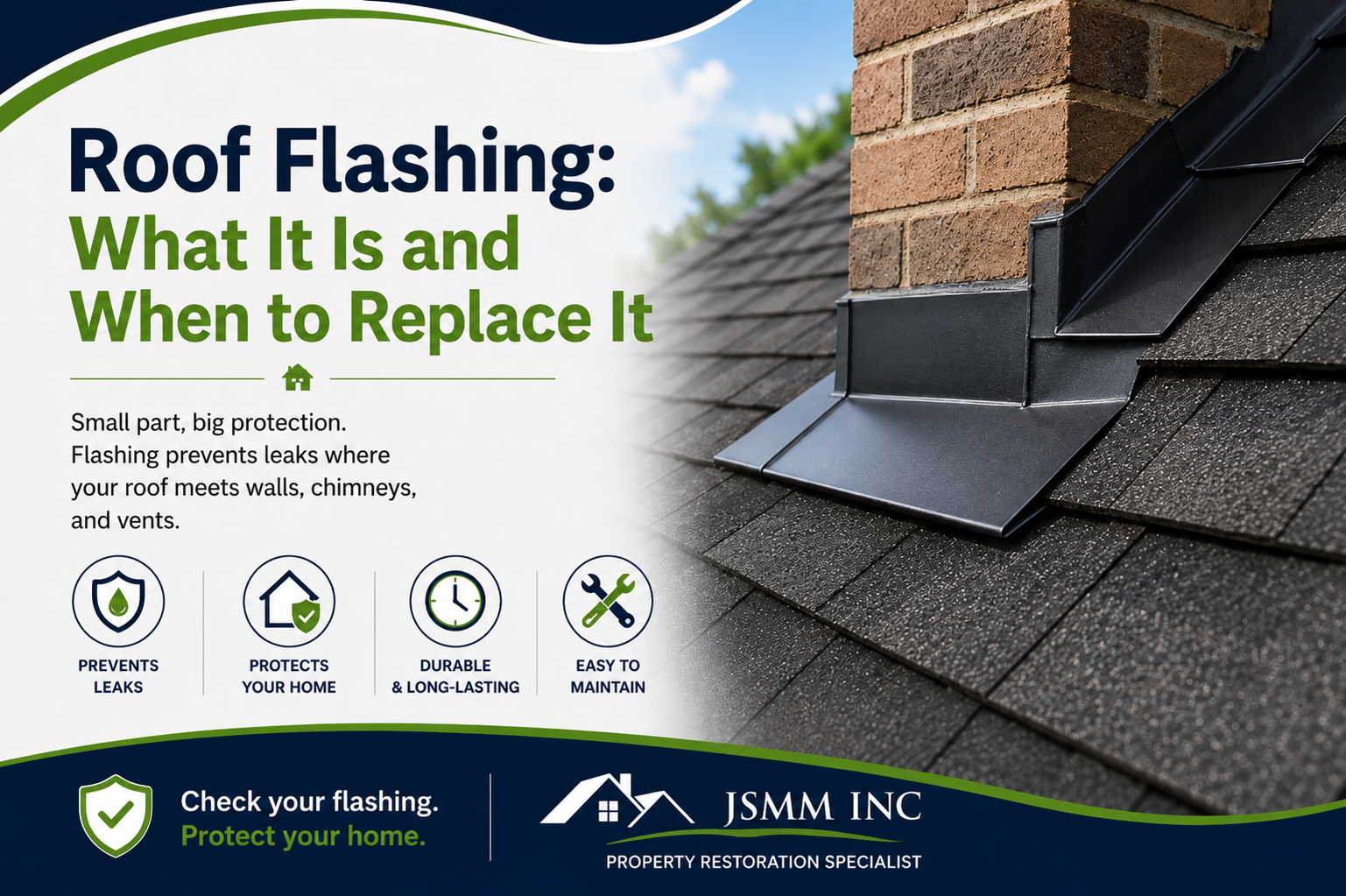
Roof flashing is the thin metal that seals the joints and edges of your roof, around chimneys, vents, skylights, and where the roof meets a wall. Its job is simple but vital: it keeps water out of the gaps that shingles cannot cover. You replace flashing when it rusts, lifts, cracks, or leaks, and always during a full roof replacement.
Most homeowners never think about flashing until it fails. And when it does, it is often the reason behind a stubborn roof leak.
The good news is that flashing problems are usually easy to fix once you know what to look for.
At JSMM Inc., we have sealed and replaced flashing on North Shore roofs for more than 30 years. This guide explains what roof flashing is, where it goes, the warning signs of failure, and when it is time to replace it.
Table of Contents
ToggleWorried Your Flashing Is Failing?
Don't let small flashing issues become expensive roof leaks. JSMM Inc. provides FREE roof inspections across Highland Park and the North Shore, carefully checking every joint to keep your roof watertight.
What Is Roof Flashing?
Roof flashing is a set of thin metal pieces that seal the seams on your roof. It is usually made from aluminum, galvanized steel, or copper.
Shingles do a great job on flat, open sections of roof. But wherever the roof changes direction or meets something, like a chimney or a wall, there is a gap. Flashing covers that gap and channels water away.
Without it, those joints would leak almost right away. Flashing is small, but it protects the spots most likely to let water in.
You will find flashing on almost every roof, hidden in plain sight along the seams and edges.
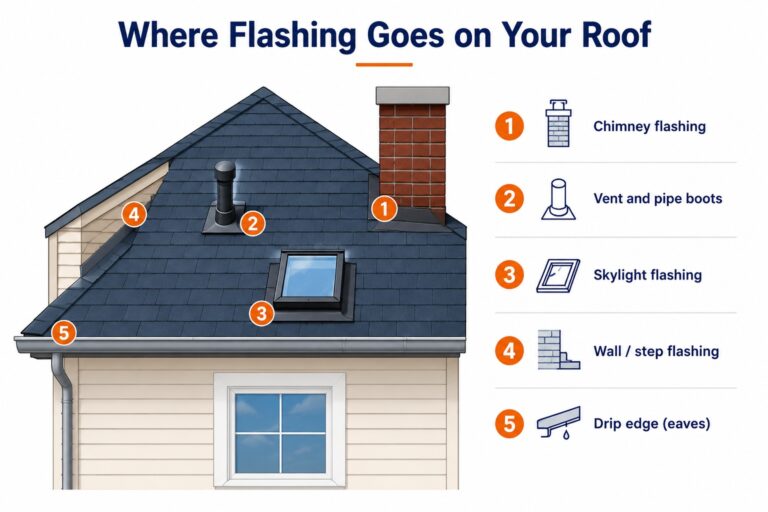
Where Does Flashing Go on Your Roof?
Flashing sits at every weak point on your roof, wherever water could sneak past the shingles.
- Around the chimney, on all four sides.
- In the valleys where two roof slopes meet.
- Around vents, pipes, and their boots.
- Along the edges of skylights.
- Where the roof meets a wall or dormer.
- Along the eaves as a drip edge.
Each of these spots has its own type of flashing, shaped for the job.
That is a lot of joints on a typical home, which is why flashing needs a careful eye during any roof work.
What Are the Main Types of Roof Flashing?
A few types do most of the work on a home.
- Step flashing seals where the roof meets a wall, layered with each shingle course.
- Valley flashing lines the channels where two slopes meet.
- Vent and pipe boots seal around round openings.
- Drip edge guides water off the eaves and into the gutter.
- Counter flashing tucks into the chimney to cover the step flashing below.
A good roofer picks the right type for each spot, since one size does not fit all.
Copper and aluminum are common today, with copper costing more but lasting the longest.
Why Is Roof Flashing So Important?
Flashing protects the exact places where roofs leak most. That makes it one of the most important parts of your roof, even though it is easy to overlook.
When flashing fails, water gets under the shingles and into your home. Worn flashing is behind a large share of every roof leak we are called to fix.
Good flashing, installed and sealed well, can keep those joints watertight for decades.
Skimping on flashing is a false saving. A cheap job here can undo the value of an expensive new roof, and buyers and inspectors notice it too.
Why Is Roof Flashing So Important?
Flashing protects the exact places where roofs leak most. That makes it one of the most important parts of your roof, even though it is easy to overlook.
When flashing fails, water gets under the shingles and into your home. Worn flashing is behind a large share of every roof leak we are called to fix.
Good flashing, installed and sealed well, can keep those joints watertight for decades.
Skimping on flashing is a false saving. A cheap job here can undo the value of an expensive new roof, and buyers and inspectors notice it too.
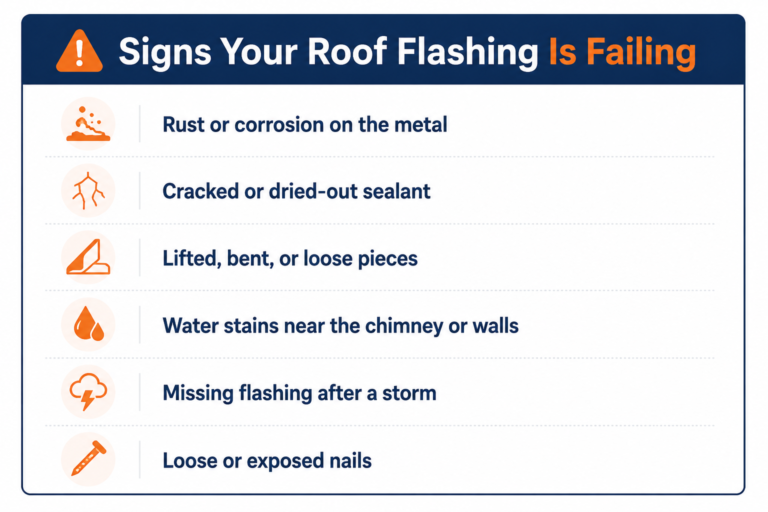
What Are the Signs Your Flashing Needs Replacing?
Flashing gives clear warnings before it fails completely. Most are easy to spot from the ground or the attic.
- Rust or corrosion on the metal.
- Cracked or dried-out sealant.
- Lifted, bent, or loose pieces.
- Water stains near the chimney or walls.
- Missing flashing after a storm.
If you see any of these, the flashing needs attention before the next hard rain.
Seeing Rust or Gaps Around Your Chimney?
Damaged chimney flashing can quickly lead to costly roof leaks. Let JSMM Inc. inspect your flashing, reseal or replace damaged sections, and help protect your home before water damage spreads.
When Should You Replace Roof Flashing?
Replace flashing when it is rusted through, badly bent, or cracked beyond a simple reseal. You should also replace it during a full roof replacement, since new shingles deserve new flashing under them.
Storms are another trigger. Wind and hail can loosen or tear flashing, so it is worth a check after a big storm, along with any hail damage to the shingles.
Not every issue means full replacement, though. A minor gap can sometimes be resealed.
As a rule, if the metal has lost its shape or its shine, it has likely lost its seal too. When in doubt, a quick inspection settles it in minutes.
How Much Does Roof Flashing Cost to Replace?
Flashing repair is often one of the cheaper roofing fixes. Resealing a joint or replacing a small piece usually costs far less than a full repair.
Chimney flashing costs more, since it has more parts and takes longer to do right. A full re-flash of a chimney sits at the higher end, but it is still small next to a new roof.
The bigger cost is waiting. Failed flashing that leaks for months can lead to rotted wood and interior repairs that dwarf the flashing itself. Ask for the flashing to be listed on your quote, so you know it was not skipped.
Can You Reseal Flashing Instead of Replacing It?
Sometimes, yes. If the metal is sound but the sealant has dried and cracked, a fresh bead of roofing sealant can buy time.
But resealing is a patch, not a cure. If the flashing itself is rusted, lifted, or bent, sealant will not hold for long. In that case, replacement is the real fix.
An honest roofer will tell you which one your roof needs, rather than caulking over a bigger problem.
Sealant also breaks down faster than metal, so even a good reseal is not forever.
What Causes Roof Flashing to Fail?
Flashing fails for a few common reasons.
- Age and rust, especially on older steel flashing.
- Poor installation, which is one of the more common roof installation mistakes.
- Storm damage from wind and hail.
- Ice dams that pry at the edges in winter, so it helps to know how to prevent ice dams.
- Constant expansion and contraction that loosens nails and sealant.
Most of these are avoidable with quality flashing and a careful install.
That is why the flashing is only as good as the roofer who puts it on.
How Does JSMM Repair and Replace Flashing?
We treat flashing as seriously as the shingles, because it protects the spots that matter most.
- We inspect every joint during a roof inspection to catch problems early.
- We reseal minor issues and replace flashing that is rusted or lifted.
- We install fresh flashing with every new roof installation, shaped for each joint.
Homeowners across the North Shore rely on us for fast roof repair in Highland Park that seals the leaks at the source.
Frequently Asked Questions
How long does roof flashing last?
Good flashing can last 20 to 30 years, though it may need resealing sooner. Copper lasts the longest. With yearly checks, you can catch small issues long before they leak.
Can flashing be replaced without a new roof?
Yes. A roofer can replace flashing on its own, without redoing the whole roof.
Is flashing covered by insurance?
If a storm damages it, often yes. Wear and age are usually not covered.
What is the most common flashing to fail?
Chimney flashing, since it has the most joints and takes the full force of the weather.
Valleys and skylights are close behind, since they handle heavy water flow.
Can I reseal flashing myself?
You can add sealant as a short-term fix, but a pro should check whether the metal itself needs replacing. A quick photo of the problem area helps a roofer tell you what it needs.
Keep Water Out Where It Matters Most
Protect your home with a professional flashing inspection. The team at JSMM Inc. will inspect, reseal, or replace damaged flashing and provide a FREE estimate before minor issues become costly repairs.