


To tarp a roof after storm damage, wait until it is safe and dry, then cover the damaged area with a heavy tarp that runs up over the roof peak, and anchor the edges to wood strips screwed into the roof. A tarp is a temporary fix to stop leaks until a roofer can make the real repair.
A good tarp job can save your home from serious water damage after a storm. But safety comes first. If the roof is steep, high, or wet, this is a job for a professional, not a ladder and good intentions.
This guide shows the safe way to tarp a roof, and when to step back and call for help. If water is already coming in, our guide on what to do about a roof leak in heavy rain covers the first steps inside your home.
Table of Contents
ToggleWhy Tarp a Roof After a Storm?
A tarp buys you time. After a storm tears off shingles or punches a hole, rain keeps coming, and every hour of exposure adds to the damage inside your home.
Storms rarely strike at a convenient time. A roofer may not be able to reach you for a day or two after a big storm, when many homes need help at once. A tarp protects your home in the meantime.
Covering the damage quickly stops water from reaching your attic, ceilings, and walls. It protects your belongings and keeps a small problem from turning into a costly one.
It also matters for insurance. Most policies expect you to take reasonable steps to prevent further damage after a storm. A tarp shows you acted quickly, which can help your claim go smoothly.
Water that gets past the roof causes hidden trouble fast. Our guide on what causes water leaks in ceilings shows how quickly one leak can spread through a home.
Is It Safe to Tarp Your Own Roof?
Sometimes yes, sometimes no. Tarping a low, walkable roof on a calm, dry day can be a safe do-it-yourself job. Tarping a steep, high, or wet roof is dangerous and should be left to a professional.
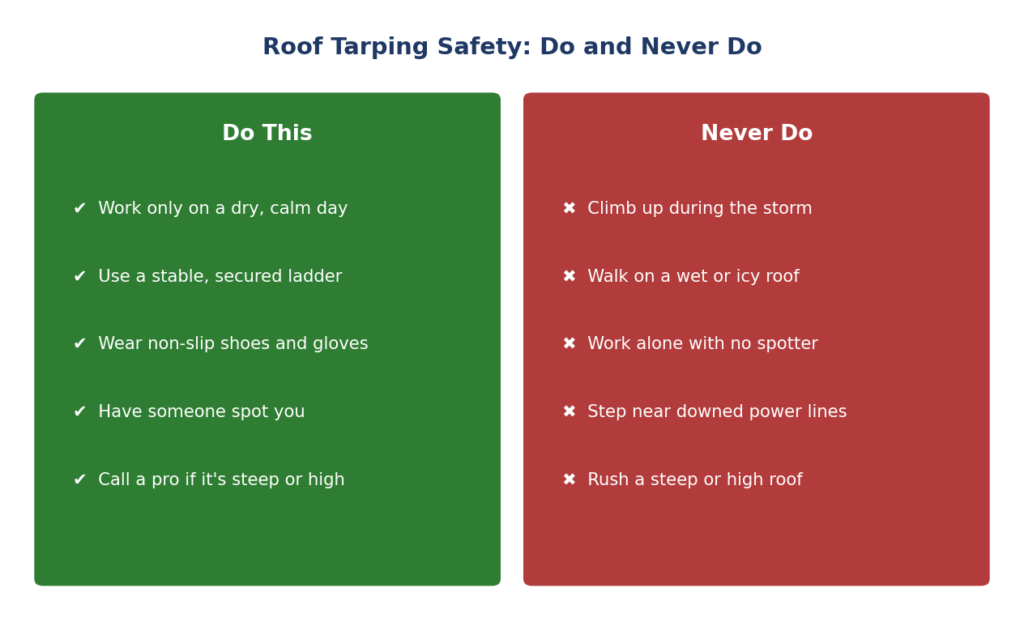
Never climb up during a storm, and never walk on a wet or icy roof. Falls from roofs are one of the most common and serious home injuries. No tarp is worth a trip to the hospital.
Also watch for downed power lines near the roof. If you see any, stay well back and call for professional help right away.
How to Tarp a Roof: Step by Step
If you have decided it is safe to do the job yourself, here is the method roofers use. Follow the steps in order.
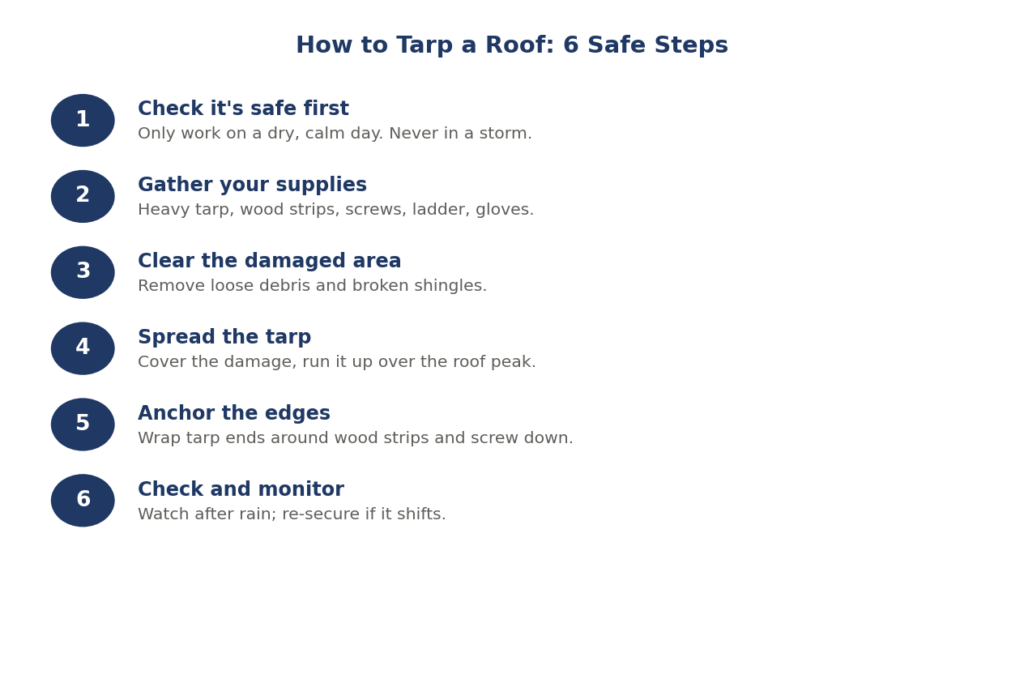
Start by making sure the weather is calm and the roof is dry. Then gather your supplies: a heavy-duty tarp larger than the damaged area, wood strips, screws, a drill, a stable ladder, gloves, and non-slip shoes.
Clear loose debris and broken shingles from the damaged area so the tarp lies flat. Spread the tarp over the damage, and run the top edge up and over the peak of the roof. This stops rain from running under it.
Anchor the tarp by wrapping each end around a wood strip, then screwing the strip through the tarp and into the roof. The wood holds the tarp tight so wind cannot lift it. Finally, check the tarp after the next rain and re-secure it if it has shifted.
Work slowly and keep three points of contact on the ladder at all times. There is no prize for speed here. A careful, well-anchored tarp will protect your home far better than a rushed one.
What Supplies Do You Need to Tarp a Roof?
The right supplies make the job safer and the tarp last longer. Here is what to have ready before you start.
- A heavy-duty tarp, larger than the damaged area on all sides.
- Wood strips, such as furring strips or 2x4s, to anchor the edges.
- Exterior screws and a drill to fix the strips down.
- A stable ladder, non-slip shoes, and work gloves.
- A helper on the ground to steady the ladder and pass tools.
A thin, cheap tarp will tear in the next gust of wind. Spend a little more on a thick one, since it may need to last until your roofer arrives.
If you do not have these on hand, most are available at any hardware store. But if a storm is still active or the roof is not safe, do not wait to shop. Call a professional who can come with everything ready.
Common Roof Tarping Mistakes to Avoid
A tarp only works if it is done right. These are the mistakes that let water back in or send the tarp flying in the next storm.
- Using a tarp that is too small to cover the damage with room to spare.
- Not running the top edge over the peak, so rain runs underneath it.
- Weighing the tarp down with bricks instead of anchoring it properly.
- Leaving loose, flapping edges that wind can catch and rip.
The peak rule matters most. If water can run under the top edge, the tarp does very little. Always carry the tarp up and over the highest point of the damaged section.
How Long Can a Tarp Stay on a Roof?
A tarp is a short-term fix, not a repair. A good tarp can hold for up to 90 days, but the goal is to get a proper repair done as soon as you can.
Left too long, a tarp breaks down in the sun and wind, and the damage underneath keeps getting worse. The sooner a roofer makes the real fix, the less it costs in the end.
Once the storm passes, book a proper look at the damage. A professional roof inspection finds every problem the storm caused, not just the obvious hole.
What to Do After You Tarp the Roof
Tarping is step one. The next steps protect your home and your wallet.
Take photos of the damage and the tarp for your records. Then contact your insurance company, since most storm damage is covered.
Insurance is a big part of storm recovery. Our guides on filing a roof insurance claim and whether insurance covers roof replacement walk you through what to expect.
Then get the real repair scheduled. Our roof repair service in Illinois handles storm damage from tarp to finished roof.
When Do You Need More Than a Tarp?
A tarp handles a hole or a patch of missing shingles. Bigger storm damage needs more than a temporary cover.
If the storm stripped large areas of the roof, cracked the deck, or left leaks in several rooms, you are likely looking at major repair or replacement. A tarp will only hold until the real work begins.
Do not let a tarp lull you into waiting. It hides the damage but does not fix it, and Illinois weather rarely gives a roof a long break between storms. The faster the real repair happens, the safer your home stays.
Hail and wind cause the worst of it. Our guides on hail damage repair and our wind and hail damage specialists cover what serious storm damage looks like, and our guide on roof repair versus replacement helps you judge the scale.
Frequently Asked Questions
How do you tarp a roof after storm damage?
Wait until it is dry and safe, clear the damaged area, spread a heavy tarp over it and up over the peak, then anchor the edges to wood strips screwed into the roof. It is a temporary fix until a roofer repairs it.
Should I tarp my roof myself or call a professional?
Tarp it yourself only if the roof is low, walkable, and dry, and you have a helper. For a steep, high, or wet roof, call a professional. Safety matters more than saving a service call.
How long can a tarp stay on a roof?
Up to about 90 days, but sooner is better. A tarp breaks down over time, and the damage underneath keeps growing until a real repair is made.
Does insurance cover roof tarping?
Often, yes. Tarping to prevent further damage is usually part of a storm claim. Our guide on the most common causes of roof leaks and your insurer can help you document the damage properly.
Will a tarp stop the leak completely?
A good tarp job stops most or all of the water in the short term. It is not perfect, so keep an eye on it after each rain and get the real repair done quickly.