

A commercial roof leak rarely shows up with a dramatic flood. It starts with a damp ceiling tile, a faint smell of mildew in the back office, or a stain that wasn’t there last month. By the time it’s impossible to ignore, it’s usually been spreading through your insulation and decking for a while.
That’s what makes commercial leaks expensive — not the leak itself, but everything that happens while it goes undetected. This guide will help you find the source, limit the damage right now, and understand what a proper fix looks like.
Table of Contents
ToggleWhy Commercial Roof Leaks Are Hard to Track Down
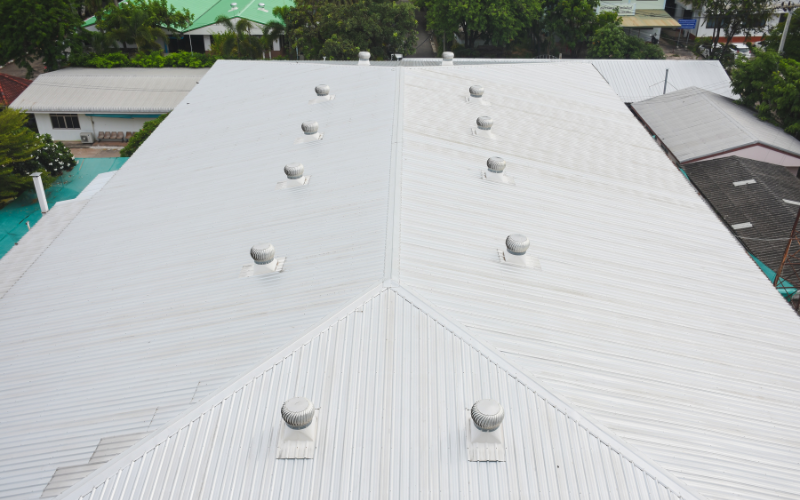
Most commercial buildings use flat or low-slope roofing systems — TPO, EPDM, modified bitumen. Unlike a sloped residential roof where water exits quickly, flat roofs pool water. That constant pressure on seams, flashings, and penetrations is what eventually forces water through.
Making it harder: water rarely enters and exits in the same spot. It travels horizontally through insulation before dripping through a ceiling — sometimes several feet from the actual breach. If you’re also seeing moisture on interior walls or ceilings and aren’t sure whether it’s a roof issue or something else, it helps to understand the broader causes of water leaks in ceilings before assuming the roof is the culprit.
Common Causes on Illinois Commercial Roofs
Illinois weather creates specific stresses. These are the failure points we see most often:
- Open or separated membrane seams — heat and cold cycling breaks down adhesive and welded joints over time
- Flashing failures around walls, parapets, HVAC curbs, and pipe penetrations
- Clogged drains — standing water accelerates membrane breakdown faster than almost anything else
- Punctures from rooftop foot traffic by HVAC or communications crews
- Hail damage — even hail that doesn’t immediately puncture creates micro-fractures that worsen each winter
How to Find the Leak

Start inside. Mark exactly where you see staining or moisture, then look directly above it and trace any water trails, rust streaks on metal, or wet insulation. Get up there within 24 hours of rain — a fresh leak is much easier to trace than a dry one.
On the roof, work outward from the point directly above the interior moisture. Look for blistering or cracked membrane, open seams, flashing that’s pulling away from equipment bases or walls, debris blocking drains, and cracked sealant around vents or skylights.
Note: If you can’t safely access the roof or the source isn’t obvious, a professional inspection using infrared scanning can detect moisture trapped beneath the membrane surface — invisible to the naked eye but clearly visible with thermal imaging.
What to Do Right Now If You Have an Active Leak

Limit the damage while repairs are arranged:
- Move inventory, equipment, and anything valuable out of the wet zone immediately
- Contain active drips with buckets and absorbent materials — and stop water from spreading across the floor
- Photograph everything: interior staining, visible exterior damage, and any standing water on the roof
If storm damage has left part of your roof structurally exposed, emergency board-up should happen before anything else — open roof sections allow water to pour in freely with each subsequent rain.
- Call your roofing contractor and insurance company as soon as possible — delays complicate claims and let damage compound
What the Repair Process Looks Like
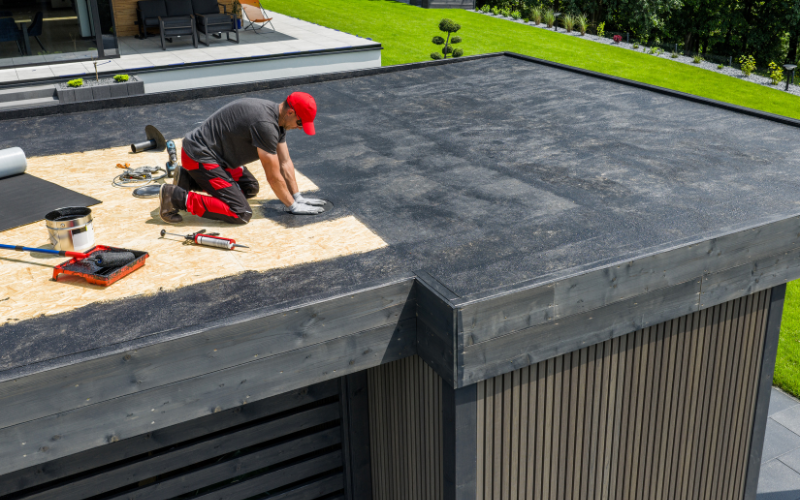
For localized damage — a separated seam, a failed flashing, a puncture — targeted repair is typically fast and cost-effective. The area is cleaned, prepped, and repaired using materials matched to your existing system.
If the membrane has widespread deterioration or moisture has saturated the insulation layer beneath, section replacement makes more sense than ongoing patches. Our commercial roofing team gives you a straight assessment of which approach is actually worth your money — and handles the insurance documentation that goes with storm-related repairs.
Not sure whether you’re looking at a repair or a full replacement? The answer usually comes down to roof age, repair history, and how far moisture has spread. We’ve put together a guide on the top signs your commercial roof needs replacement if you’re trying to make that call.
Frequently Asked Questions
How quickly do I need to act on a commercial roof leak?
Right away. Mold can begin establishing in wet insulation within 24 to 48 hours, and standing water on a flat roof accelerates membrane failure. The longer a leak runs, the more of your building’s structure and contents are at risk — and the more the repair will cost.
Can the leak be patched from inside the building?
Interior patching can stop visible dripping temporarily, but it doesn’t address the source. Water will keep entering and finding new paths through the structure. It’s a short-term measure only — the exterior breach needs to be fixed.
My roof is relatively new. Why is it leaking?
New roof leaks are almost always installation issues — improperly welded seams, undertreated flashing details, or missed spots around penetrations. This should be covered under your workmanship warranty. If the installing contractor isn’t responsive, we can inspect, document the deficiency, and repair it.
Will my insurance cover a commercial roof leak?
Sudden storm or hail damage is typically covered. Gradual leaks from deferred maintenance usually aren’t. Keeping inspection and maintenance records matters here — it demonstrates the roof was being maintained and that the damage wasn’t caused by neglect.
How long does a commercial roof repair take?
Targeted repairs are often done in a few hours. Larger section repairs or re-roofing work typically runs one to three days. We schedule around your business operations and keep disruption minimal.
- Licensed Illinois contractor — License #104.019924
- BBB A+ rated with 5.0/5 customer satisfaction
- 24/7 emergency repair response
- Free on-site diagnostic inspection
- Full insurance documentation and claim management
Also serving: Northbrook roof repair, Glenview roof repair, Winnetka roof repair, and Lake Forest roof repair.
Get It Looked At — Before It Gets Bigger
JSMM Inc. has been handling commercial roof leak detection and repair across the North Shore and greater Chicago area for over 30 years. We offer free inspections and can typically get to an active situation within 24 hours.
Contact us here or call (847) 410-7060 — we’re available around the clock for emergencies. Our office is at 1542 Old Skokie Valley Rd, Highland Park, IL 60035.
Don’t just take our word for it — check out what our customers are saying.” → Link text: Read our Google reviews
About the Author
Janathan is a licensed roofing repair specialist at JSMM Inc with decades of field experience in residential and commercial roofing across Illinois. He leads the company’s diagnostic inspection process and storm damage documentation program.