
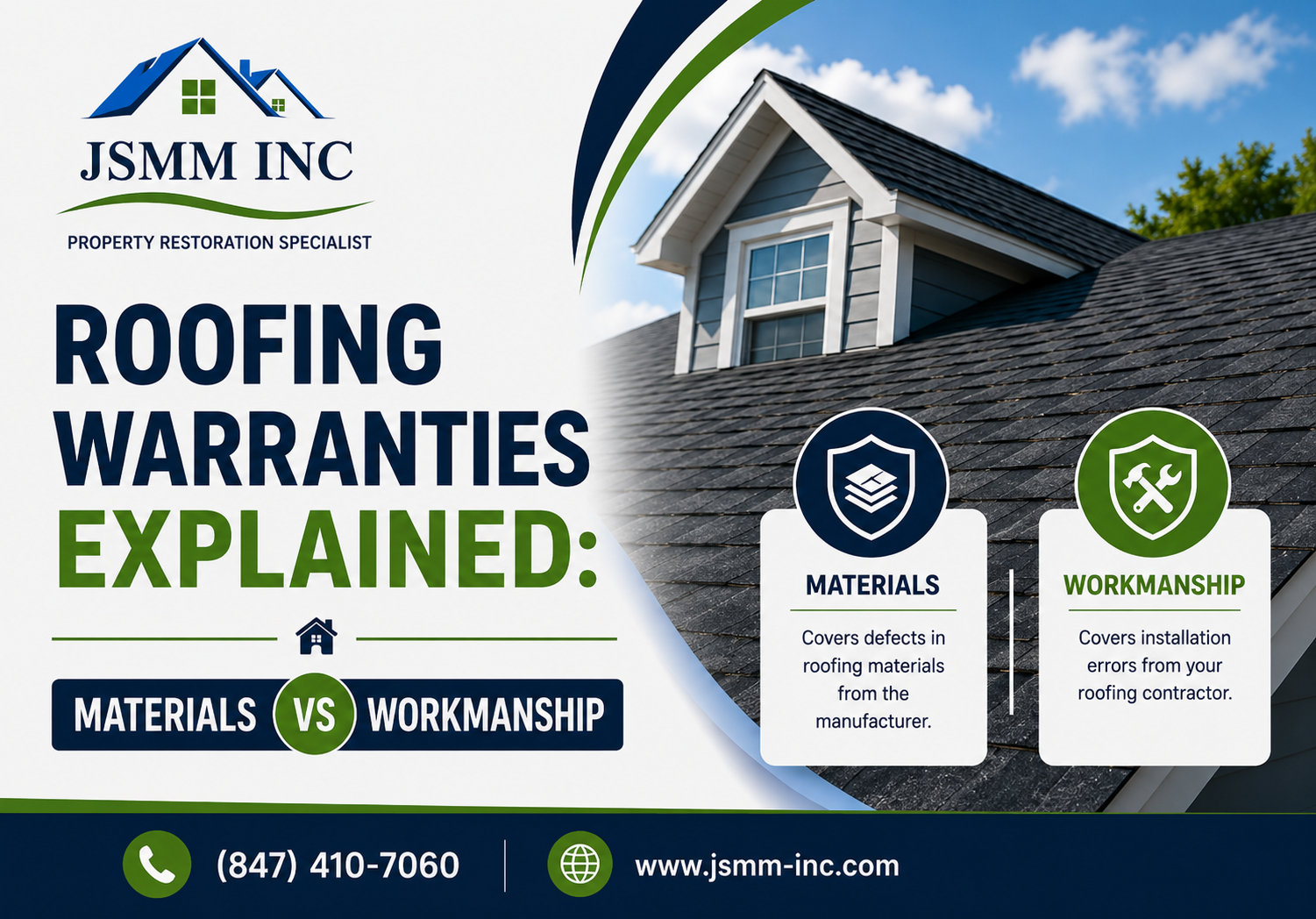
Most homeowners assume a new roof comes with one warranty that covers everything. It does not. A typical roofing job comes with two separate warranties from two separate sources, and understanding the difference matters when something goes wrong.
This guide explains what each warranty covers, how long each lasts, what can void them, and what to ask your contractor before signing anything. Knowing this before the job starts is one of the simplest ways to avoid the biggest mistakes homeowners make during roof replacement.
Table of Contents
ToggleGetting a New Roof?
Before installation begins, make sure you understand exactly what your roofing warranty covers and how to keep it valid. JSMM Inc. will explain your options so you can move forward with confidence.
The Two Types of Roofing Warranty Every Homeowner Should Know
When a new roof is installed, you typically receive two separate warranties. One comes from the manufacturer of the roofing materials. The other comes from the contractor who installed them.
They cover different things, they last different lengths of time, and neither one covers what the other is responsible for. Knowing which is which tells you exactly where to call if a problem appears.
What a Material Warranty Covers
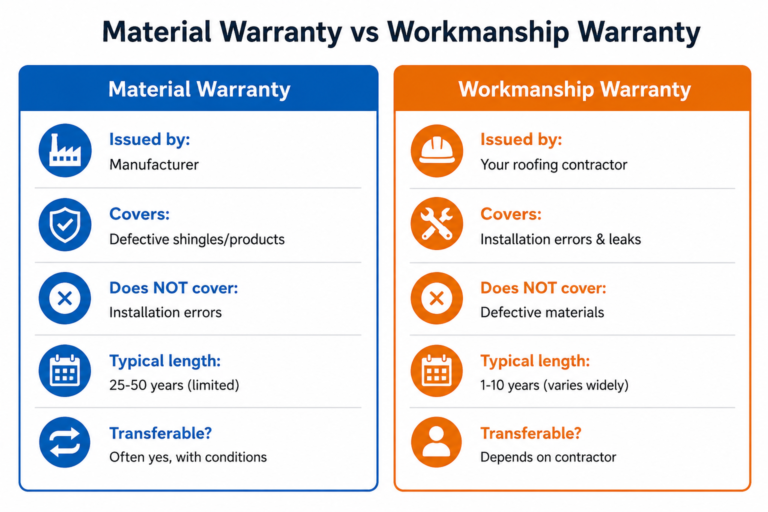
A material warranty, sometimes called a manufacturer warranty, covers defects in the roofing products themselves. If a batch of shingles cracks or fades faster than expected, or if a product fails because of a manufacturing problem, this warranty covers the repair or replacement of the defective material. What it does not cover is installation errors. If the shingles were installed incorrectly and that caused the failure, the manufacturer will typically not pay for it.
Material warranties are issued by the manufacturer and vary significantly by product type. Architectural asphalt shingles often carry limited lifetime warranties, while standard three-tab shingles may be covered for 20 to 25 years. Our guide on how long asphalt shingles last explains what those numbers really mean in practice. Some manufacturers offer enhanced or system warranties when a contractor uses only that manufacturer’s products for every component — underlayment, ventilation, and ridge cap included. These typically add five to fifteen years of extra coverage.
What a Workmanship Warranty Covers
A workmanship warranty comes from your roofing contractor and covers the quality of the installation itself. If the crew made a mistake and that mistake caused a leak, the workmanship warranty covers the fix. This is the warranty most homeowners overlook, and it is often the one that matters most in the first few years. Material failures on modern shingles are relatively rare. Installation errors are the more common cause of early roof problems. Lengths vary widely. Some contractors offer one year. A company that stands behind its work typically offers five to ten years. Always ask for the specific length and get it in writing before the job starts. Choosing the right roof installation contractor in Illinois makes all the difference here, since a workmanship warranty is only as good as the company behind it.
How Long Do Roofing Warranties Usually Last?
Length depends on the product and the contractor.
- Basic asphalt shingles: 20 to 25 years (material).
- Architectural shingles: limited lifetime (material), which usually means 30 to 50 years.
- Metal roofing: 30 to 50 years (material), depending on the product.
- Contractor workmanship: typically 1 to 10 years.
Architectural shingles deliver more coverage than three-tab and usually cost only slightly more. Our guide on architectural vs 3-tab shingles compares the two in detail.
Metal roofing products often carry some of the longest material warranties available. If longevity matters to you, our guide on metal or composite roofing walks through the options.
What Can Void a Roofing Warranty?
Both types of warranty come with conditions. Missing any of them can cancel your coverage entirely, sometimes years after the installation is complete.
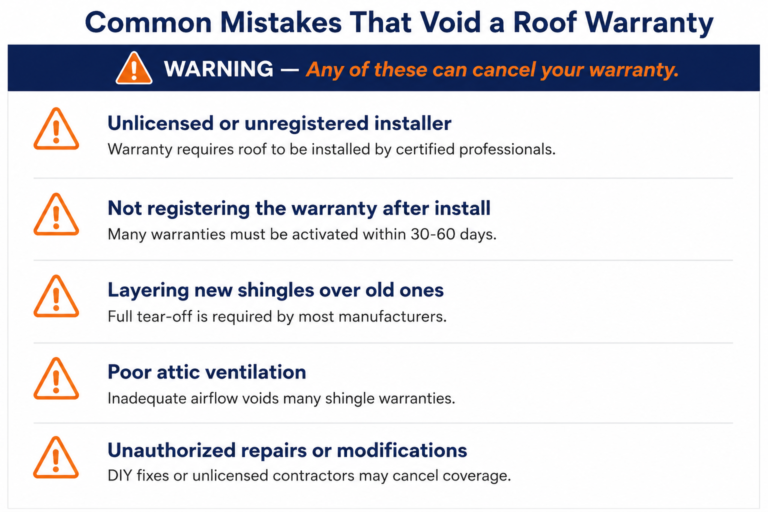
The most common one is using an unlicensed or manufacturer-uncertified installer. Many manufacturers require that their products be installed by a certified contractor for the warranty to apply. Hiring a company that is not registered with that manufacturer can void the material warranty before the first shingle goes on.
Not registering the warranty after installation is another common problem. Many warranties must be activated within 30 to 90 days of completion. Ask your contractor whether the registration is their responsibility or yours, and confirm it was done. A yearly roof inspection is a good time to verify your warranty documents are in order.
Poor attic ventilation is a less obvious one. Most shingle manufacturers specify minimum ventilation requirements. If your attic runs too hot or too cold because airflow is inadequate, the shingles degrade faster and the warranty may not apply.
Protect Your Investment With a Roof You Can Trust
JSMM Inc. is fully licensed, insured, and backed by leading manufacturer warranties, giving you reliable protection and expert workmanship from the very first day.
📍 Highland Park, IL
Why Attic Ventilation Affects Your Warranty
Most homeowners do not realize this until it is too late. Our guide on why roof ventilation matters goes into detail, but the short version is that heat and moisture buildup in an underventilated attic shortens the life of every component above it.
Shingle granules break down faster. Underlayment dries out. Wood decking weakens. Because of this, manufacturers tie their warranty terms directly to ventilation specifications. If you are replacing a roof, make sure your contractor assesses and corrects the ventilation at the same time.
It is one of the lowest-cost steps that protects one of the highest-value warranties.
Can You Transfer a Roofing Warranty to a New Owner?
Many material warranties are transferable to a new homeowner if you sell the house, but the terms vary. Some allow one free transfer. Others charge a fee. Most require you to notify the manufacturer within a set window after the sale.
Workmanship warranties are less commonly transferable, since they depend on the relationship between the homeowner and the contractor. Check with your contractor specifically about this before signing a purchase or sale agreement.
A transferable warranty adds real value to a home sale, since the buyer knows the roof is covered. This is one more reason why the full cost of a roof replacement in Illinois is worth thinking about carefully, including what warranty length you are paying for.
What to Ask Your Contractor Before the Job Starts
Getting answers to these questions upfront protects you for the life of your roof.
- Which manufacturer’s products are you using, and are you certified to install them?
- What is the length of your workmanship warranty, and what exactly does it cover?
- Is there an enhanced system warranty available if only one manufacturer’s products are used?
- Who is responsible for registering the material warranty after installation?
- Is the workmanship warranty transferable if I sell the house?
Get all of these answers in writing before signing anything. A contractor who cannot or will not answer them clearly is worth walking away from.
These questions also apply whether you are doing a full roof replacement in Illinois or a new installation on a build. The warranty structure is the same in both cases.
Frequently Asked Questions
Does a warranty mean the roof will never leak?
No. A warranty means that if the roof leaks because of a defective material or an installation error, the cost of fixing it is covered. It does not mean leaks cannot happen.
What happens if the contractor goes out of business?
The material warranty from the manufacturer still applies. The workmanship warranty is tied to the contractor, so if they close, that coverage is gone. This is one reason to choose an established, long-running company.
How do I know if my warranty is still valid?
Check that it was registered, that you have not made any unauthorized repairs or modifications, and that your attic ventilation meets the manufacturer’s spec. If you are unsure, a professional inspection can confirm.
Do repairs affect my warranty?
Unauthorized repairs made by an unlicensed contractor can void coverage. Always use a licensed roofer for any work on a warrantied roof.
What is a limited lifetime warranty?
This phrase is used by most major shingle manufacturers. It means the warranty lasts for the expected life of the product, which in practice means 30 to 50 years, though coverage often reduces after a set number of years. Read the specific terms carefully.
Replace Your Roof With Confidence
Choose JSMM Inc. for a roof that's installed the right way. We're licensed, insured, and backed by leading manufacturer warranties, giving you lasting protection and peace of mind from day one.