


If your roof is leaking, the cause is usually one of a few common problems. Cracked or missing shingles, worn flashing, clogged gutters, and gaps around vents or chimneys are the usual suspects. Storms, ice dams, and simple old age cause the rest. The tricky part is that water often shows up far from where it got in.
A roof leak is easy to ignore when it is just a small stain. But water spreads fast, and a slow drip can rot wood, ruin insulation, and grow mold before you know it.
The sooner you find the cause, the smaller and cheaper the fix.
At JSMM Inc., we have chased down roof leaks across the North Shore for more than 30 years. This guide covers the most common causes of roof leaks, how to spot them, and when to call for help.
Table of Contents
ToggleHave a Roof Leak Right Now?
Don't wait for water damage to spread. JSMM Inc. provides fast roof leak inspections and reliable repairs for homeowners across Highland Park and the North Shore.
What Are the Most Common Causes of Roof Leaks?
Most roof leaks come from a short list of problems. Once you know them, you can often guess the cause before a roofer even climbs up.
Here are the seven causes we see most often on North Shore roofs.
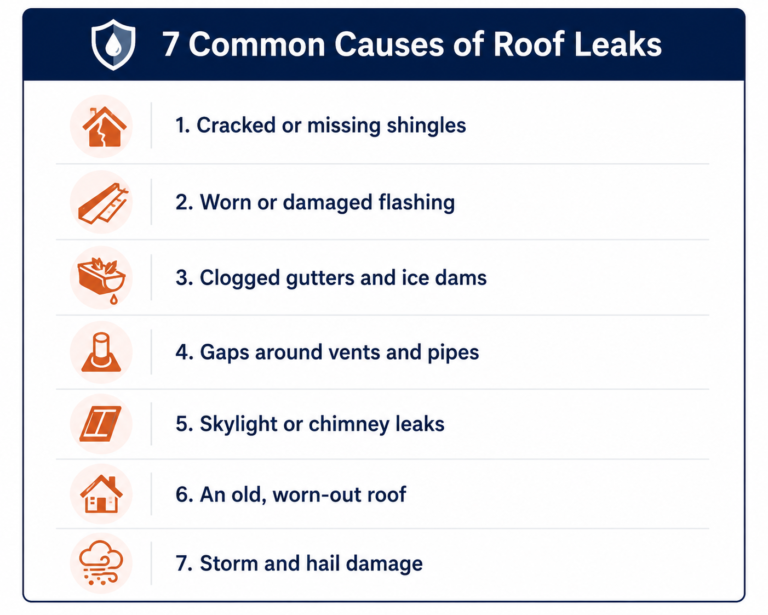
Any one of these can let water in. Often it is a mix, like an old roof with worn flashing that finally gives way in a storm.
Can Cracked or Missing Shingles Cause a Leak?
Yes, and it is one of the most common causes. Shingles are your roof’s first shield against water. When one cracks, curls, or blows off, the layer underneath is exposed.
Wind, hail, and age all take their toll. A single missing shingle may not leak right away, but it opens a path for water to work its way in.
Missing granules and bald spots are early warning signs, even before a shingle is gone.
Older roofs are more prone to this, since shingles get brittle over time. Knowing how long asphalt shingles last helps you plan before leaks start.
Why Does Flashing CauseSo Many Leaks?
Flashing is the thin metal that seals the joints on your roof, around chimneys, vents, skylights, and in the valleys. It sits where two surfaces meet, and that is exactly where water tries to sneak in.
When flashing rusts, lifts, or was installed poorly, it fails. Water slips underneath and travels along the roof until it finds a way into your home.
Flashing problems are behind a large share of roof leaks, which is why a good roofer checks every joint first.
Chimneys are the worst offenders, since they have four sides of flashing and take the full force of the weather.
Do Clogged Gutters and Ice Dams Cause Leaks?
They do. Gutters carry water away from your roof. When they clog with leaves, water backs up under the shingles at the edge.
Winter makes it worse. Snow melts, runs to the cold edge, and refreezes into an ice dam. That ice forces water back up under the roof, which is why ice dams cause so many winter leaks.
Clean gutters and good attic airflow are your best defense against both problems.
Cleaning your gutters twice a year, in spring and fall, prevents most edge leaks.
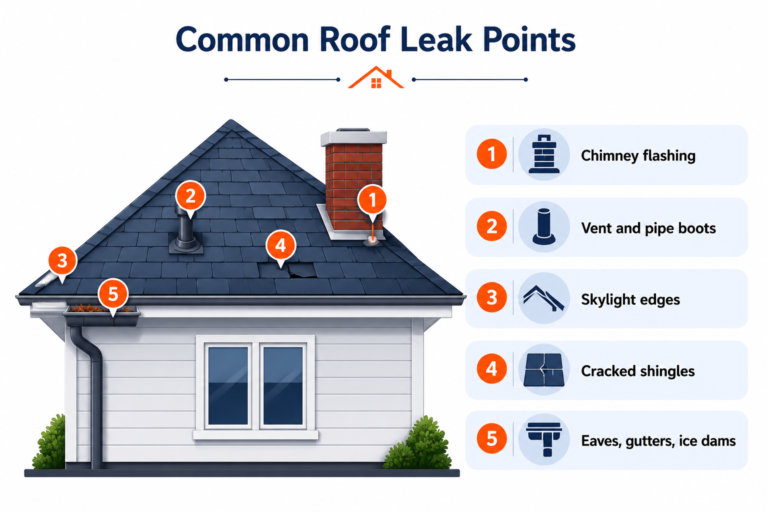
Where Do Roofs Leak Most?
Leaks tend to start at the weak points, not in the middle of a clean roof slope.
- Around the chimney and its flashing.
- In the valleys where two roof slopes meet.
- Around vents, pipes, and their rubber boots.
- Along the edges of skylights.
- At the eaves, where ice dams and clogged gutters do their damage.
Water rarely enters where you see the stain. It often runs along a beam first, so the leak inside can be feet away from the real entry point. This is why guessing at the source often leads to a patch that does not hold.
Not Sure Where Your Roof Leak Is Coming From?
Our experienced roofing team will locate the source of the leak, explain the issue, and recommend the right repair before it causes more damage to your home.
Can Storms and Hail Cause Roof Leaks?
Yes. A strong storm can lift or tear shingles in seconds. Hail cracks them and knocks off the protective granules, which speeds up wear.
Sometimes the damage is obvious. Other times it is small and hidden, and the leak shows up weeks later after the next rain. That is why a check after a big storm is smart, especially for hail damage.
If your roof started leaking after a storm, your homeowners insurance may help cover the repair.
Keep photos and a record of the storm date, since they help with a claim.
Does an Old Roof Just Start Leaking?
Sometimes, yes. Every roof has a lifespan. As it nears the end, shingles wear out, seals fail, and leaks become more common, often in more than one spot.
A single leak on a newer roof usually means a simple repair. Several leaks on an aging roof often point to a bigger problem. Watch for the signs you need a new roof, since patching an old roof over and over rarely pays off.
When the roof is near the end of its life, a full roof replacement is usually the smarter, cheaper choice over time.
Doing the math early saves you from paying for repairs that only buy a little time.
How Much Does It Cost to Fix a Roof Leak?
The cost depends on the cause. A single lifted shingle or a small flashing fix is often inexpensive. A leak that has spread into the deck or attic costs more, since the repair includes the damage below.
That is why speed matters. A leak caught early is usually a quick, low-cost fix. The same leak left for months can mean new decking, insulation, and drywall.
An honest roofer will tell you what the repair really needs and give you a clear price before starting.
How Do You Find a Roof Leak?
Finding the source is the hardest part, since water travels before it drips.
Start in the attic on a dry day and look for water stains, damp wood, or daylight. Trace the wet trail uphill to find where water enters. A flashlight and patience go a long way.
If it is pouring right now, focus on safety first. Our guide on what to do about a roof leak in heavy rain walks through the quick steps. For anything you cannot find, a professional roof inspection is the fastest answer.
A pro can also spot hidden damage you might miss from the ground.
How Does JSMM Fix Roof Leaks?
We find the real source, not just the wet spot, so the fix actually holds.
- We inspect the roof and attic to trace the leak to its start.
- We repair shingles, flashing, boots, and sealant as needed.
- We tell you honestly if a repair will hold or if replacement makes more sense.
Homeowners across the North Shore rely on us for fast roof repair in Highland Park that stops the leak and protects what is underneath.
Frequently Asked Questions
Why does my roof leak in heavy rain but not light rain?
Heavy rain and wind push water into small gaps that light rain misses. It often points to worn flashing or lifted shingles.
Do dark roofs mCan a roof leak without visible damage?ake your house hotter?
Yes. Flashing gaps and pinholes can leak while the roof looks fine from the ground. An attic check often finds them.
How urgent is a small roof leak?
More urgent than it looks. Even a slow drip can rot wood and grow mold, so it is best to fix it early. Fixing it now almost always costs less than waiting.
Will my insurance cover a roof leak?
It depends on the cause. Sudden storm damage is often covered, while wear and age usually are not.
Can I fix a roof leak myself?
You can slow it with a temporary patch, but finding the true source is tricky. A professional fix saves money over repeated tries. Climbing a wet or steep roof is also risky, so leave the real repair to a pro.
Stop the Leak Before It Spreads
The team at JSMM Inc. will locate the source of your roof leak, repair it quickly, and help protect your home from further damage. Get expert service with a FREE roof inspection.