
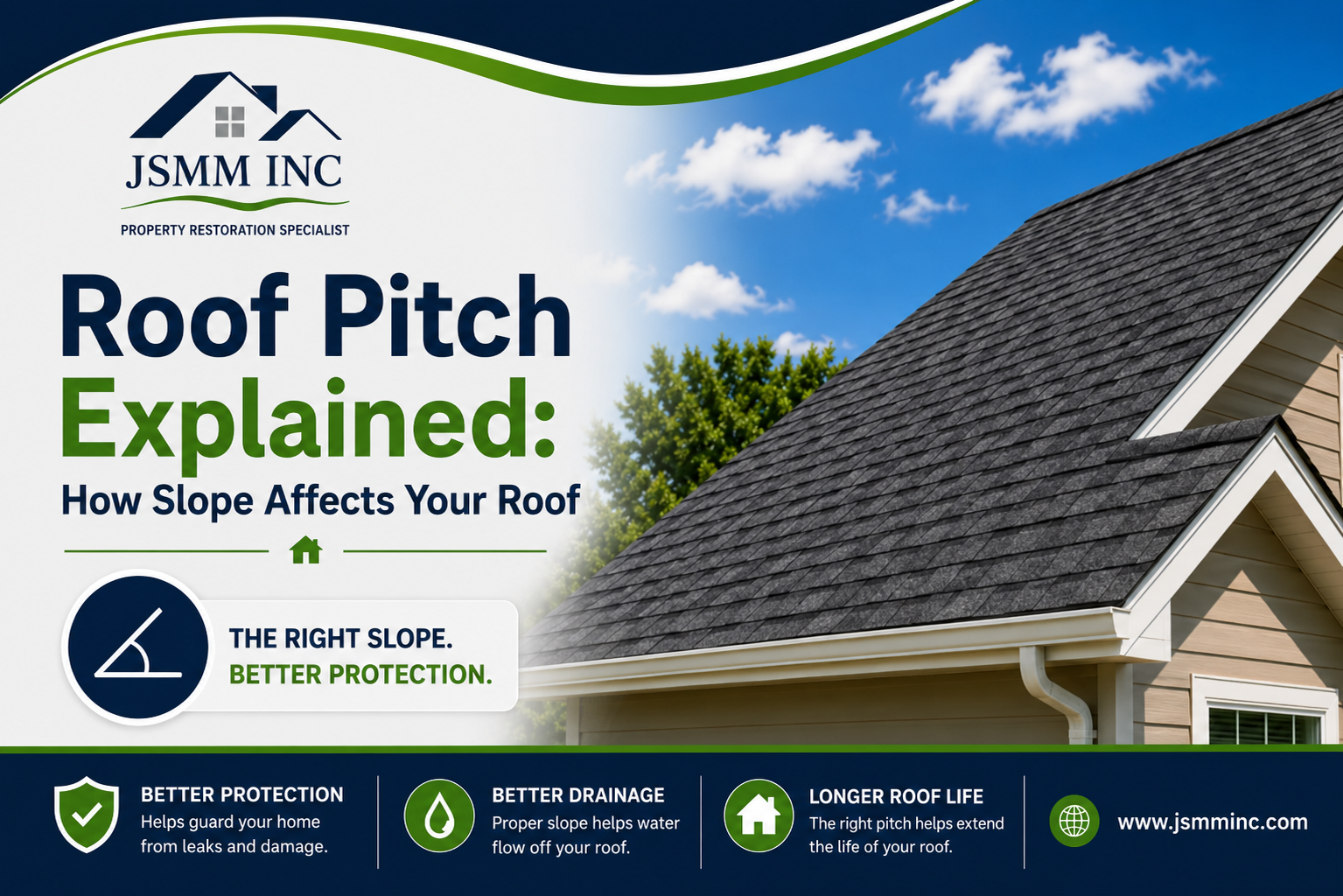
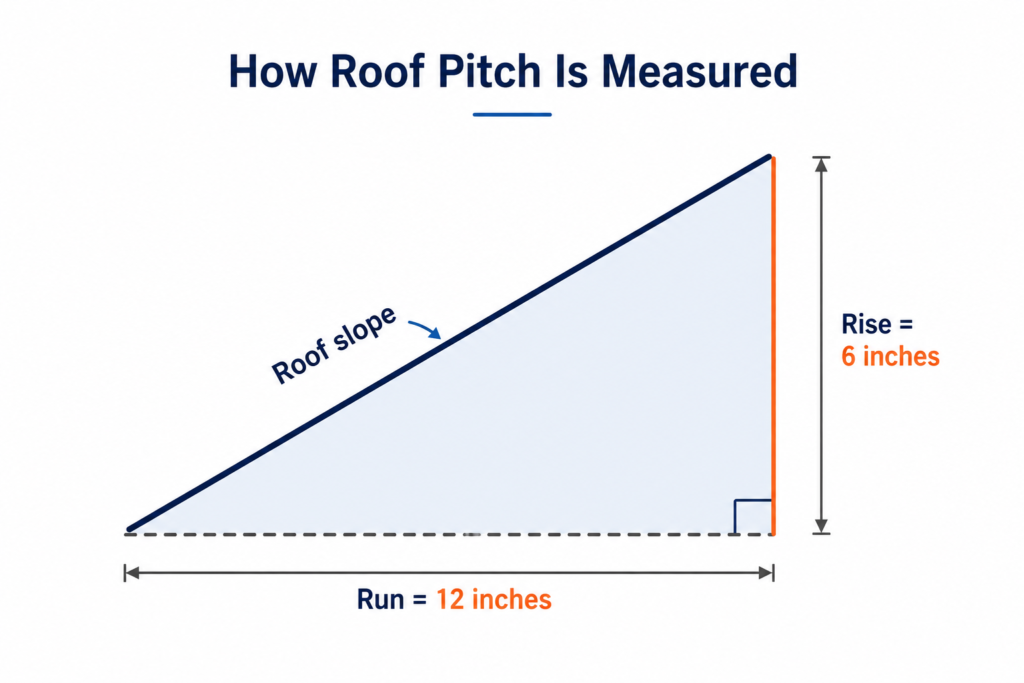
Roof pitch is the slope of your roof, or how steep it is. Roofers measure it as rise over run: how many inches the roof rises for every 12 inches it runs across. A roof that climbs 6 inches over 12 inches is a 6:12 pitch.
Pitch is more than a number. It affects how well your roof sheds water and snow, which materials you can use, and how much a new roof costs. A steep roof drains fast and tends to last longer. A low-slope roof needs extra care to stay dry.
Knowing your pitch helps you plan repairs, budget for a new roof, and pick the right materials.
At JSMM Inc., we have worked on every kind of roof across the North Shore for more than 30 years. This guide explains what roof pitch is, how it is measured, and why it matters for your home.
Table of Contents
ToggleNot Sure What Your Roof's Pitch Means?
JSMM Inc. offers FREE roof inspections across Highland Park & the North Shore. Our roofing experts will evaluate your roof's pitch, explain your repair or replacement options, and provide a no-obligation estimate.
Book Free Inspection 📞 (847) 410-7060How Is Roof Pitch?
Roof pitch is simply how steep your roof is. A flat roof has a low pitch. A tall, pointed roof has a high pitch.
You may also hear it called slope or grade. They all mean the same thing: the angle of your roof from flat to steep.
Roofers write pitch as two numbers, like 6:12 or 8:12. The first number is the rise. The second is the run, which is always 12 inches. So a 6:12 roof rises 6 inches for every 12 inches across.
Once you know the pitch, you know a lot about the roof: how it drains, what it can be covered with, and how safe it is to walk on.
How Is Roof Pitch Measured?
Measuring pitch is easier than it sounds. A roofer uses a level and a tape measure to find the rise over a 12-inch run.
Hold a level flat against the roof slope. Measure 12 inches along the level, then measure straight down to the roof at that point. That drop is your rise.
You can do this from inside the attic against a rafter, which is safer than climbing on the roof. For a precise number, a roofer can confirm it in a few minutes.
If the drop is 5 inches, your roof is a 5:12 pitch. During a roof installation, we check this early, since it shapes every choice that follows.
What Are the Main: Types of Roof Pitch?
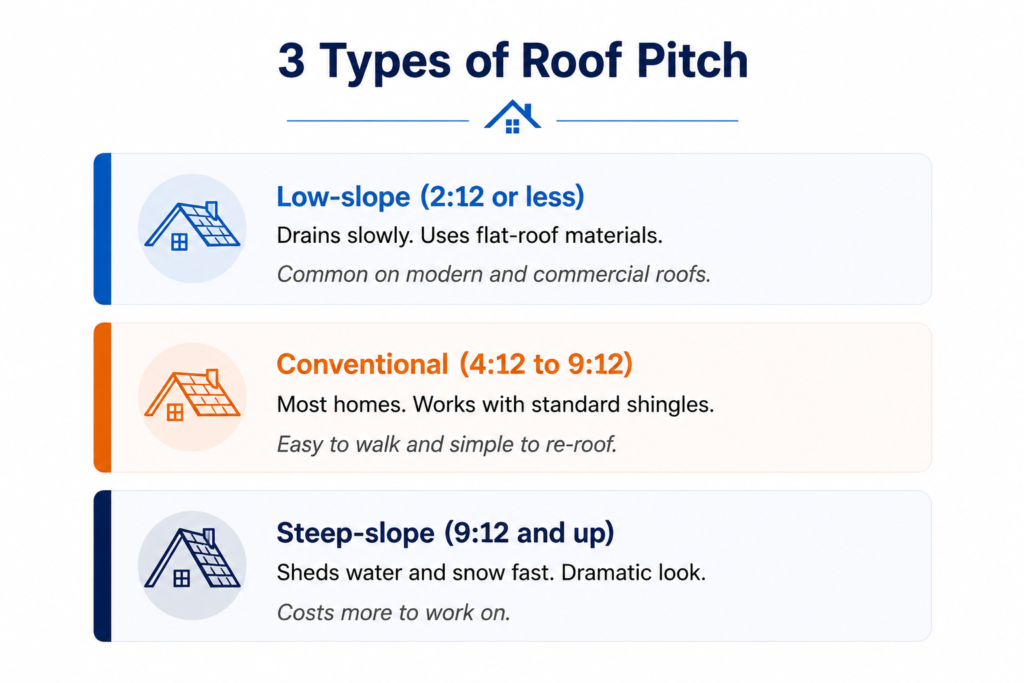
Roofs fall into three broad groups by slope.
- Low-slope roofs (2:12 or less) drain slowly and often use flat-roof materials. They are common on modern homes and on commercial roofing.
- Conventional roofs (about 4:12 to 9:12) cover most homes. They are easy to walk on and work with standard shingles.
- Steep-slope roofs (9:12 and up) shed water and snow fast and give a home a dramatic look, but they cost more to work on.
Most North Shore homes fall in the conventional range, though plenty have steeper front gables for style.
How Does Roof Pitch Affect Your Materials?
Pitch decides what can go on your roof. Not every material works on every slope.
Steep and conventional roofs handle asphalt shingles well, which is why they are so common. The slope helps water run off before it can seep under a shingle, which is part of how long asphalt shingles last.
Low-slope roofs are a different story. They need sealed membranes or rolled roofing, since shingles would let water pool and leak. Our guide on flat roof vs pitched roof covers this, and our guide on metal or composite roofing helps you compare options.
Steeper roofs also open the door to heavier materials like slate or tile, since the slope carries their weight and sheds water fast.
How Does Pitch Affect Drainage and Leaks?
Drainage is where pitch really shows its value. The steeper the roof, the faster it sheds rain and snow.
A steep roof clears water in seconds, which keeps the surface dry and the roof lasting longer. A low-slope roof drains slowly, so water sits longer and finds any weak spot.
That is why low-slope roofs need better sealing and more frequent checks. A small gap that a steep roof would shrug off can turn into a roof leak on a flat one.
Good gutters matter on every pitch, but they are extra important on a low-slope roof that cannot rely on gravity alone.
Does Roof Pitch Matter in Illinois Winters?
It matters a lot. Our winters bring heavy snow, and pitch decides how your roof handles it.
A steep roof sheds snow before it piles up. A low-slope roof holds snow longer, which adds weight and raises the risk of ice dams along the edge, so it helps to know how to prevent ice dams.
If you have a lower-slope roof, extra edge protection and good attic airflow help you get through the season without trouble.
Steep roofs are not risk-free either. Fast-sliding snow can pile up at the eaves, so snow guards sometimes help.
How Does Pitch Affect the Cost of a New Roof?
Steeper roofs cost more to replace. They are harder and slower to work on, and the crew needs extra safety gear and time.
A steep roof also uses more material, since the surface area is larger than it looks from the ground. All of that adds to the price.
Very low-slope roofs can cost more too, since they need special membranes instead of standard shingles.
Can You Change Your Roof's Pitch?
Changing a roof’s pitch is possible, but it is a big job. It means rebuilding the frame, not just the surface, so most homeowners never do it.
There are good reasons to consider it, though. Some owners raise a low-slope section to fix constant drainage problems or to add attic space. Others do it for looks during a major remodel.
If your roof drains poorly, changing the pitch is rarely the first fix. Better sealing, flashing, and drainage usually solve the problem for far less money.
When we quote a roof replacement, pitch is one of the first things we measure, so your estimate reflects the real job.
Planning a New Roof?
Your roof's pitch affects the materials, labor, and overall installation cost. Schedule a FREE roof estimate with JSMM Inc. and receive an accurate quote based on your roof's slope.
Book Free Estimate 📞 (847) 410-7060How Does JSMM Work With Your Roof's Pitch?
Every roof is different, and pitch is one of the first things we account for.
- We measure your pitch and match it to the right materials.
- We use the proper safety setup for steep roofs, so the work is done right.
- We flag drainage and edge-protection needs on lower-slope roofs.
Homeowners across the North Shore rely on us for a full roof replacement in Highland Park that fits their roof’s slope, not a one-size approach.
Frequently Asked Questions
What is a good roof pitch for a house?
Most homes do well with a conventional pitch, around 4:12 to 9:12. It drains well and works with common materials.
Can you put shingles on a low-slope roof?
Usually not below 2:12. Low-slope roofs need membranes or rolled roofing to stay watertight.
Does a steeper roof last longer?
Often, yes. Faster drainage keeps the surface dry, which helps the roof and its shingles last.
It also gives dirt, leaves, and moss less time to settle and cause wear.
How do I find my roof's pitch?
Measure the rise over a 12-inch run with a level, or ask a roofer to check it during an inspection.
Does roof pitch affect my attic space?
Yes. A steeper pitch usually means a taller attic, while a low pitch leaves less room above your ceiling .That extra height can mean usable storage or even a finished room.
Ready to Make the Most of Your Roof's Slope?
JSMM Inc. will measure your roof's pitch, explain the best roofing options, and provide a FREE no-obligation estimate. Visit our Highland Park office or contact our team today to get started.
Get Free Estimate 📞 (847) 410-7060