
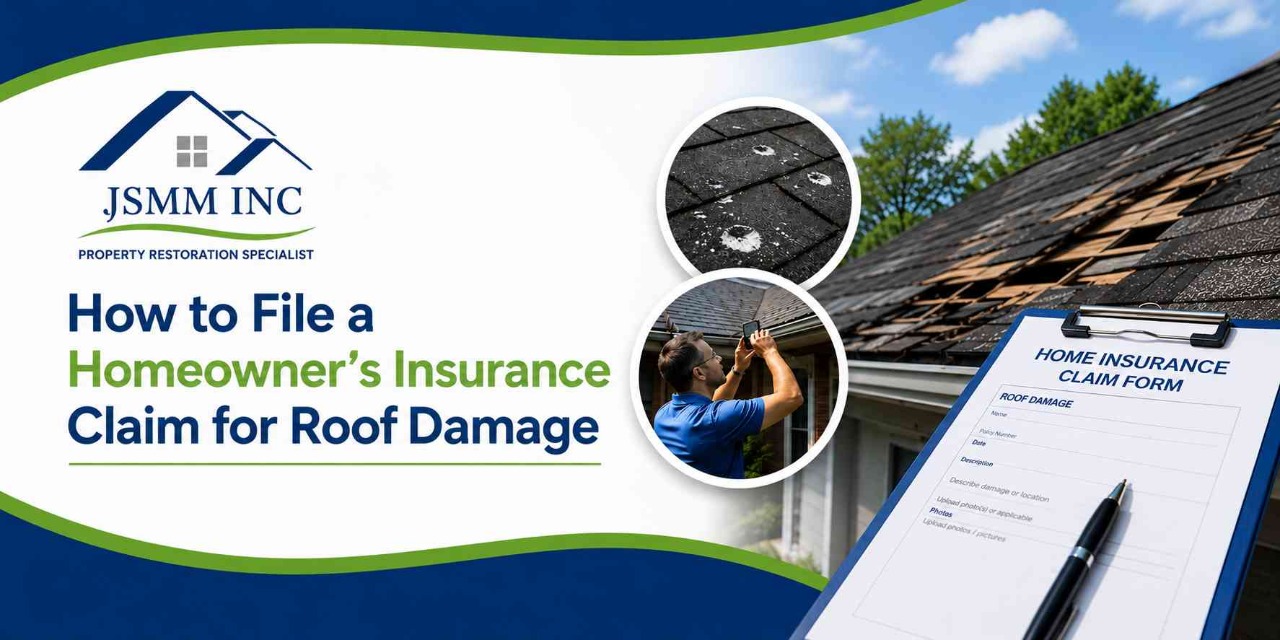
Roof damage from a storm or hail is stressful enough. Then comes the insurance claim, and most homeowners have no idea where to start.
You’re not sure what to document, who to call first, or whether you’re doing things in the right order. One wrong step can cost you real money you’re fully entitled to.
The good news? The process is simple once you know the steps. This guide walks you through everything in plain language, with no insurance jargon and no confusing terms.
Table of Contents
ToggleWhat to Do in the First 24 Hours
Check Whether Your Policy Covers the Damage
Most homeowner insurance policies cover damage that happens suddenly: storms, high winds, hail, fallen trees, and fire. What they don’t typically cover is gradual wear, old age, or damage from years of missed maintenance.
Before you file anything, pull out your policy and find the section on dwelling coverage or roof coverage. The most important thing to check: does your policy pay Replacement Cost Value (RCV) or Actual Cash Value (ACV)?
RCV pays what it costs to replace your roof today. ACV deducts for age, so a 15-year-old roof might only get a fraction of the replacement cost. Knowing which one you have will tell you what to expect from your settlement.
If you’re unsure what your policy covers, our insurance loss management team can walk through the damage with you before you file, at no cost to you.
Document Everything Before You Do Anything Else
This is the most important step in the whole process. Insurance companies pay based on evidence. The more you have, the harder it is for an adjuster to reduce or deny your payout.
Start outside. Walk around the home and photograph everything visible from the ground: damaged or missing shingles, dented flashing, gutters pulled away from the roofline. Do not climb on the roof yourself.
Then go inside. Photograph any water stains on ceilings, wet insulation in the attic, or wall damage near windows and exterior walls.
Write down the date and time the damage happened and what caused it. If it was a hailstorm, search your zip code and the storm date, as weather service records often confirm hail size and wind speed. Save those records too.
If your home took hail damage to the roof, photograph every dent and cracked shingle you can see. The more you capture now, the harder it is for the adjuster to dispute anything later.
Stop Further Damage From Happening
Most policies require you to take basic steps to prevent additional damage after a storm. If you don’t, your insurer can use that against you during the claim.
Cover any exposed areas with a tarp, move valuables away from active leaks, and place buckets under drips. Do not make any permanent repairs until after the adjuster visits.
Photograph every temporary fix you make. This shows your insurer you acted responsibly and protects you if conditions worsen before the inspection.
Step-by-Step: From Your First Call to Settlement
| 1 | Call Your Insurance Company and Open the Claim Call the claims line on your insurance card or file through your insurer’s online portal. Have your policy number, the date of damage, the cause (storm, hail, wind), and your photos ready before you call. Your insurer will open the claim, assign an adjuster, and give you a claim number. Write it down, as you will need it for every conversation from here on. The adjuster visit may be scheduled anywhere from a few days to two weeks out, depending on storm activity in your area. |
| 2 | Get Your Own Contractor Estimate Before the Adjuster Comes Here is something most homeowners don’t know: you are not required to accept whatever number the insurance adjuster gives you. Before or right after the adjuster visits, get an independent estimate from a licensed roofing contractor. You can get a free roof repair estimate from JSMM-INC, with no pressure and no obligation. If the adjuster’s number comes in lower than the contractor’s estimate, you now have written evidence to push back with. |
| 3 | Be Present When the Adjuster Inspects Your Home When the adjuster arrives, do not leave them to inspect alone. Walk the property with them. Show them your photos. Point out every area of damage, both inside and outside. Ask them to explain what’s covered and what isn’t. Ask for their written assessment before they leave. If you’re working with JSMM-INC’s wind and hail damage specialists, we can attend the inspection with you and flag damage that adjusters commonly miss, especially on flat or multi-slope roofs. |
| 4 | Review the Settlement Offer Carefully Before You Sign Anything Once the inspection is done, your insurer will send a written settlement offer. Read every line. Check how your deductible is applied. Check whether the payout is ACV or RCV. Make sure every area of damage you reported is included in the offer. If the number is lower than your contractor’s estimate, you can request a re-inspection, file a supplemental claim, or have your contractor speak directly with the adjuster. Our complete damage restoration team handles exactly this for homeowners on a regular basis. |
Getting the Repair Done and Making the Right Call
Repair or Replace? Know Before You Sign a Contract
Once the settlement is approved, there’s one more decision to make: should you repair the damaged sections or replace the whole roof?
The answer depends on how much of the roof is damaged, how old it is, and whether a partial repair will actually hold long-term.
As a general rule: if damage covers more than 25–30% of the surface, or if the roof is already 15–20 years old, a full replacement usually makes more sense. Our guide on roof repair vs. roof replacement walks through exactly how to make that call, including when insurance is more likely to cover a full replacement.
Before signing any repair contract, check our breakdown of roof repair costs and timelines in Illinois so you know what fair pricing looks like in your area.
What If Your Claim Is Denied or Underpaid?
It happens more than it should. Insurers sometimes deny claims by citing pre-existing wear, policy exclusions, or disputes over what caused the damage.
If you get a denial or an offer that doesn’t match your real repair cost, you have options. Request a formal written explanation. File an appeal. Ask for a re-inspection with your contractor present so they can point out everything the adjuster may have missed.
In more complex cases, homeowners work with a public adjuster, which is an independent professional who negotiates the settlement on your behalf.
At JSMM-INC, our team works with insurance companies directly to help homeowners get fair settlements. If your claim has been denied or the offer seems low, reach out to our roof repair team in Highland Park before you accept anything.
Quick Tip: Don’t Wait Too Long
Most homeowner policies require you to file within 1 year of the damage, and some require filing within as little as 60 days. Even if you’re unsure whether the damage is serious enough to claim, a free inspection from a licensed contractor costs you nothing and gives you the facts you need to decide.
Frequently Asked Questions
How long do I have to file after roof damage?
Most policies allow 1 year from the date of damage. Some require filing within 60–180 days. The sooner you file, the better. |
Will filing a claim raise my premiums?
One claim does not automatically raise rates, but it varies by insurer and policy. Check with your agent before filing if you’re unsure. |
Can my insurer deny a claim because my roof is old?
Yes. Many policies won’t cover roofs over 20–25 years, or will only pay ACV (depreciated value). Check your policy before filing. |
Should I fix the roof before the adjuster visits?
No. Temporary fixes like tarps are fine, and you should photograph them. Do not make permanent repairs before the adjuster inspects. |
Does JSMM-INC help with insurance claims?
Yes. We provide free inspections, written contractor estimates, and work with adjusters on behalf of homeowners. |
Contact JSMM Inc for Roof Repair Near Highland Park
- Licensed Illinois contractor — License #104.019924
- BBB A+ rated with 5.0/5 customer satisfaction
- 24/7 emergency repair response
- Free on-site diagnostic inspection
- Full insurance documentation and claim management
Also serving: Northbrook roof repair, Glenview roof repair, Winnetka roof repair, and Lake Forest roof repair.
Contact JSMM Inc
JSMM Inc
📍 1542 Old Skokie Valley Rd, Highland Park, IL 60035
📞 (847) 410-7060
Email: admin@jsmminc.com