
When Highland Park homeowners search for roof repair near them, they are usually dealing with one of a small number of recurring failure types. Knowing what those failures look like, what fixing them actually requires, and what the work should cost helps homeowners evaluate whether a contractor is quoting a proper repair — or just patching the surface.
This guide covers the most common roof repair scenarios in Highland Park, the repair process for each one, realistic cost ranges, and the conditions under which a repair is the right choice over replacement.
This guide covers the most common roof repair scenarios in Highland Park, the repair process for each one, realistic cost ranges, and the conditions under which a repair is the right choice over replacement.
Table of Contents
ToggleShingle Damage Repair
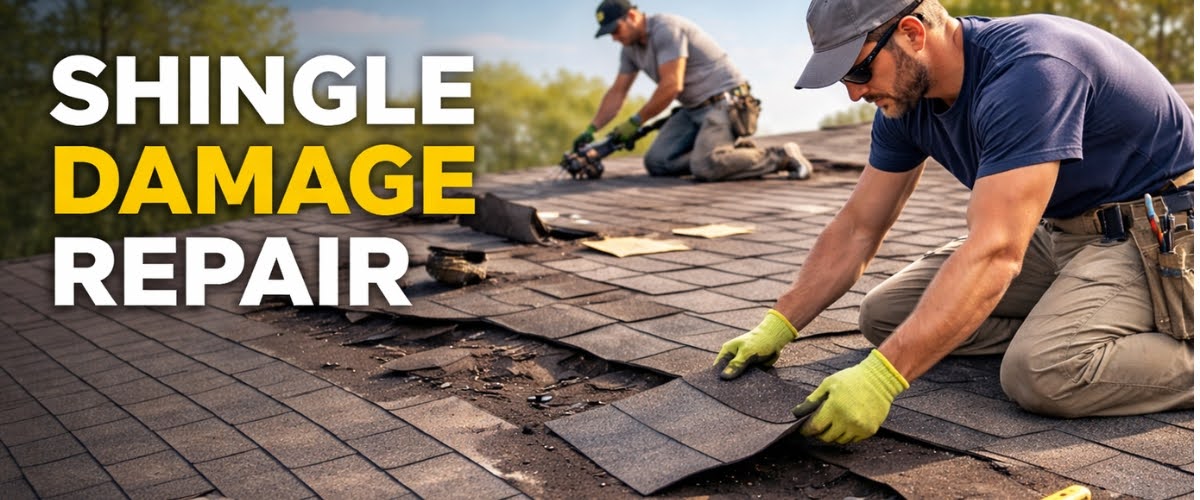
Shingle damage includes cracking, curling, blistering, wind uplift, and missing shingles. Individual shingle replacement is practical when damage is confined to a defined area and the underlying deck is undamaged.
What the repair involves:
What the repair involves:
- Removing the damaged shingle and the nails holding adjacent shingles in place
- Inspecting the deck beneath for moisture damage before installing new material
- Installing a new shingle that matches the existing material in weight and profile
- Sealing the repair zone with roofing-grade sealant
Shingle repairs are most reliable when the roof is under 15 years old and the surrounding shingles are in good condition. On older roofs, mismatched shingles and brittle surrounding material reduce the effectiveness of a spot repair.
Our residential roof repair service in Highland Park covers all shingle repair types.
Our residential roof repair service in Highland Park covers all shingle repair types.
Flashing Repair
Flashing is the metal that seals transitions between the roof surface and vertical elements — chimneys, dormers, skylights, pipe penetrations, and valleys. Flashing failure is the cause of most recurring leaks on Highland Park homes that have had prior repairs.
Chimney Flashing
Chimney base flashing consists of step flashing woven into the shingles and counter flashing embedded in mortar joints. When mortar joints deteriorate, the counter flashing separates and water enters behind it. Repair requires repointing the mortar and reseating the flashing — not just applying sealant over the gap.
Step Flashing
Step flashing is a series of L-shaped metal pieces running up a wall or dormer alongside shingle courses. Each piece must be properly woven with the course above it. Applying caulk over deteriorated step flashing rather than replacing it is the most common cause of repeat leaks at dormers.
Pipe Boot Seals
Rubber pipe boots around plumbing vents crack as they age, particularly in Illinois temperature extremes. Replacement takes 30 to 60 minutes and costs $150 to $300 — but ignored, a cracked boot causes water intrusion that can damage decking, insulation, and interior finishes.
Valley Flashing
Open metal valleys require flashing that extends at least 8 inches on each side of the centerline. Short or improperly lapped valley flashing creates a direct water path into the roof assembly. Repair requires removing the affected shingle courses and replacing the full flashing length in the valley.
Storm events accelerate flashing failures. Our wind and hail damage specialists document flashing damage as part of every storm inspection.
Chimney Flashing
Chimney base flashing consists of step flashing woven into the shingles and counter flashing embedded in mortar joints. When mortar joints deteriorate, the counter flashing separates and water enters behind it. Repair requires repointing the mortar and reseating the flashing — not just applying sealant over the gap.
Step Flashing
Step flashing is a series of L-shaped metal pieces running up a wall or dormer alongside shingle courses. Each piece must be properly woven with the course above it. Applying caulk over deteriorated step flashing rather than replacing it is the most common cause of repeat leaks at dormers.
Pipe Boot Seals
Rubber pipe boots around plumbing vents crack as they age, particularly in Illinois temperature extremes. Replacement takes 30 to 60 minutes and costs $150 to $300 — but ignored, a cracked boot causes water intrusion that can damage decking, insulation, and interior finishes.
Valley Flashing
Open metal valleys require flashing that extends at least 8 inches on each side of the centerline. Short or improperly lapped valley flashing creates a direct water path into the roof assembly. Repair requires removing the affected shingle courses and replacing the full flashing length in the valley.
Storm events accelerate flashing failures. Our wind and hail damage specialists document flashing damage as part of every storm inspection.
Roof Leak Repair
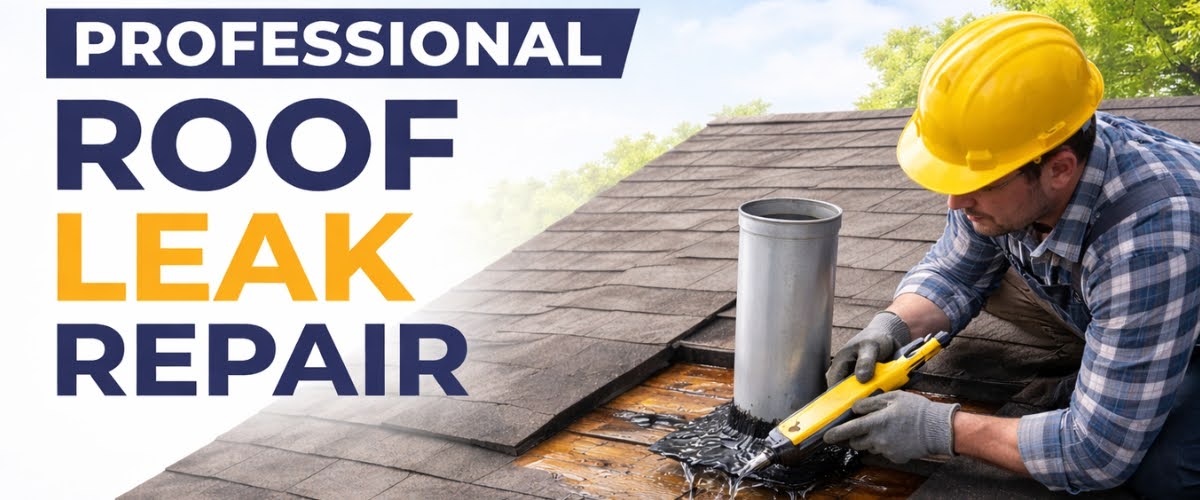
A roof leak appears on the interior ceiling, but the entry point is rarely directly above the stain. Water follows rafters and pools at structural points before dripping through. A proper leak repair starts with identifying the actual source — not the symptom.
The diagnostic process for a roof leak repair:
See also our guide on what to do if your roof leaks during heavy rain.
The diagnostic process for a roof leak repair:
- Attic inspection to trace moisture migration path
- Moisture meter readings on decking, insulation, and rafters
- Exterior inspection of all penetrations, transitions, and surface zones above the interior stain
- Water simulation test if the source is not identified visually
- Documentation of findings before any repair begins
See also our guide on what to do if your roof leaks during heavy rain.
Ice Dam Damage Repair
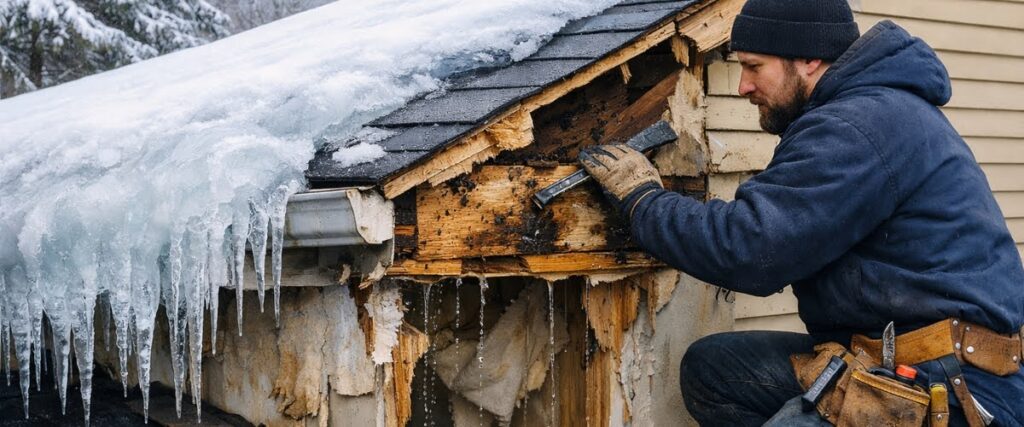
Ice dams form when heat escaping from the living space melts snow on the upper roof, and that water refreezes at the cold eave. The ice forces water under shingles, causing leaks at the interior wall-ceiling intersection on upper floors.
Ice dam damage repair includes two components:
Surface Repair
Replacing shingles damaged by ice dam water intrusion and installing ice and water shield membrane at the eave zone. Ice and water shield is a self-adhering membrane that seals around nails and prevents water from entering even when ice dam conditions exist.
Ventilation Correction
Ice dams are caused by heat escaping from the attic. A surface repair alone does not stop them from forming again. Correcting the attic insulation and ventilation deficiency is required to prevent recurrence. JSMM Inc addresses both components in every ice dam repair.
Water that has entered interior wall assemblies through ice dam intrusion may require remediation beyond roofing repair.
For interior moisture damage, see our water damage restoration service.
Ice dam damage repair includes two components:
Surface Repair
Replacing shingles damaged by ice dam water intrusion and installing ice and water shield membrane at the eave zone. Ice and water shield is a self-adhering membrane that seals around nails and prevents water from entering even when ice dam conditions exist.
Ventilation Correction
Ice dams are caused by heat escaping from the attic. A surface repair alone does not stop them from forming again. Correcting the attic insulation and ventilation deficiency is required to prevent recurrence. JSMM Inc addresses both components in every ice dam repair.
Water that has entered interior wall assemblies through ice dam intrusion may require remediation beyond roofing repair.
For interior moisture damage, see our water damage restoration service.
Flat Roof Membrane Repair
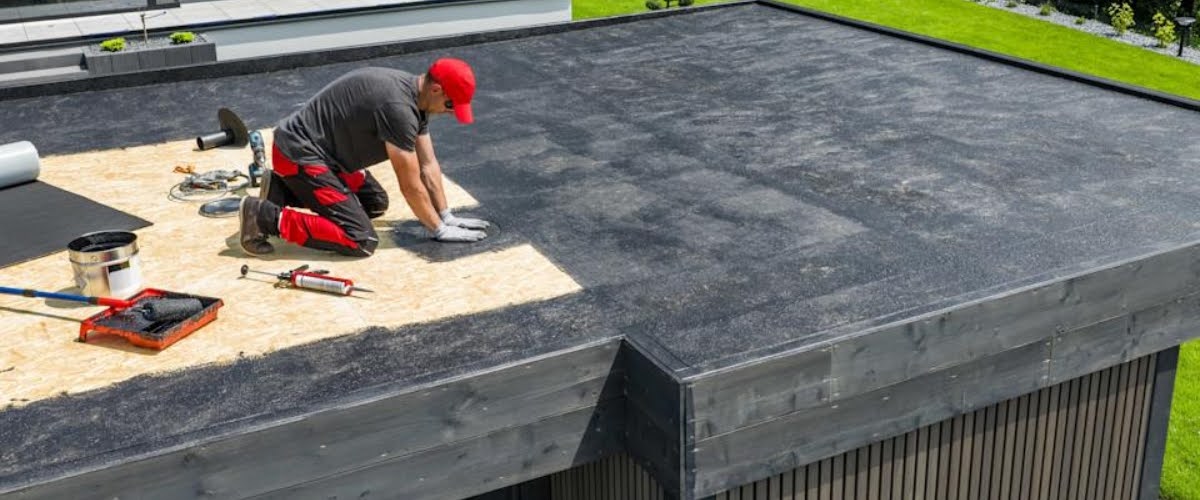
Flat and low-slope roofs on residential additions and commercial properties use TPO or EPDM membrane systems. Common failures include seam separations, punctures, and membrane blistering.
TPO seam repair uses heat welding to re-fuse separated seams. EPDM seam repair uses contact adhesive and tape. Both require the membrane surface to be clean and dry before repair begins.
Blistering occurs when air or moisture is trapped beneath the membrane during installation. Small blisters can be repaired by cutting, drying, and re-adhering the material. Large blistered sections require full membrane removal and replacement in the affected zone.
Our team handles commercial flat roof repairs through our commercial roof repair service.
TPO seam repair uses heat welding to re-fuse separated seams. EPDM seam repair uses contact adhesive and tape. Both require the membrane surface to be clean and dry before repair begins.
Blistering occurs when air or moisture is trapped beneath the membrane during installation. Small blisters can be repaired by cutting, drying, and re-adhering the material. Large blistered sections require full membrane removal and replacement in the affected zone.
Our team handles commercial flat roof repairs through our commercial roof repair service.
Roof Decking Repair
Roof decking is the structural layer beneath the roofing material — typically 7/16 inch OSB or 1/2 inch plywood. Decking damage from moisture saturation is identified during a repair by soft spots underfoot and discoloration or delamination visible in the attic.
Decking repair requires:
Decking repair requires:
- Removing the roofing material over the damaged section
- Cutting out the damaged panel to the nearest rafter bays
- Installing new decking of matching thickness and rating
- Re-nailing to code and reinstalling roofing material over the repaired zone
What Roof Repair Costs in Highland Park
Cost varies by repair type, material, and extent of damage. These are realistic ranges for standard Highland Park residential repair work:
- Individual shingle replacement: $150 to $400
- Pipe boot replacement: $150 to $300
- Chimney flashing repair: $400 to $900
- Step flashing replacement: $500 to $1,200 depending on length
- Roof leak diagnosis and repair (minor): $300 to $700
- Roof leak repair with decking damage: $1,200 to $2,500+
- Ice dam damage repair (surface and ventilation): $800 to $2,500
- Flat roof membrane repair: $400 to $1,200
JSMM Inc provides free on-site inspections with written estimates before any work is authorized. No work begins without a signed written scope of work.
For a full Illinois cost breakdown, see our roof repair cost and timeline guide.
For a full Illinois cost breakdown, see our roof repair cost and timeline guide.
How Long Roof Repair Takes
Most roof repairs in Highland Park can be completed within one working day. Timelines vary by scope:
- Shingle or pipe boot replacement: 1 to 3 hours
- Flashing repair (chimney or step): 2 to 6 hours
- Leak diagnosis and minor repair: 1 day
- Repairs involving decking replacement: 1 to 2 days
- Ice dam damage repair with ventilation correction: 1 to 3 days
Weather is the most common cause of scheduling delays. JSMM Inc does not install roofing in rain or in temperatures below 40 degrees Fahrenheit.
Roof Repair and Insurance Claims
Roof repair caused by storms, hail, and wind is typically covered under standard Illinois homeowner’s policies. Wear and age-related deterioration is not covered.
For insurance-covered repairs:
For insurance-covered repairs:
- Document all visible damage with photographs before any work begins
- Have the contractor prepare a written scope of the damage for the claim file
- File the claim as a weather event — not general damage — for correct coverage classification
- Request that the contractor be present during the adjuster's inspection
- Review the adjuster's scope for missing items before accepting the settlement
JSMM Inc manages insurance documentation and adjuster meetings as part of every storm-related repair project.
For insurance claim guidance, see our insurance loss management page.
Also read: how to apply for roof replacement assistance or free estimates.
When Repair Is the Right Choice and When It Isn't
Repair is appropriate when:
- The roof is under 15 years old with localized damage
- Damage is confined to one slope, one penetration, or one transition zone
- The underlying decking is undamaged in the affected area
- Fewer than 25 percent of the total shingle surface is affected
Replacement is more appropriate when:
- The roof is 20 or more years old with widespread wear
- Multiple zones are failing simultaneously
- Two layers of shingles already exist — a third layer is not permitted under Illinois building code
- The cumulative cost of repairs is approaching 40 to 50 percent of replacement cost
For a detailed comparison, see our blog post: Roof Repair vs. Roof Replacement — How to Choose the Right Option.
Case Study: Roof Repair in Highland Park — What the Inspection Found
Situation:
A homeowner on Laurel Avenue had paid for two separate leak repairs by two different contractors over 16 months. The ceiling stain reappeared after each rain.
JSMM Inc Inspection:
A homeowner on Laurel Avenue had paid for two separate leak repairs by two different contractors over 16 months. The ceiling stain reappeared after each rain.
JSMM Inc Inspection:
- Attic moisture meter readings elevated 8 feet from the interior stain — not directly above it
- Exterior inspection found step flashing at the master bedroom dormer improperly installed — each piece was butt-jointed rather than lapped
- Both previous contractors had replaced shingles in the area above the interior stain without accessing the dormer flashing
Repair Performed:
- Full step flashing replacement at the dormer — 14 pieces replaced with proper lap installation
- Ice and water shield installed behind new step flashing
- Written report provided for insurance supplemental documentation
Frequently Asked Questions
Can I stay in my home during roof repair?
Yes. Standard roof repairs do not require the homeowner to vacate. The crew works on the exterior and cleanup is completed before they leave.
Does insurance cover roof repair in Highland Park?
Storm, hail, and wind damage is typically covered. JSMM Inc documents damage and manages the claim process. Age-related wear is not a covered event under most policies.
How do I know if my roof needs repair or replacement?
A free on-site inspection provides a written assessment. In general, localized damage on a roof under 15 years old is a repair. Widespread wear on a roof over 20 years old is a replacement scenario.
How long does a roof repair warranty last?
JSMM Inc provides a written workmanship warranty on every repair project. Warranty duration depends on the scope of work. All warranty terms are included in the written contract before work begins.
Why does my roof keep leaking after repairs?
The most common reason is that the true source of the leak was not identified. Surface patching above an interior stain — without attic inspection and moisture tracing — does not address the actual entry point.
Contact JSMM Inc for Roof Repair Near Highland Park
- Licensed Illinois contractor — License #104.019924
- BBB A+ rated with 5.0/5 customer satisfaction
- 24/7 emergency repair response
- Free on-site diagnostic inspection
- Full insurance documentation and claim management
Also serving: Northbrook roof repair, Glenview roof repair, Winnetka roof repair, and Lake Forest roof repair.
Contact JSMM Inc
JSMM Inc
📍 1542 Old Skokie Valley Rd, Highland Park, IL 60035
📞 (847) 410-7060
Email: admin@jsmminc.com
About the Author
Janathan is a licensed roofing repair specialist at JSMM Inc with decades of field experience in residential and commercial roofing across Illinois. He leads the company’s diagnostic inspection process and storm damage documentation program.